

Published in the News-Review January 23, 2026
By : Chris Rusch
“Ferns are a great addition to your shady landscape”
Question: I would like to add ferns to my landscape. Can you give me advice on growing ferns?
Answer: Delicate as lace, or tough as leather, ferns are found in climates ranging from rain forest to tundra. It is no wonder that they find their way to so many Pacific Northwest gardens.
Descendants of the earth’s oldest plants, ferns have evolved into more than 12,000 species, some as tiny as moss and others as big as a tree. Ferns are one of the oldest groups of plants on earth, with a fossil record dating back over four hundred million years ago, predating dinosaurs. Today, ferns are the second-most diverse group of vascular plants on earth, outnumbered only by flowering plants.
Many ferns are evergreen. They are a benefit during winter when many other perennials have died back, and certain shrubs are reduced to mere sticks. Ferns are ideal for shady gardens. As the hot weather of summer arrives, the thought of working in shady gardens sounds wonderful. Many great plants for shady areas are found among the ferns. The different species range from under a foot to as much as 3 feet tall.
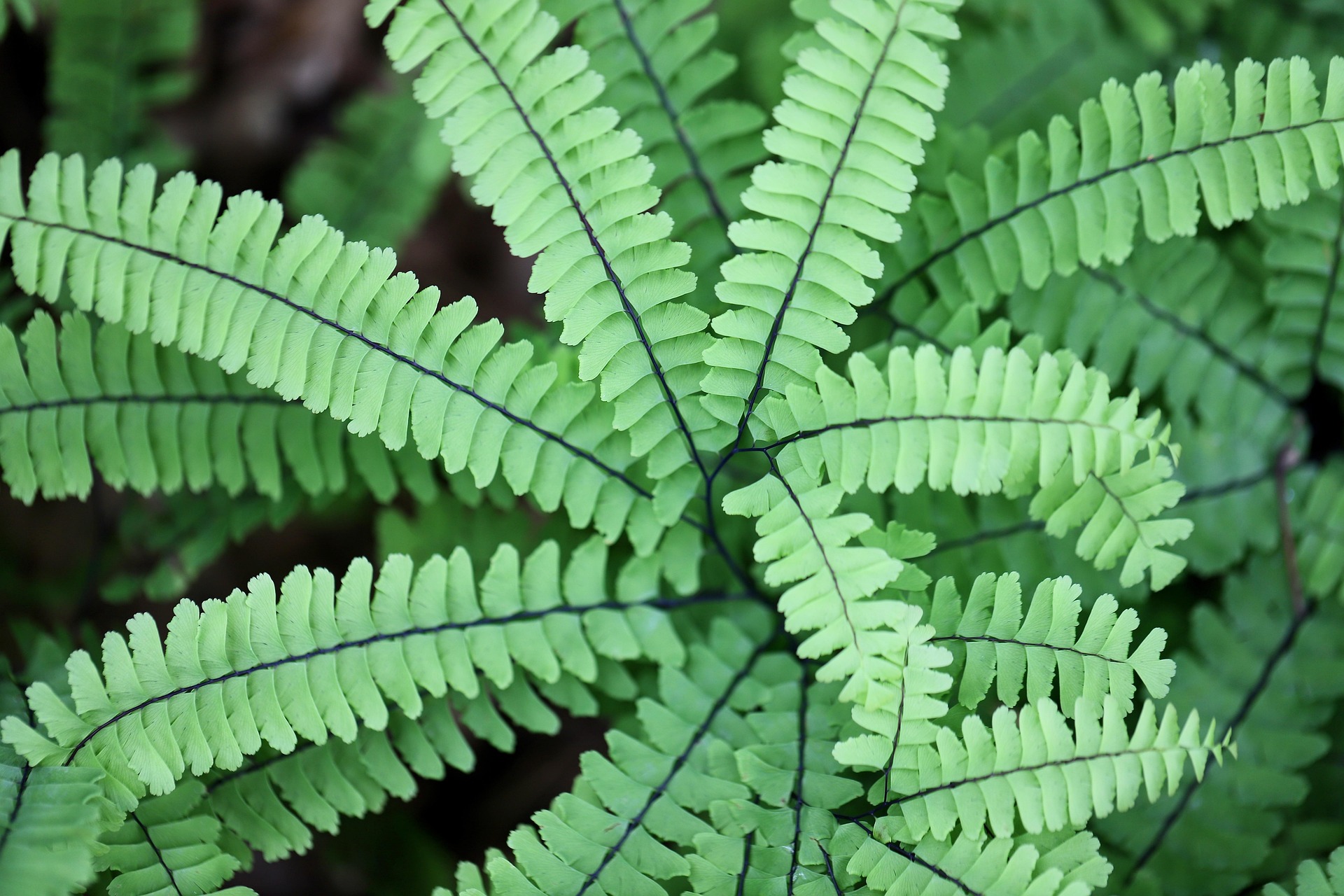
Ferns do not produce colorful flowers, instead the leaves of ferns, called fronds, provide the primary ornamental feature of the plants. Fern fronds come in many shades of green from chartreuse to deep olive. Some produce fronds that are tinted in red or have silvery variegations. Ferns possess a grace of form and movement that is unique among garden plants.
Ferns are easy to grow and are not prone to any major insect or disease problems. Site selection is critical to production of high-quality ferns. Ferns grow best in areas that receive one to four hours of direct sun or dappled light during the day. Morning sun is preferred. Shady areas under trees are ideal locations to incorporate ferns and other shade-loving herbaceous perennials, ground covers and shrubs. Avoid hot, dry areas that receive several hours of direct sun in the afternoon or areas that receive sun all day. Soils rich in humus, slightly acidic, with good surface drainage are preferred. To prepare your soil for ferns, amend it with lots of organic matter like compost, leaf mold, or peat moss to create a rich, loamy, well-draining soil that stays moist but not soggy, mixing amendments deeply into a hole at least twice as wide as the root ball for good aeration and moisture retention. When planting, don’t bury the crown (center) of the fern. Ferns need consistently moist soil. Mulching a fern planting with your favorite mulch such as leaves, dry grass clippings or pine straw, is highly recommended to conserve soil moisture and reduce weeds. Water deeply but allow the soil to dry slightly between waterings, especially for deciduous types. Use diluted, high-nitrogen or all-purpose fertilizer in the growing season (April-September).
Some recommended ferns for our area include:
Adiantum venustum (Himalayan maidenhair). This charming fern holds its foliage throughout our mild winter. Fronds are 8 to 12 inches long and form arching mounds. Small pink fiddleheads usually emerge in early March.
Asplenium scolopendrium (Hart’s tongue fern). Looks too delicate to be hardy, let alone evergreen. But it is. It reaches 1 to 2 feet.
Athyrium niponicum (Japanese painted fern).Silvery fronds with a touch of blue and deep red stems make this fern stand out.
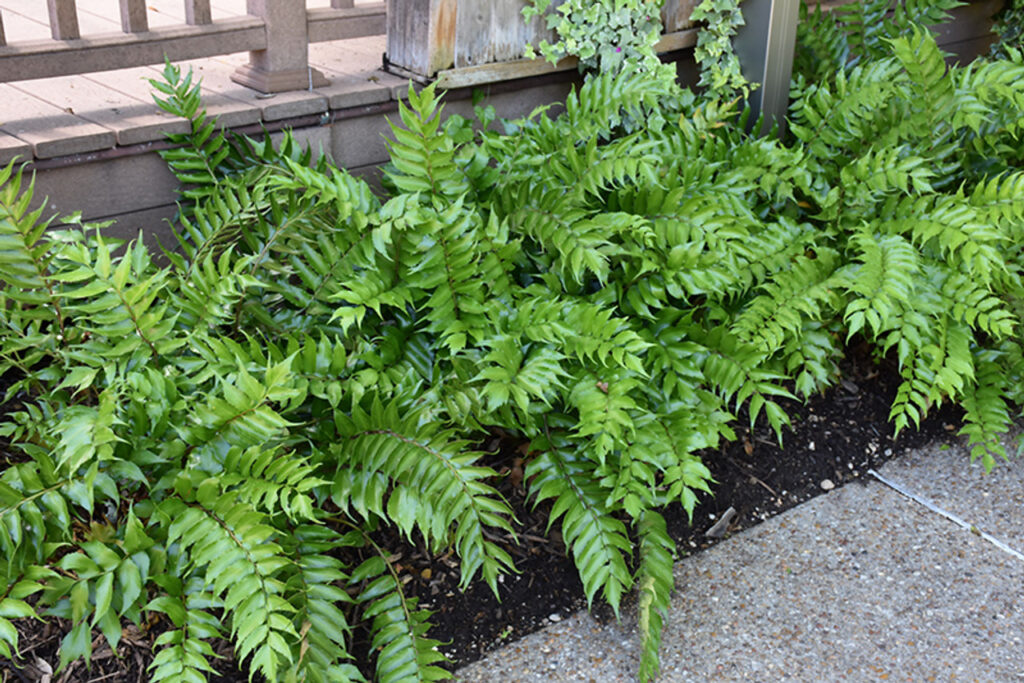
Cyrtomium fortunei (holly fern). Fronds are long, and each individual pinna (leaflet) looks like a holly leaf. Medium to light green.
Dryopteris dilatata (buckler fern). Very lacy and dark green.
Dryopteris erythrosora (autumn fern). New fronds are coppery-pink, and wintry weather brings a hint of russet to the otherwise deep green fronds. 24 inches.
Dryopteris pseudo-filix-mas (Mexican male fern). Emerald, green fronds, reach 5 feet over time.
Polystichum munitum (western sword fern). Ubiquitous Northwest native that is drought-tolerant, sturdy and will put up with a fair bit of sun. It is deer resistant. 3 ft.
Polystichum neolobatum (long-eared holly fern). Practically indestructible, with glossy surface of fronds that becomes overlaid with a silver wash as blades mature. 2 to 3 feet.
Polystichum polyblepharum (tassel fern). It prefers even moisture and dappled shade. Deep, dark green with frosted green underside. 2 feet.
Ferns are also popular for pots and indoor plants. Because of their graceful fronds and lush color, ferns are often used as hanging plants. Ferns are used as specimens in atriums, greenhouses, and conservatories and we find them in the smallest apartments to the largest homes. They offer quiet, graceful beauty by softening landscapes indoors and out.
Do you have a gardening question? Please email, call, or visit the Douglas County Master Gardener Plant Clinic at douglasmg@oregonstate.edu, 541-672-4461, or 1134 S.E. Douglas Ave., Roseburg.