
Published in the News-Review April 3, 2026
By: Chris Rusch
Fragrant flowers for your summer landscape
Question: I am enjoying the many fragrant spring flowers in my garden like hyacinth, narcissus, and freesias. How can I keep wonderful scents in my garden and patio throughout the summer?
Answer: Summertime means time outdoors in the garden and patio, a perfect time to enjoy fragrant flowers. Scented flowers offer significant advantages by attracting beneficial pollinators (bees, butterflies, moths). Fragrances, like music, often elicit memories. People, places, and time are recalled with great fondness in a single whiff. You can use fragrant plants in a variety of ways. En masse, they create a bathed-in-scent garden. Set out in just a few spots, they provide a mystery perfume from who-knows-where. Plant them in containers to scent a deck or patio. Locate them beneath a window to let the fragrance waft indoors.
Here are some recommendations:
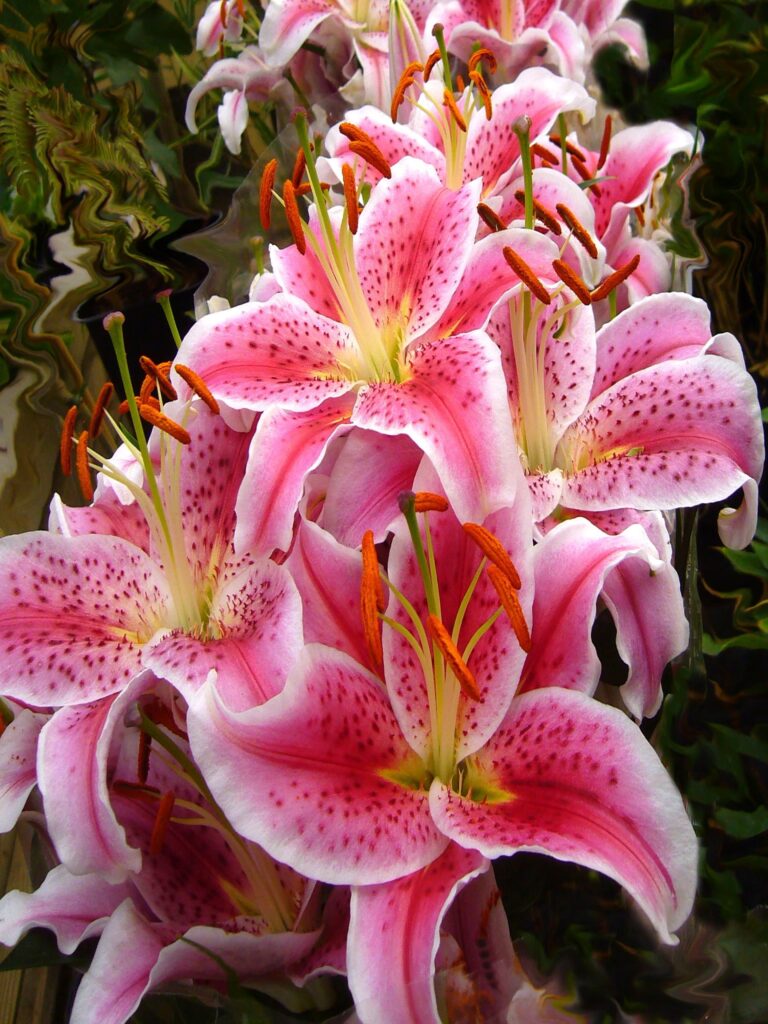
Sweet smelling lilies (Lilium) are beloved by gardeners and send their fragrance far and wide. This is a large group of bulbs bearing trumpet-shaped flowers with an unmistakably sweet scent. It is a favorite of gardeners and floral arrangers alike. Plant some bulbs near a patio or deck, or next to a walkway. They also do well in containers. No matter the location, the effect is the same: a heavenly experience for the senses. There are all kinds of varieties available.
Sweet peas (Lathyrus odoratus) are a classic flower in English gardens since they were introduced in the 17th century from southern Italy. Their sweetly scented flowers have enchanted generation after generation of garden lovers, and they are easy to grow – germinating willingly, growing swiftly, and flowering lavishly, all within a few months. Shorter bush or dwarf varieties, including “Supersnoop” and “Fragrantissima” types, make a colorful hedge in a flower bed, along a walkway or in planters. Taller climbing varieties, such as “Old Spice Mix” or “Royal Family” can be trained to cover fences and trellises. Both types make wonderful cut flowers with sweet, old-fashioned fragrances in a variety of colors.
Jasmines (Jasminum) can be a versatile, trouble-free addition to your fragrant landscape. The species with the classic, sweet jasmine scent is J. officinale, also called common jasmine or poet’s jasmine. It’s a fast growing vine and sometimes needs a trellis. Once established, it can bloom from June through August with small white fragrant flowers. The popular dark green vine with the strongly nutmeg-scented flowers called star jasmine is not really jasmine. It is Trachelospermum jasminoides, also called Confederate jasmine. It grows on a trellis or can be used as a ground cover.
Siberian wallflower (Erysimum allionii) is an easy to grow annual with fragrant flowers in fiery rich orange and yellow blooms. The name tells you this is a wildflower from cold climates. However, in warmer places, it grows as a perennial, returning year after year. The plants are very easy to grow; simply scatter the seed in spring or fall on loosened soil, and compress into the soil; do not cover.
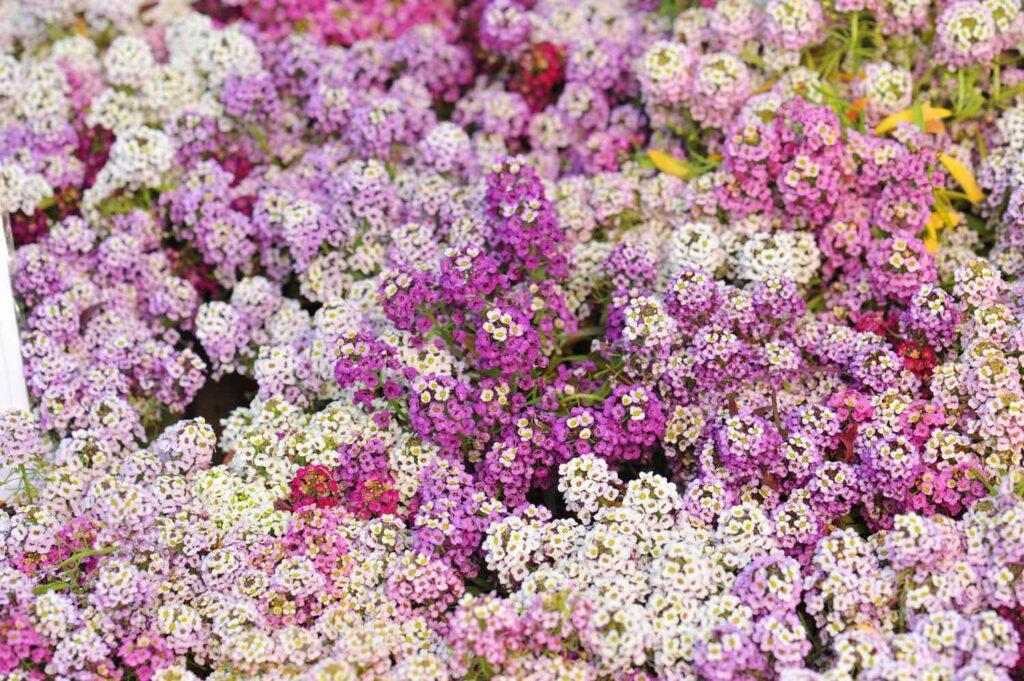
Sweet alyssum (Lobularia maritima) is a low-growing, annual known for its sweet, honey-like scent and dense clusters of tiny white (most common), lavender, or pink blossoms. It blooms from spring until frost.
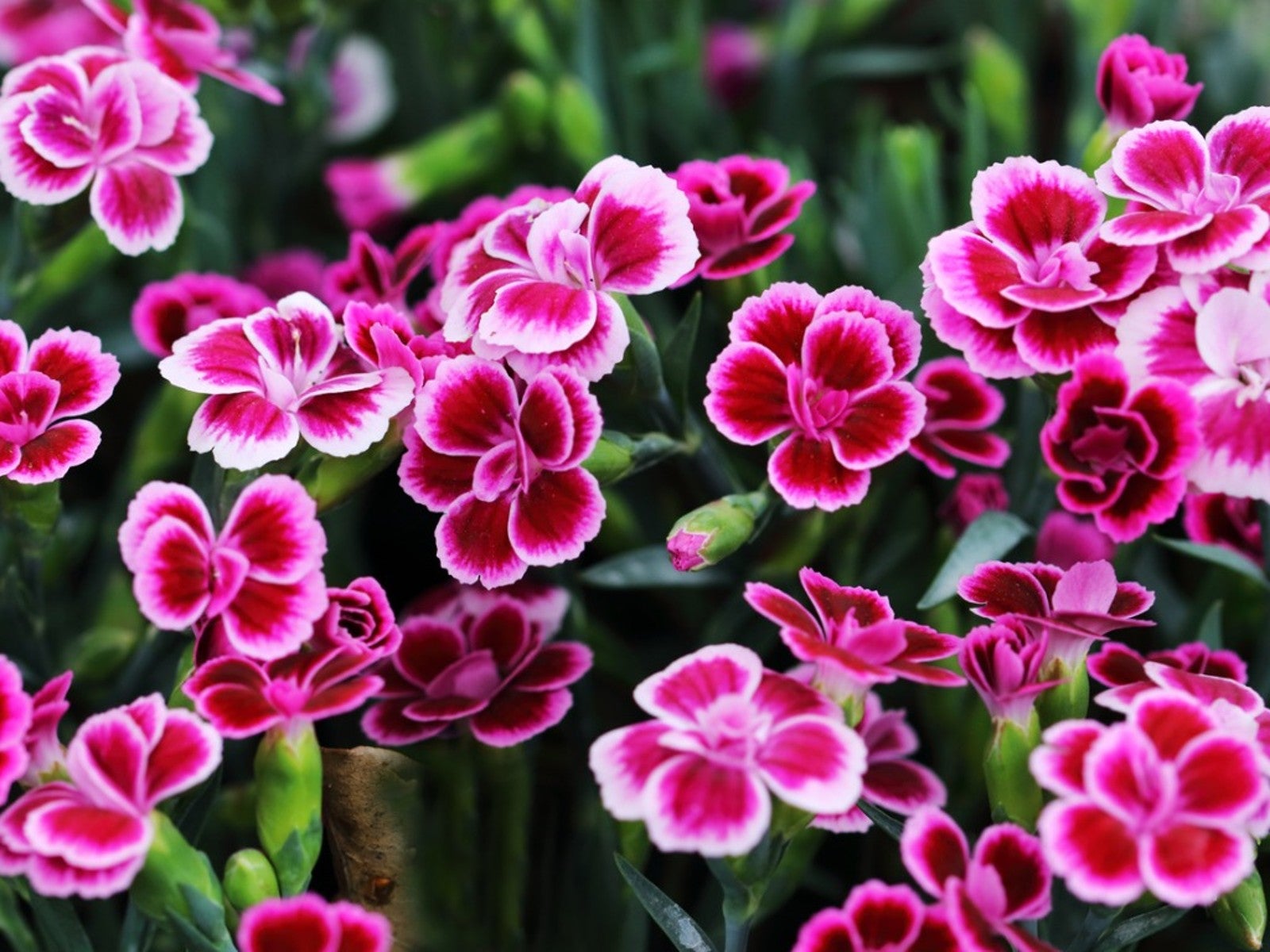
Sweet William, carnation, and pinks (Dianthus) are a group of flowers that are easy to grow from seed but it’s easier to buy them as plants from your local garden center. They are hardy perennials with grey-green evergreen or semi-evergreen foliage and flowers in shades of pink, magenta, salmon pink and white. They have spicy scented single or double flowers nearly all summer and will repeat flowering if deadheaded. They are perfect for a border or as a companion for roses.
The Mexican marigold (Tagetes lemmonii) is renowned for its strong, pleasant foliage scent resembling passionfruit and lemon. Other highly aromatic varieties include the culinary Mexican mint marigold (Tagetes lucida) with an anise/tarragon scent, and pungent French marigolds (Tagetes patula), which are excellent for repelling pests.
Some flowers open their blossoms after the sun goes down, a perfect time to enjoy fragrant flowers. Here are a few recommended flowers that release their scent after hours seemingly just for human enjoyment: Evening primrose (Oenothera), four o’clock (Mirabilis jalapa), moonflower (Ipomoea alba), and flowering tobacco (Nicotiana alata).
Remember that the amount of scent a plant carries varies between cultivars and even individual plants. It’s always best to buy plants in flower so you can choose those most wonderfully scented and confirm that you enjoy their fragrance. Individual preference varies greatly — one person’s heady perfume is another’s allergen!
Fragrant flowers enhance gardens with scents ranging from sweet and citrusy to spicy and musky. With a little planning, you can have a parade of fragrance throughout the season.
Do you have a gardening question? Please email, call, or visit the Douglas County Master Gardener Plant Clinic at douglasmg@oregonstate.edu, 541-672-4461, or 1134 S.E. Douglas Ave., Roseburg.