


Published in the News-Review April 10, 2026
By: Janet Bitter
Question: When I was turning over my compost pile, there were a whole bunch of sow bugs in there. Is it safe to use this compost on my plants?
Answer: Sow bugs in your compost pile are a good thing—they are enjoying their preferred diet of decaying organic matter and helping your compost pile decompose. Will they cause harm elsewhere in your house and garden? During my research for this question, I have learned a lot of interesting and quirky facts about this “bug”!
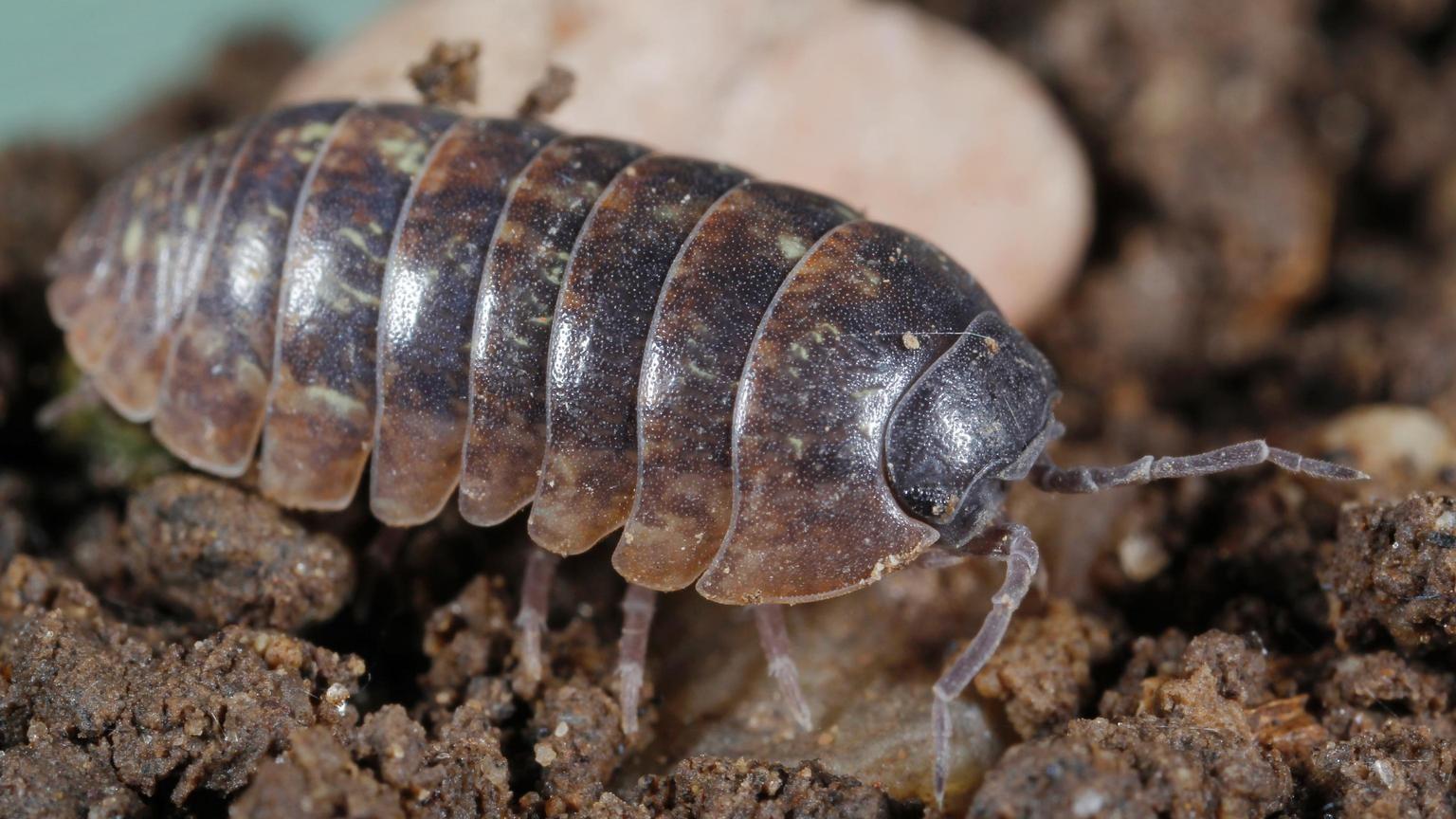
Pill bugs, Armadillium vulgare, and sow bugs, Porcellio laevis, are similar, and people often use the same names for each. They are sometimes called roly-poly bugs, doodle bugs, or wood louse. Only the pill bugs can roll up into a little ball; sow bugs are a little flatter and have tail-like appendages which prevent them from rolling up completely. These creatures are not insects at all! They are crustaceans and are closely related to lobsters, shrimp, and crayfish. They have an armored exoskeleton, seven pairs of legs, and have gills. They are usually about ½” long at maturity. Eggs are laid by the female and carried in a pouch underneath her body. After hatching, the young remain in the pouch for up to two months. They will reach maturity at about one year of age and can live about three years.
Sow bugs and pill bugs are usually categorized as nuisance and household pests. They do not bite or sting people, carry disease, or damage structures. They are basically scavengers looking for moist organic matter to eat. If you have a damp basement or entryways around your home with these conditions, some of them may enter your home. They might occasionally damage young plants, especially in a greenhouse setting if their numbers are high.
If you find a lot of pill or sow bugs in or around your house, the best control is to limit what they are seeking – moist organic matter. Keep leaf litter and mulch away from your foundation, caulk entry points (good for a host of other pests), and make sure water is draining away from your home.
If you find a lot on one of your indoor plants, simply re-pot those plants in new soil. If found in large numbers around newly transplanted seedlings outdoors or if you suspect they are causing plant damage, go out at night with a flashlight and verify the culprit. You can trap sow/pill bugs with damp rolled up newspapers left at night (you might find that another pest, like an earwig, is the guilty party). In the morning, gather them up and deposit them in your compost pile where they will help make compost for you. If you don’t want to trap them, you can use paper collars around young seedlings to block pests also.
As is sometimes the case when researching these questions, I stumbled upon an entire world of sow/pill bug information that I had never considered. These creatures are kept as pets by hobbyists around the world. Who knew?! (I do remember my own children collecting them and housing them somewhere contained. But, trust me, it was outside!!) If you want to go down a rabbit hole, you can find all kinds of information on—or even sources to procure—pet pill bugs. Just to pique your interest, I will let you know that they are bred in some interesting colors. I even saw one type called “cookie crumble”. Just no.
Sow and pill bugs are interesting creatures that are mainly beneficial in our gardens. They cause little or no damage and can be easily managed just by controlling the environment around our homes, especially the entry points. If they are found in considerable numbers in an area where there are sensitive plants, use a physical barrier and/or trap them to remove them. Remember, their preferred diet is decaying organic matter. If you find some in your compost pile, they are doing a service for you. Happy gardening!
Do you have a gardening or insect question? Contact the Douglas County Master Gardeners at douglasmg@oregonstate.edu or 541-672-4461 or visit 1134 SE Douglas Ave., Roseburg. Douglas County Master Gardeners are trained volunteers who help the OSU Extension Service serve the people of Douglas County.