

Published in the News-Review October 3, 2025
By: Julie Burchstead
Question: I want to plant some new bushes in my yard, but shouldn’t I wait until spring?
Answer: It may seem counterintuitive for gardeners, as we know fall is the end of the growth cycle for most plants. But the best time to add trees and shrubs to your garden is indeed the Fall.
And Fall is upon us. I can see it in the chickadees as they work the seeds out of the last of the curled heads of my sunflowers, in the increased angle of the light ensuring cooling evening respite to even the warmer afternoons. The chatter and demand of the garden is subsiding. Seed heads dry. Leaves begin to curl and drop. Plant growth is slowing. I don’t know about you, but after a frenetic growing season, I look forward to cleaning my tools and shutting the doors of my shed for some well earned rest and attention for other things. But, gardeners, though it may seem counterintuitive to tuck new bushes into your garden just when they are going dormant, fall is actually the perfect time for several reasons:
.
- To survive our hot summers, a new bush needs a strong root system. Planting in the fall allows roots time to grow over the winter.
- New plantings, even of native shrubs known to be drought tolerant, need water support for the first few years, especially their first. Fall temperatures are milder and often bring the return of rains so less hand watering is needed.
- Because the rest of the plant is completely or mostly dormant, plants bedded in during the fall can focus specifically on root growth, setting them up for better success when spring and summer place more demands on them.
- Fall is also a pleasant time for gardeners to be out in the garden. Digging holes is a much less onerous chore when the temperatures are more hospitable.
- Shrubs planted in spring face heat and dry conditions often before they have much time for root growth. Also, spring plants are putting a lot of energy into new leaf, branch, and perhaps flower growth, leaving fewer resources to put into growing roots. The closer you plant to peak summer stress time (the heat of the summer), the more stressed new plants will be over their first year. Stressed plants are more prone to disease and have less tolerance for pests. As larger plants put a bigger dent in your pocketbook, Fall planting better protects your investment.
But timing for planting isn’t the only consideration to make. Do a little research to make sure you are choosing the right plant for the space. The wrong plant will become a battle instead of the garden enhancement you were hoping for.
Research and consider:
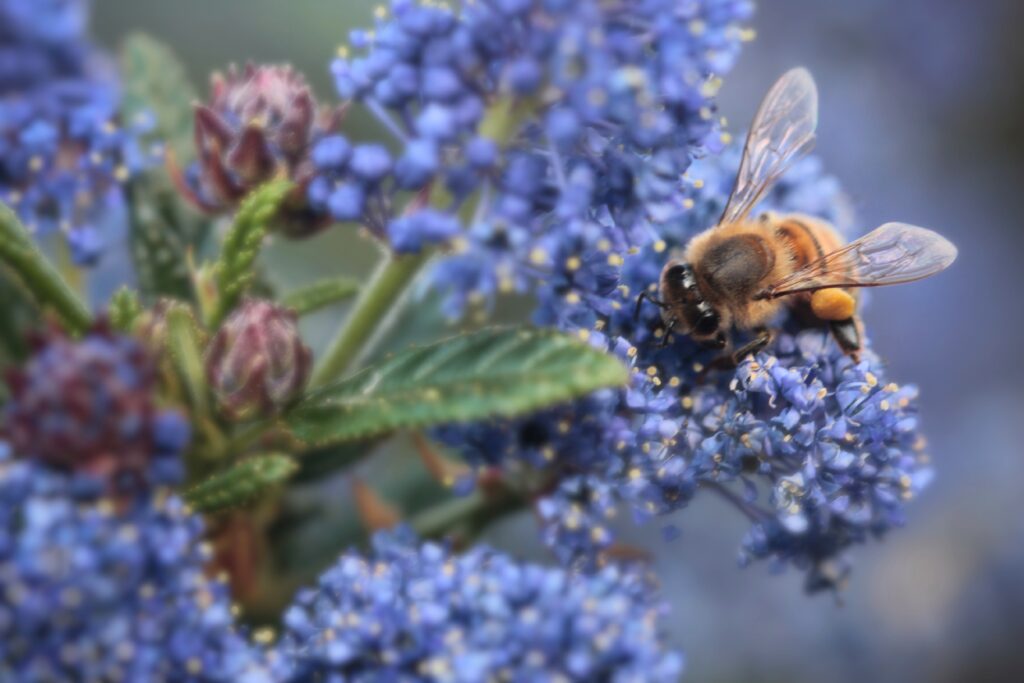
- Sun exposure. Scorching afternoon sun in the summer may not faze a Ceanothus, but will likely cause a Western Azalea to suffer. Match the plant’s needs with the space, or you may eventually need to provide shade cloth, or find yourself moving or replacing the plant. Shrubs get large. Moving them later can become a chore.
- Water needs. It makes your life easier (and plants happier) if you plant things with like water needs in communities.
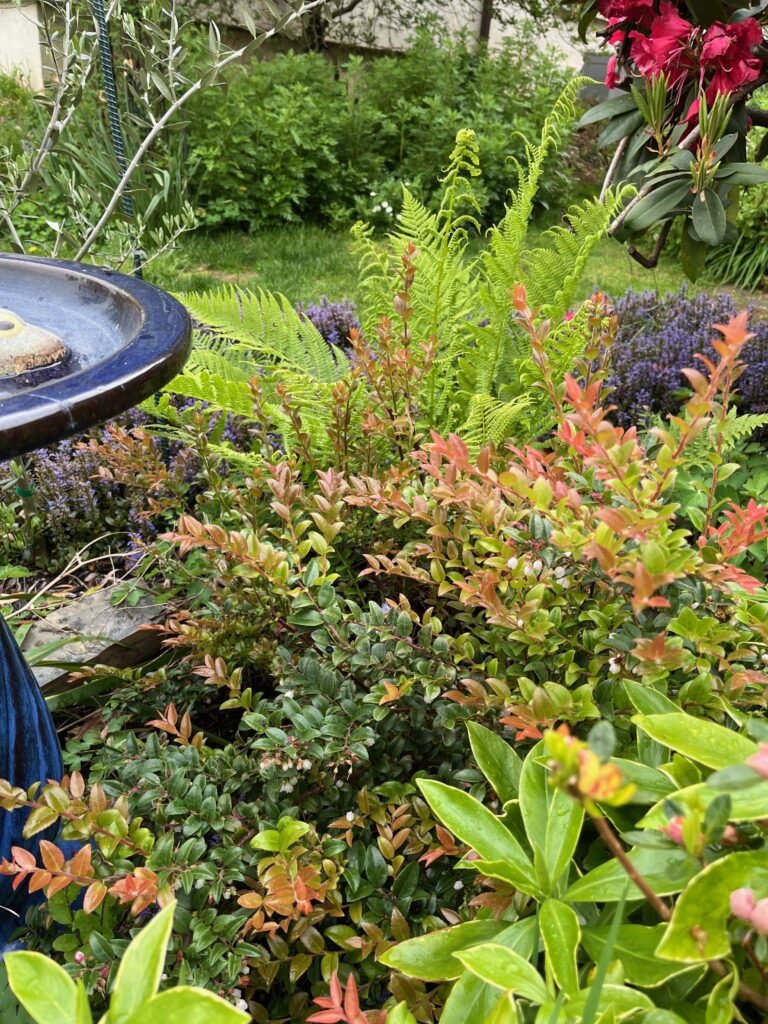
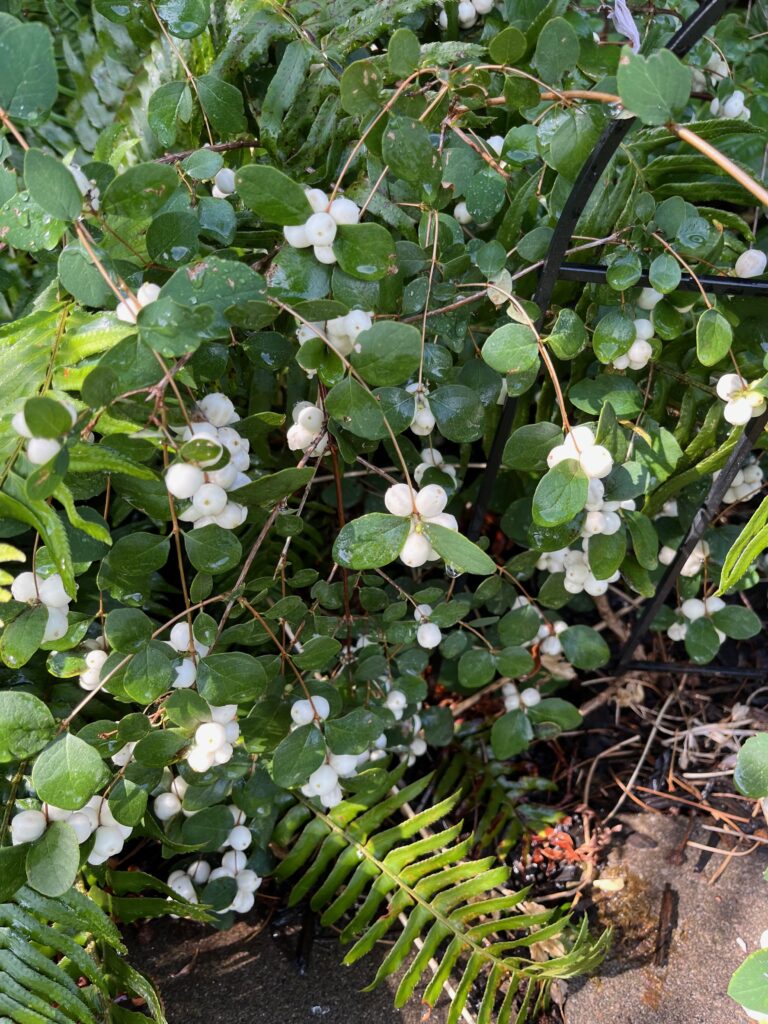
- Growth habits and pruning needs. A gallon sized plant likely won’t remain so. Will the eventual mature size of the plant, both height and girth, fit the space you are thinking about? Pruning creates a lot of work and if severe pruning is needed annually, you may not only lose the bloom, but depending on the plant’s specific response to pruning, you may make your problem worse. That gallon pot of Oceanspray, for example, can mature into a bush five or more feet high, and three or more feet wide. It’s beautiful white blooms grow at the end of cascading branches. Evergreen Huckleberry, in contrast, is a bit like boxwood and can better handle more pruning.
- Bloom time. Does the shrub bloom? When and what shape are the blooms? What will the blossoms attract? And if you are adding a native plant for pollinators, does the bloom time fill a bloom gap in your garden?
- Deer palatability. I planted a Mock Orange in my front yard where I cannot fence out the deer. Deer pruned, it has never bloomed. Some shrubs and bushes are more attractive to deer than others.
- Hole size. For a bush, dig a hole 6-8 inches larger than your root ball. If the plant was root-bound in the pot, gently loosen the roots on the outside of the ball. Make sure you set the plant into its new hole so the crown of the rootball sits at the same level it was in the pot. Gently press your topsoil over the roots making sure to not leave large air holes.
- Add mulch. A layer of bark will insulate the newly forming roots over the winter, as well as decreasing dehydration and providing some cooling in summer. Just be careful not to pile it up high around the plant trunk.
- Don’t forget to monitor the soil until rains are regular. Keep it moist, not wet.
- Have Patience. Though it doesn’t hold for all, an adage for perennial plants is the first year they sleep, the second they creep, the third year they leap. You may not see blooms on some for a few years.
Shrubs can provide a lot of bang for the buck in a garden. They add structure, screening, shade, habitat, food, and beauty. You can plant bushes and shrubs in milder parts of Douglas County even into winter. There is still a lot of time to add some to your garden before you put your gardening gloves up for the winter. If you are looking for some ideas, Oregon State University has created several resources with lists of native or ornamental shrubs and their attributes. These resources are mostly free and can be found on the internet by searching Oregon State University Extension-Plants and Shrubs. Find the right plant, pull on a comfy sweater, grab your shovel, and get planting!
Do you have a gardening or insect question? Contact the Douglas County Master Gardeners at douglasmg@oregonstate.edu or 541-672-4461 or visit 1134 SE Douglas Ave., Roseburg. Douglas County Master Gardeners are trained volunteers who help the OSU Extension Service serve the people of Douglas County.