


Published in the News-Review June 20, 2025
By: Julie Burchstead
Question: My ceanothus has been in the ground for two years now, and has yet to bloom with the expected blue blossoms. What am I doing wrong?
Answer: Likely nothing. It is always good to double check for optimum growing conditions. But some plants, native or not, simply need time to mature before they will bloom.
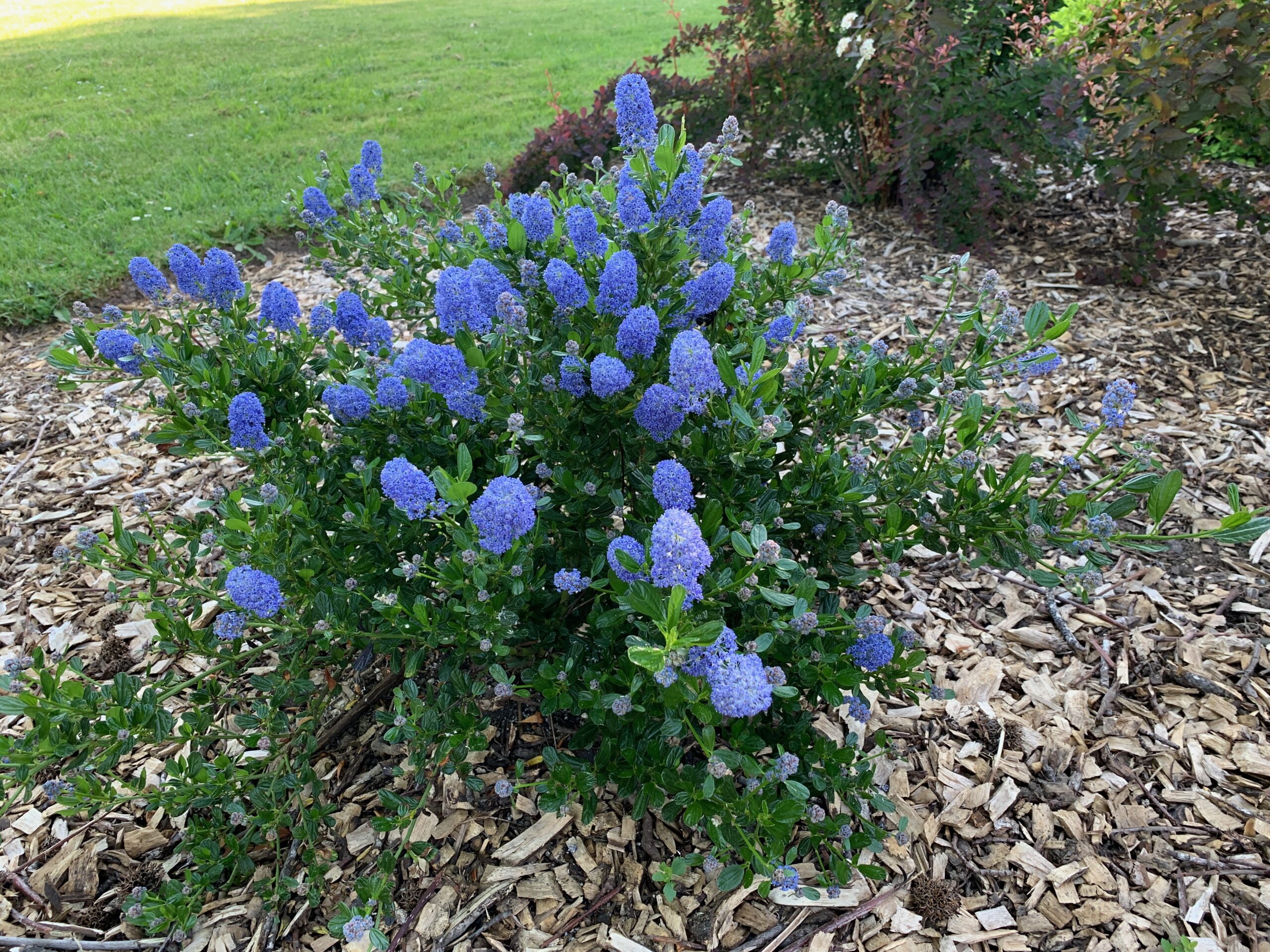
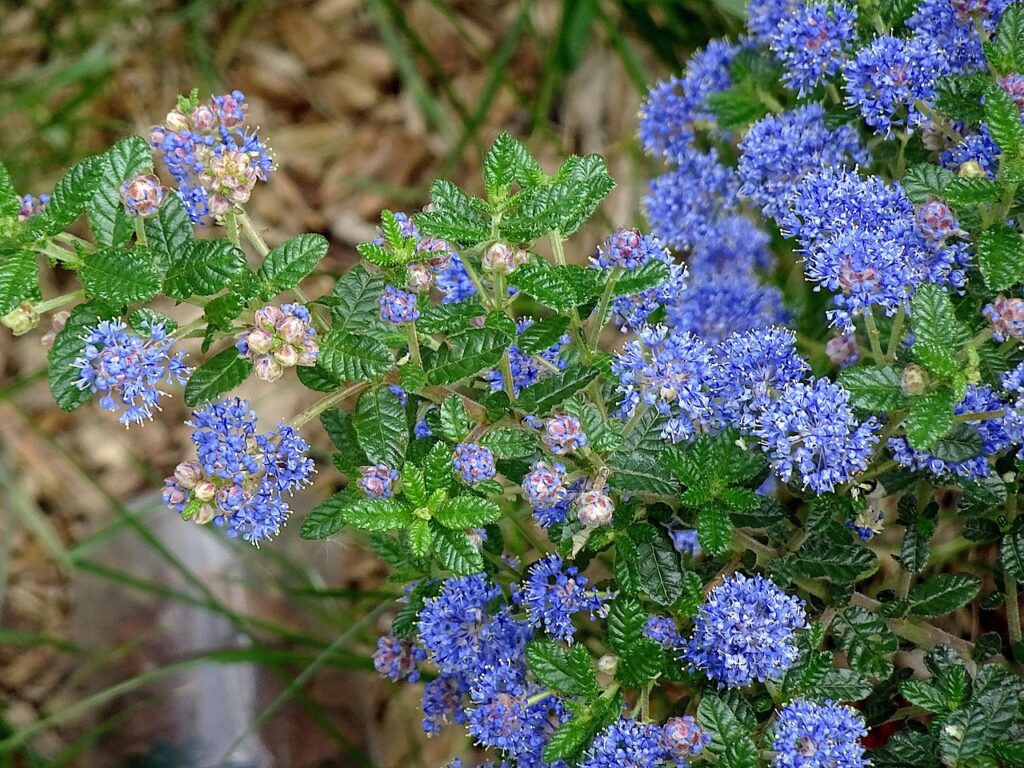
If you have room and the right conditions, Blueblossom Ceanothus (Ceanothus thyrsiflorus) is a spectacular native plant to add to your home garden. Like peas and legumes, it is a nitrogen fixer, meaning it can convert atmospheric nitrogen into a form other plants can also use, naturally enriching your soil. Its tiny glossy leaves stay green year round making the shrub an excellent screen. Cut stems of ceanothus make lovely additions to flower arrangements. And their spring blossoms add an explosion of blue color to the garden early in the season. Ceanothus plants in their variety also host and support a wide range of native pollinators including the spectacular Ceanothus Silk Moth (Hyalophora euryalus) as well as honeybees. But like many plants, Ceanothus thyrsiflorus needs time to mature before blooming.
In gardening there is an old adage: “The first year they sleep. The second year they creep. The third year they leap.” With the exception of annuals which complete their entire life cycle within a growing season (seed-seedling-blossom-creation of new seed-death), this adage often holds true for perennials, trees, and shrubs. Many gardeners add shrubs at their most economical and still easy to transport “gallon pot” sized stage. Ceanothus is rather fast growing compared to some native shrubs. Gallon sized pots typically house plants that are about a year or so old. But in my experience, the growth adage begins with the year you set the plants in your garden. Unlike some plants that truly seem to sleep, like a creeping Oregon Grape (Mahonia repens) specimen I planted that took years to add new stems before finally taking off in year four, ceanothus grows in size quite rapidly, but blooms little, if at all, in the first year after planting, sometimes even in the second. But with patience, gardeners will be well rewarded.
Of course, it is important to also double check other issues that might also affect optimum ceanothus growth such as sun exposure, water and soil conditions, and the possibility hungry deer might be the culprits. I have yet to get blooms on one of my mock orange plants as deer munch the new growth every year as soon as it appears.
Ceanothus needs:
- Full sun
- Well drained soil (they don’t like wet feet – water well the first year, then back off)
- Space: Ceanothus thrysiflorus can grow quickly and can reach 4-12 feet tall and 6 or more feet wide. Plan accordingly. They don’t like being moved once settled in.
- New growth is susceptible to deer pruning, though according to the University of California Extension Service, some cultivars like “Blue Jeans” appear less so.
We so often see our gardens through the lens of where we hope them to be instead of appreciating our efforts and enjoying them for where they are. In these pleasant weeks of near summer, take a moment, perhaps at the beginning or close of your busy days, to savor your garden where it is – right now, at this moment.
Do you have a gardening or insect question? Contact the Douglas County Master Gardeners at douglasmg@oregonstate.edu or 541-672-4461 or visit 1134 SE Douglas Ave., Roseburg. Douglas County Master Gardeners are trained volunteers who help the OSU Extension Service serve the people of Douglas County.