
Published in the News-Review March 27, 2026
By: Julie Burchstead
“Garden Thugs”
Question: I have some bluebells in my yard that simply crowd everything else out. What can I do?
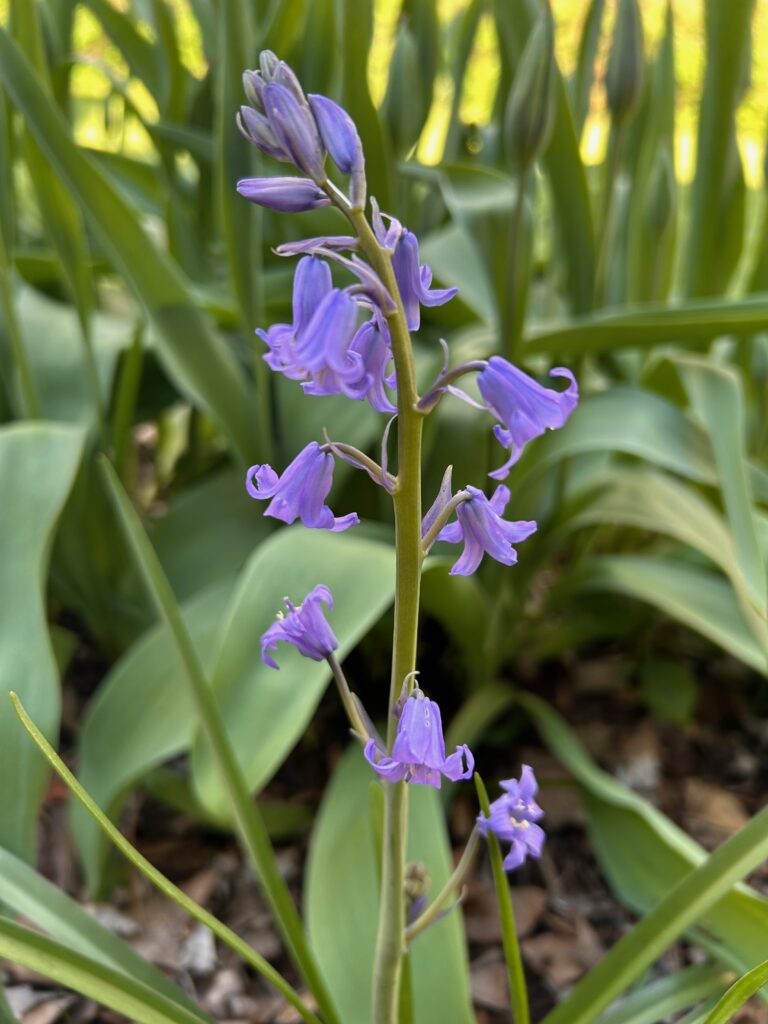
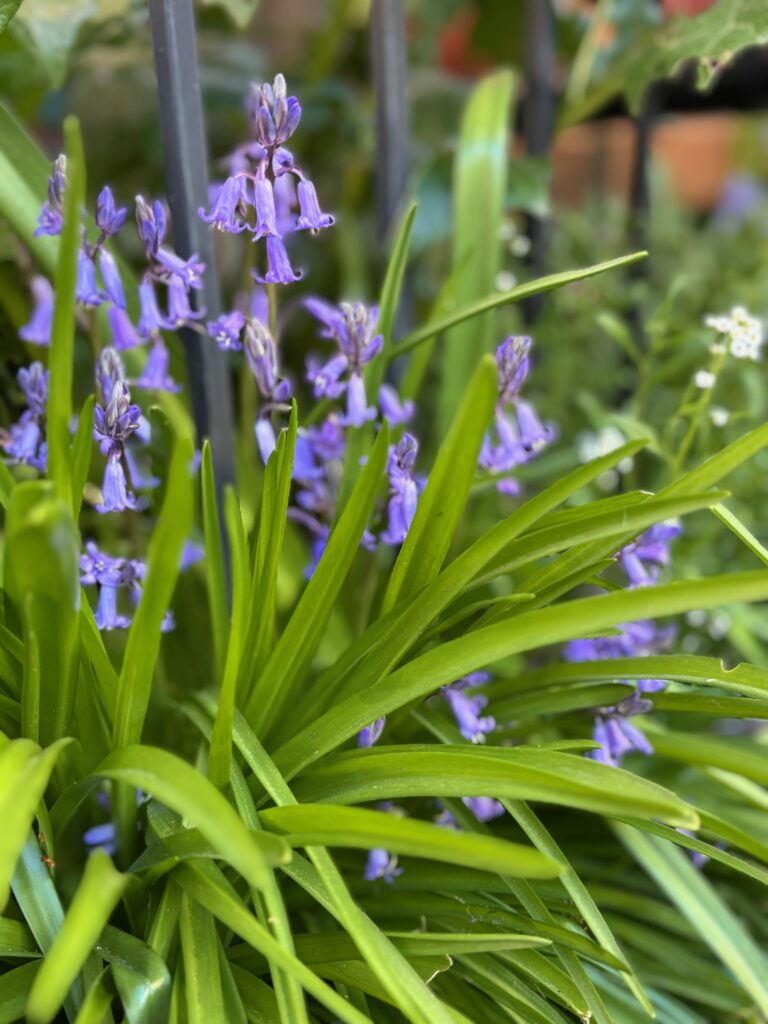
Answer: You are likely dealing with Hyacinthoides hispanica, aka Spanish Bluebells. As with all garden thugs, there are things you can do to combat and eventually eliminate them, but it will take time, effort, and patience.
Plant thugs are much like certain party guests. We get drawn in by their charm only to discover the conversation becomes all about them, sucking all the air out of the room, leaving no pause for a graceful escape. Plant thugs can be pretty plants, but their aggressively vigorous growth soon chokes out anything else in their path. Some are prolific seeders, others spread underground. Even if you don’t plant them yourself, the “gift” can arrive, wind-carried or by bird.
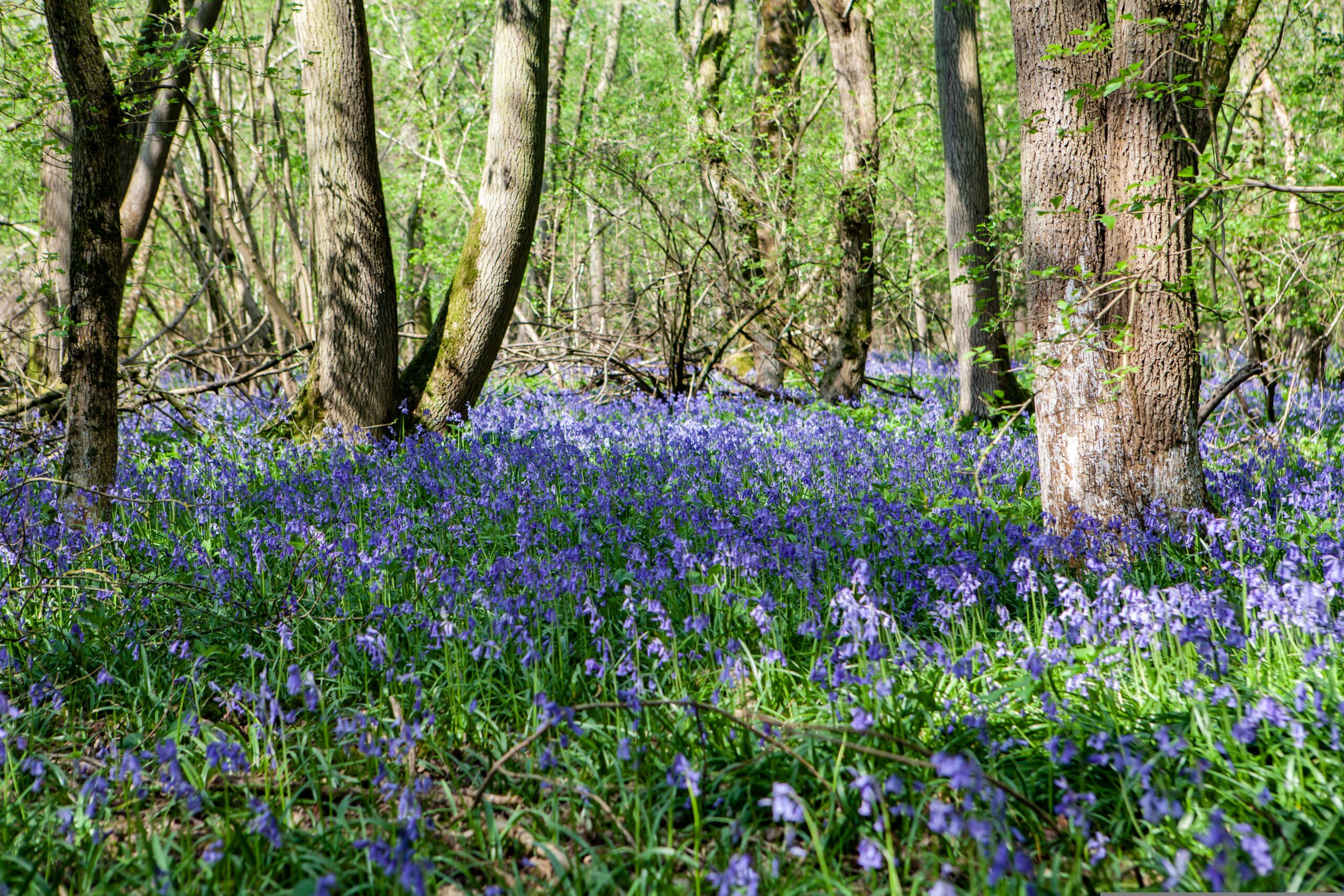
Spanish bluebells look lovely enough, with their carpet of early green leaves, eventually pushing up stems of sweet blue bells. What’s not to love? I used to drool over photos of English gardens with their swaths of bluebells beneath shady trees where not much else will often grow. Little did I know, not all species of bluebells are beloved.
The first spring in my garden here in Roseburg, I was delighted to see bluebells pop up in my mostly shady sideyard. But then I got to know them better. By the next spring, they were everywhere, crowding out everything – pushing between my Iris rhizomes where they are impossible to remove without lifting the Iris, competing for resources with my blueberries, preventing my carefully propagated native wildflowers from reseeding. I soon discovered that rather than having the more genteel English bluebells (hyacinthoides non-scripta), mine were Spanish bluebells, the aggressive invader.
Know what you are planting
The best way to deal with thug plants is to be prepared – better yet, not invite them in to begin with. Amazingly, some thug plants are still sold through nurseries and even shared among gardeners. Some plants only become thugs in ideal conditions. If a plant tag reads, “vigorous grower”, it might become thug-like in your garden. Plant aggressive growers with caution. Get to know which plants to stay away from by researching known thugs through your Extension Service or monitoring the Oregon Noxious Weed profile. Spanish bluebells are not on the noxious weed list in Oregon, but are now illegal to sell or plant in the UK. Even some native plants, in the right conditions, can behave more aggressively in your garden, though most thug plants are non-native.
Mitigate the risk
Plant aggressive growers and spreaders in a container (I do this with mint).
Deadhead before plants create new seeds.
If you already have a problem and it is a manageable area
Spanish bluebells are blooming now. Deadhead the plants right after they bloom. Though they are bulbs, Spanish bluebells create new colonies readily from seed.
Dig them up. In the case of Spanish bluebells, you have to dig deep to get all the bulbs. Any left remaining will begin new colonies. For some thugs, like the toxic but beautiful white lily, Italian arum, leaving even a piece of plant material will allow regeneration. Bag and throw out all the removed plant material. Spanish bluebell bulbs can survive composting.
Keep at it. The leaves are distinctive. Once you begin to recognize them, you can get after them when the bulbs are small and easier to remove.
Be patient. If you have a large infestation of Spanish bluebells, complete eradication will take time, perhaps years. But each spring, you will find fewer if you keep at it.
If you have a problem in an area too large for you to manage with mechanical methods, call your local Extension Service for advice and recommendations. The use of chemicals always comes with trade-offs. And there is indication in the UK, Spanish bluebells are resistant to some treatments.
Most of all, we need to plant and manage our home gardens responsibly. Seeds and rhizomes don’t respect property lines.The choices we make in our gardens matter. When a plant’s aggressive growth crosses the line to become a known noxious weed that not only affects our garden, but also begins to choke out our wild ecosystems, we need to make sure we eliminate such plants. Like guests at a party, we are in charge of the invitations. With so many lovely plants to choose from, we need to ensure we create environments where all can thrive.
Do you have a gardening or insect question? Contact the Douglas County Master Gardeners at douglasmg@oregonstate.edu or 541-672-4461 or visit 1134 SE Douglas Ave., Roseburg. Douglas County Master Gardeners are trained volunteers who help the OSU Extension Service serve the people of Douglas County.