



Published in the News-Review December 12, 2025
By: Julie Burchstead
Question: I have heard mason bees are really good to have in your garden. I want to get my partner a mason bee house for Christmas, but there are so many different kinds. Are some better than others?
Answer: Mason bees, a species of wild native bees, are true workhorses in the garden and the greater ecosystem. Providing habitat for them is a great way to attract and keep them near. But gardeners need to understand correctly-built housing and responsible management is critical to bee health. Some mason bee houses provide a cute aesthetic, but are not good for bees. And even properly built houses require responsible management, or gardeners can inadvertently cause harm to mason bee populations, rather than stewardship.
There is a lot of buzz about mason bees (Osmia lignaria) these days. More and more gardeners are hoping to attract these wild and highly efficient pollinators into their home gardens. Because they do not create communal hive structures, mason bees are non-aggressive and make delightful, gentle gardening partners. They have unique superpowers that set them apart from honey bees in other ways as well. There is an increasing library of information about them through OSU Extension and on YouTube. But as with all creatures, housing them in human ways comes with responsibility.
In the wild, mason bees are solitary cavity nesters. In the spring, male bees emerge first from their cocoons and await the arrival of females. Fertile female bees gather pollen and search for natural narrow crevices. She crawls to the back, creates a pollen ball into which she lays one of her 25 eggs, neatly sealing off each nursery chamber with a mud cap. She repeats this process until the length of the crevice is filled, capping it off with one last daub of mud. Once her eggs are all safely fed and sheltered, her life-cycle is complete. The larva hatch and feed on the pollen until they spin a cocoon. They overwinter until conditions (temperature and hopefully the availability of nectar and pollen) are just right for emergence in the spring.
Bee larva are vulnerable to birds, insect predators (wasps, beetles, Houdini flies, mites), and fungus (chalk brood). In nature, nursery crevices are separated by distance from each other, so though some nest sites might be discovered and attacked, others survive. Human built mason bee homes are often crafted for aesthetic appeal and convenience. Because the crevices (drilled, inserted, or affixed tubes) are grouped, it makes the discovery by predators more lethal, and the spread of pathogens more likely.
Two critical practices mitigate these risks – purchasing cleanable houses and seasonally retrieving cocoons to check for and eliminate predators and pathogens.
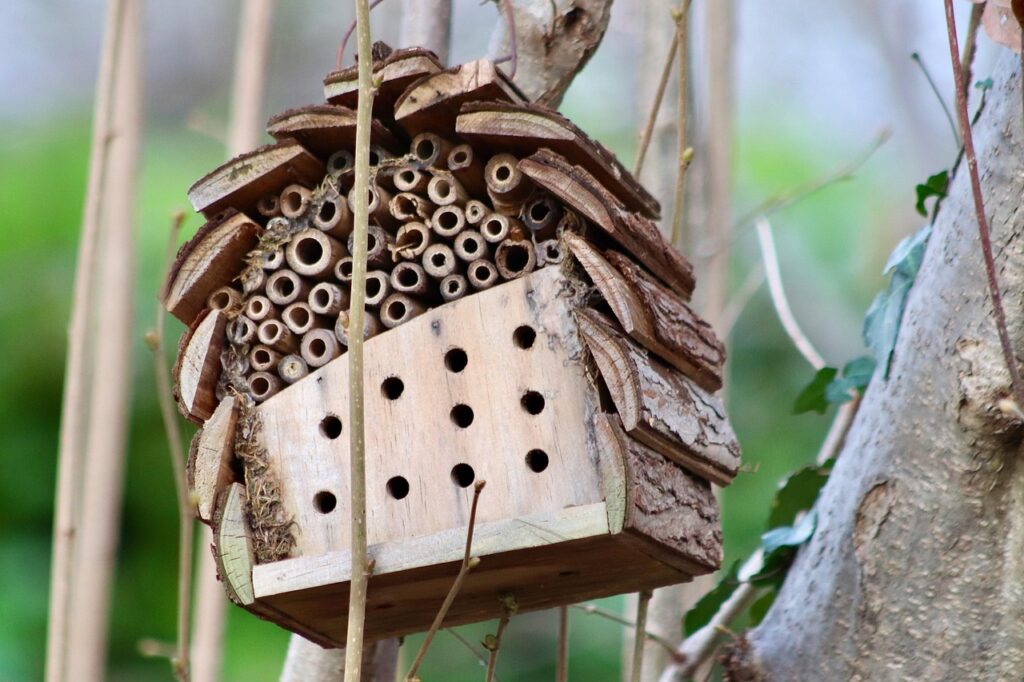
- When purchasing a mason bee house, avoid solid blocks with drilled holes that don’t open to allow cleaning. Knowledgeable makers manufacture their mason bee blocks so they come apart for easy cocoon harvesting and cleaning.
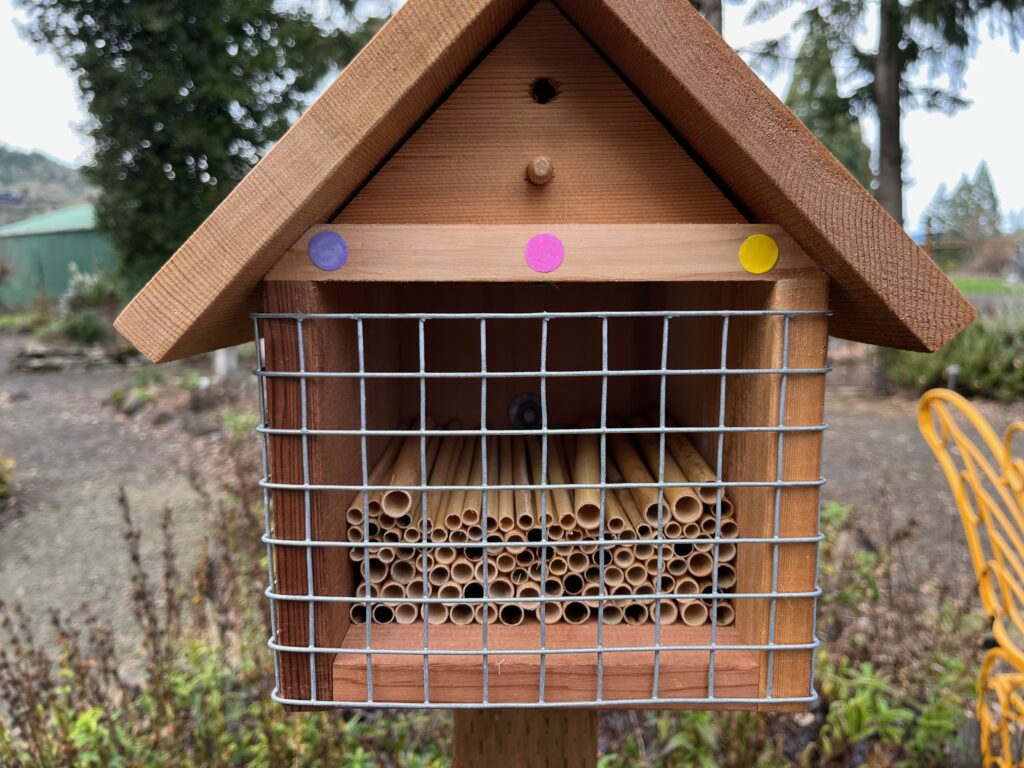
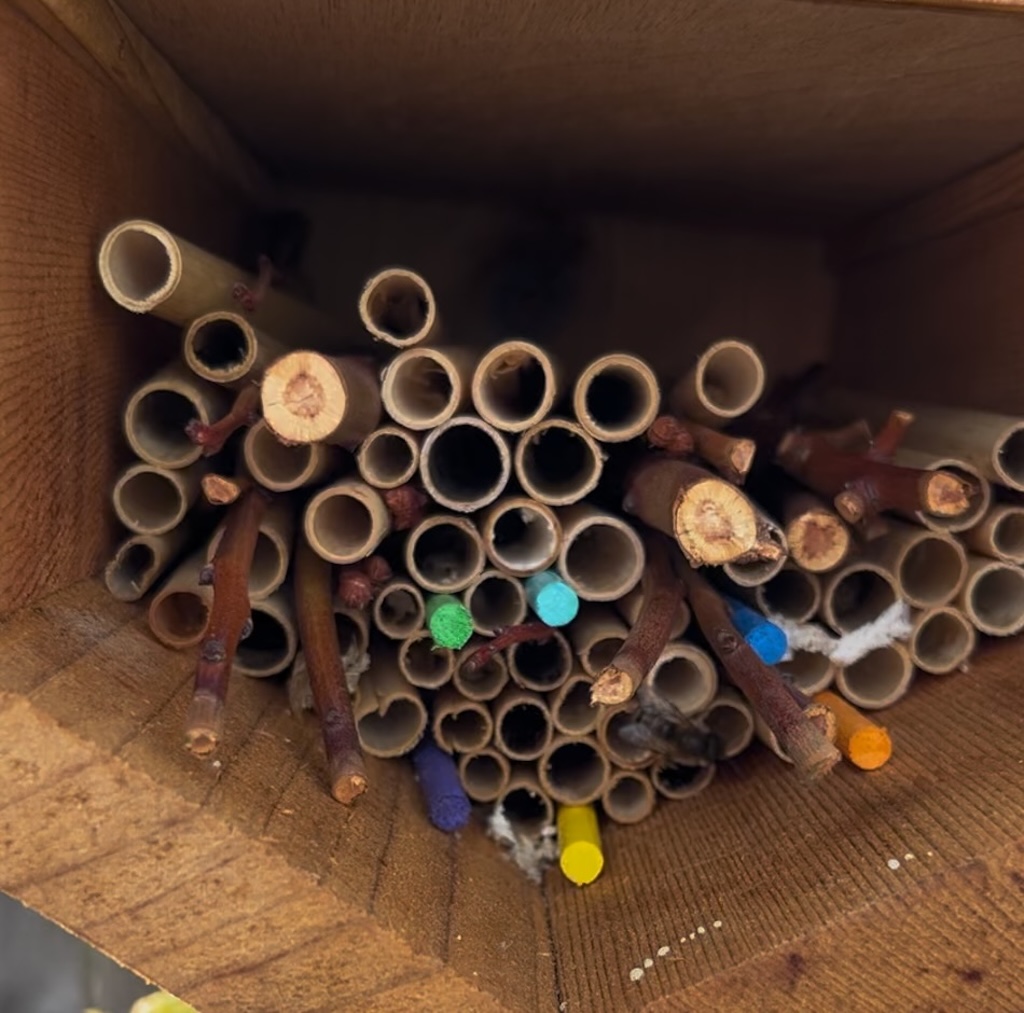
- Avoid houses made with glued-in bamboo tubes that can’t be removed, opened for cleaning, and replaced. Choose a house that has compartments deep enough to house replaceable 6 inch reed tubes, with enough overhang to keep the tubes dry. One that has a removable bird guard is a plus. Once removed, reeds are easily split open for cocoon harvesting. Cardboard tubes with replaceable paper liners are a less expensive option and also work well. The paper liners can be pulled out, allowing the tubes to be reused, unless pathogens were present.
Some houses will hold both blocks and reed tubes in a variety of circumferences, giving bees a choice.
Seasonal cleaning of the cocoons is also critical. Improperly built houses are impossible to clean. Skipping this step allows predators and pathogens to proliferate, decreasing the egg hatch rate to 30% compared with a 70% rate for properly managed bee houses.
Cleaning mason bee cocoons is not difficult, but requires a few hours, and the willingness to overwinter the cocoons in your refrigerator. Next month, I will detail the steps for this process. Increasingly some companies will do this step for you. You can send your filled reeds and tubes in for cleaning, and they will send you cleaned cocoons in time for next spring.
Gardeners who are unable to take on the responsibility for cleaning will be better bee stewards simply planting flowers and enjoying the mason bees that may just show up. But with a little investment in quality housing and responsible care, you can ensure mason bees will delightfully pollinate your garden for years to come.