

Published in the News-Review July 25, 2025
By: Julie Burchstead
Gardening Glory and Heartbreak
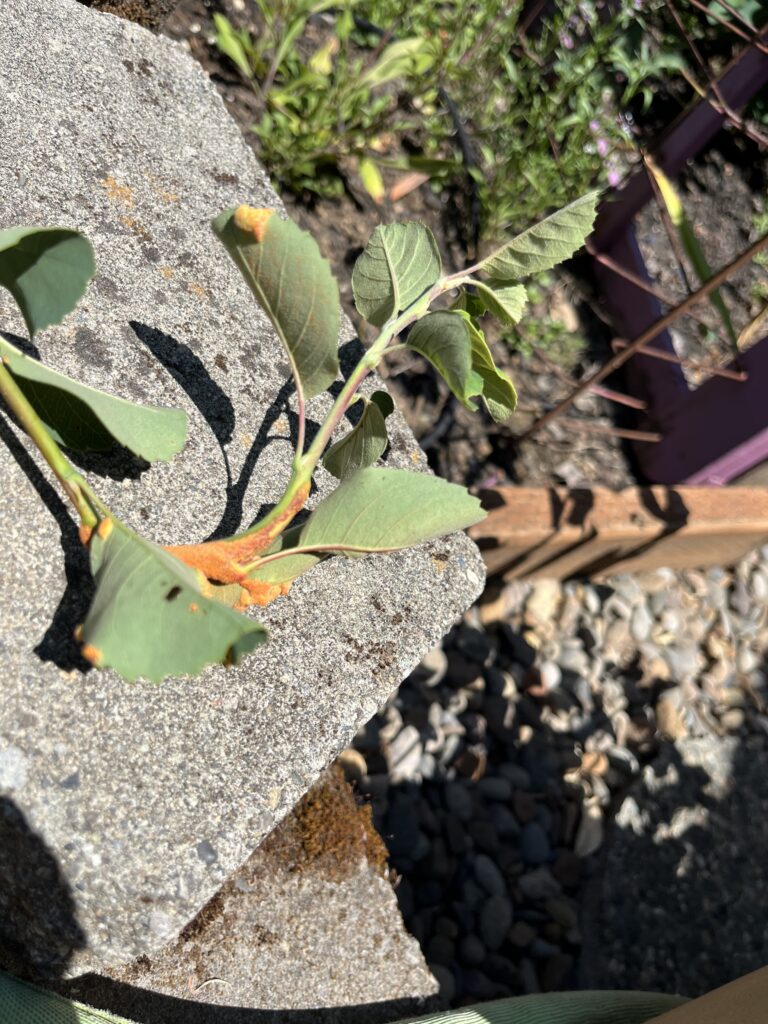
Question: Some of my serviceberry bush leaves and stems have bright orange lesions. What causes this?
Answer: It very likely could be a fungal condition called rust. I am seeing it on my bush this summer too. Though unsightly, rust generally won’t kill its host. But it can ruin the fruit, and if not dealt with, can spread to nearby pear trees.
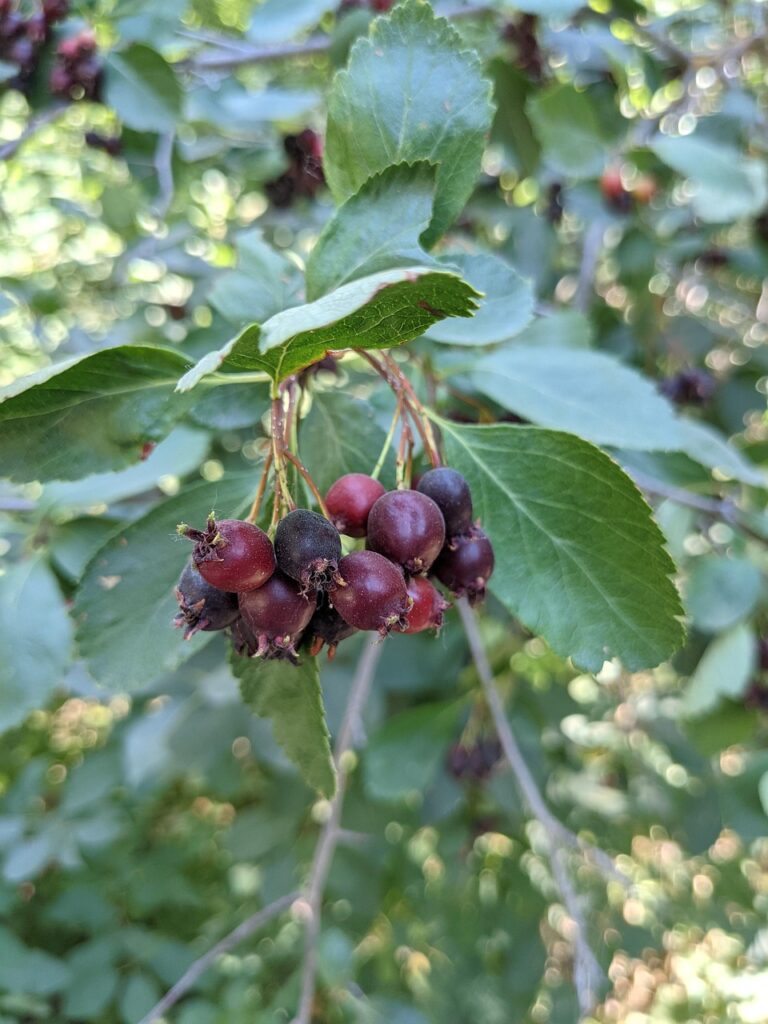
In mid-summer we often bask in the glory of gardening with an abundance of blooms and produce everywhere we turn. But this time can also bring heartbreak. Heat, drought, and pests can seem to thwart us at every turn. I have experienced my share of issues. Cucumber beetles chewed ragged holes in my Stella D’Ooros. And when that seemed to have passed, just as my serviceberry bush (Amelanchier alnifolia) was producing its best crop yet, rust reared its bright orange alien head, warping leaves and fruit alike.
The Gymnosporangium rust fungi attacking serviceberry plants usually begins in a Cedar host. One way to prevent rust is not to plant your serviceberry plants within 200 feet of rust carriers: trees and shrubs in the Juniperous family. But where there is cedar, plants in the Rosacea family, like serviceberry (which serve as the secondary host in the rust fungal cycle) are at risk. Serviceberry rust fungus can also spread to nearby pear trees. My espaliered pear tree is a mere ten feet from my serviceberry bush in my garden, so I got on mitigation right away.
Armed with pruners and a large garbage bag, I pruned away all leaves and branches showing signs of rust, carefully placing them immediately into the bag. Fortunately I caught it early, and I didn’t have to remove more than a third of the plant, giving my bush the best chance to recover. When I was done, I completely tied off and disposed of the bag in the trash and then cleaned my pruners with alcohol. Rust-infected plant material should never be left on the ground or put into compost piles or you risk spreading the infection. You can also spread it with dirty pruners.
Pruning seems to have stopped the issue. I have not seen any new lesions, and thankfully I also have not detected any spread to my pear tree, though I will keep monitoring the situation. Humidity caused by water on leaves in warm weather may encourage rust spores, so watering at the base of plants is best practice. Neem oil and copper spray may help when used as directed. Though fungicides exist that will prevent rust infection on new growth, they are not recommended for use by the home gardener. Fungicides do not cure existing rust infection, are expensive, and highly toxic to people. In the home garden, for a plant with a severe case of rust untreatable by pruning, removal, careful disposal, and replacement are recommended.
Gardens are places of heartbreak and glory. Of course it would be the season you start all your own tomatoes from seed, carefully nurturing them from greenhouse to garden, that a mob of adolescent deer munch your vines to nubs, just as they were ready to trellis! Or the week your serviceberry reaches full fruit that rust attacks out of nowhere. As gardeners, whenever we feel we might have it all together, nature reminds us we are in control of very little. Therein lies the heartbreak. But If we did not garden, there would not also be glory, like the sweet-tart perfection of a marionberry dangling just within reach – a juicy bite of pure summer joy. Fellow gardeners, may your heartaches be few. And may they be balanced always by glory.
Do you have a gardening or insect question? Contact the Douglas County Master Gardeners at douglasmg@oregonstate.edu or 541-672-4461 or visit 1134 SE Douglas Ave., Roseburg. Douglas County Master Gardeners are trained volunteers who help the OSU Extension Service serve the people of Douglas County.