

Published in the News-Review August 1, 2025
By: Chris Rusch
The Peanut Butter Tree: A Fun Tree for Any Landscape
Question: When visiting the Splash Pad at Fir Grove in Roseburg I noticed a beautiful tree that had a strong fragrance of peanut butter. Can you tell me more about this lovely tree?
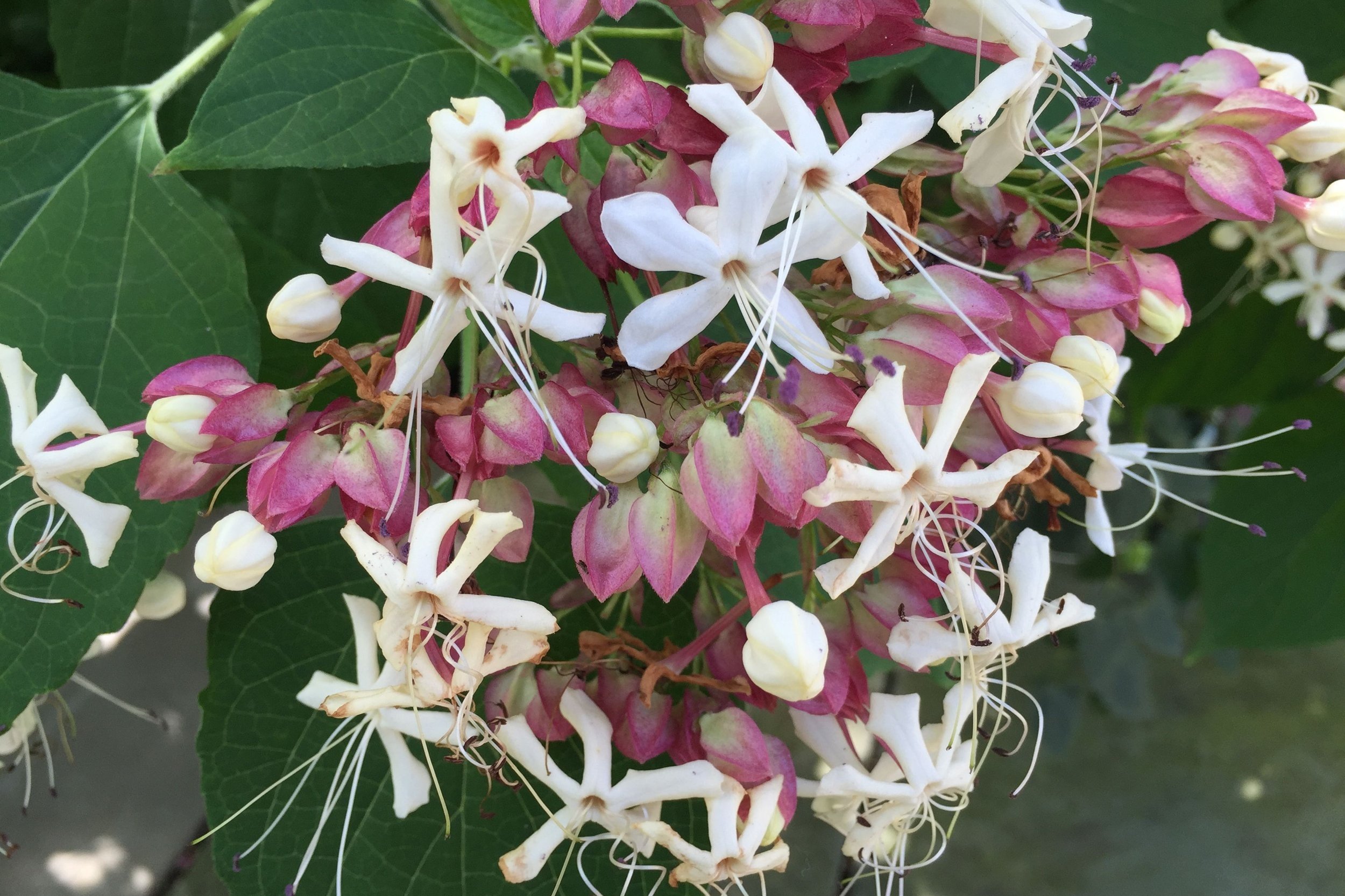
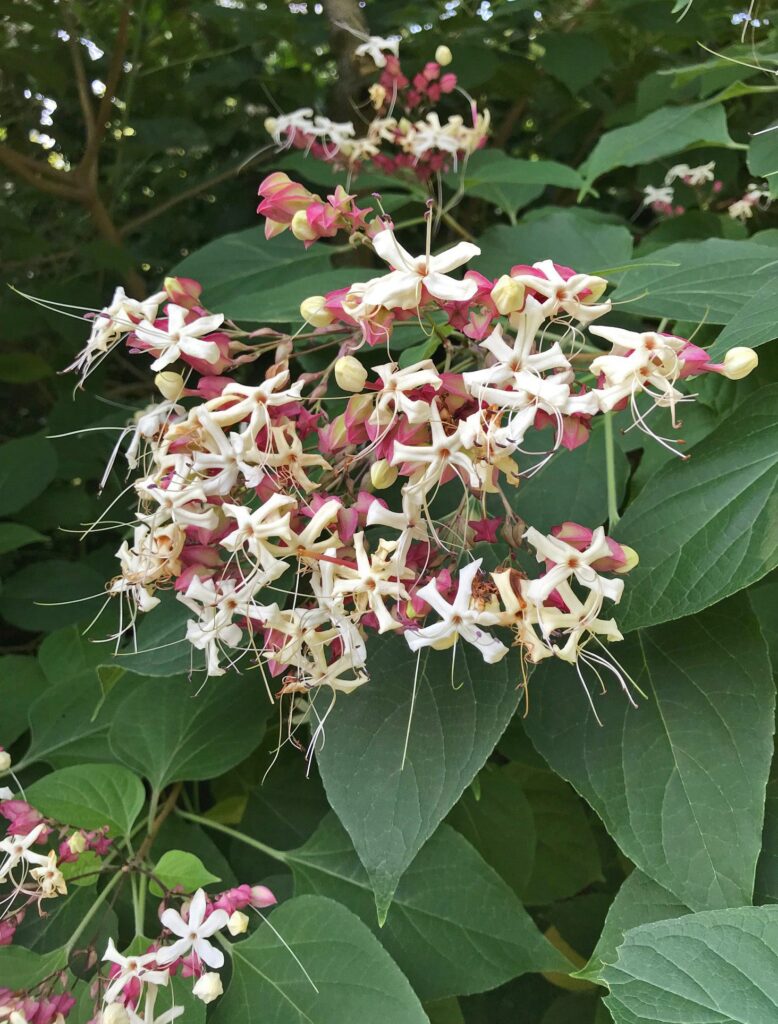
Answer: The Harlequin Glorybower, also known as the Peanut Butter Tree, Fate Tree, and Glory Chain is a member of the family Verbenaceae, species Clerodendrum trichotomum. It is a small tree, growing 15-20 feet tall, and known for its unusual peanut butter scent emitted from their large dark green, velvety, ovate leaves. In midsummer, the tree is festooned with cascades of delicate, showy flowers and vibrant blue, metallic-looking fruit making the peanut butter tree a unique and beautiful addition to any landscape.
Clerodendrum trichotomum has a history rooted in East Asia, particularly China, Japan, and Korea. The genus name, Clerodendrum, comes from the Greek words’ “kleros” (chance or destiny) and “dendron” – tree. While native to East Asia, C. trichotomum has naturalized in some regions of the southeastern United States and New Zealand.
The peanut butter tree, Clerodendrum trichotomum, should be planted in an area that receives full sun, but in hotter areas, some afternoon shade would be beneficial. At least six hours of direct sunlight is ideal for yielding large flowers and berries. The peanut butter tree prefers a rich, loamy, slightly sandy, well-drained soil that retains some moisture. You can amend the soil with organic matter for best results. Persistently soggy soil can cause root rot and other damage, so be mindful when choosing a planting location. Avoid planting peanut butter trees at the bottom of hills or in areas where your yard collects standing water after heavy rainfall. Since these trees are usually drought-tolerant, they don’t require much watering, except during dry spells in spring or summer, in which case they may benefit from an irrigation system. About 1 inch of water per week is sufficient. This species grows profusely and sometimes aggressively, so it does best when given plenty of space in the yard.
You may find that your peanut butter tree benefits from a light application of water-soluble fertilizer in spring to promote more abundant flower blooms and berries. For the amount to use, follow the product label instructions. Stop fertilizing once the flowering period is over. Opting for a fertilizer high in phosphorus (like a 10-30-20 ratio, for example) will help boost blooming.
The peanut butter tree should be pruned in late winter or early spring to remove dead, damaged, or crossing branches and to shape the plant and remove suckers.
It is easiest to purchase your peanut butter tree from a local garden center as a tree or seedling. However, the peanut butter tree can also be propagated by semi-hardwood cuttings in the spring or summer. To propagate successfully, select healthy, vigorous shoots from the current season’s growth, remove lower leaves, dip the base in a rooting hormone, and plant in a well-draining medium, burying about 2 inches deep. Aim for cuttings around 6 inches long. Create a humid environment by covering the cuttings with a plastic bag or dome to reduce water loss. Place the cuttings in bright, indirect light, avoiding direct sunlight. When the cuttings have been rooted, transplant them into larger containers. It may take a couple of years before your tree is ready to transplant out into your yard.
The peanut butter tree is great for pollinators, particularly bees and butterflies. It attracts these insects with its profusion of fragrant, white, late summer flowers. The flowers have a bright red calyx and a blue fruit, making them visually appealing as well. In addition to bees and butterflies, hummingbirds are also known to visit the flowers for nectar.
The peanut butter tree is usually disease and pest-free, and somewhat deer resistant.
There are several varieties of peanut butter trees to choose from. Some recommended varieties for our area include:
- Clerodendrum trichotomum ‘Betty Stiles’:Offers fragrant pink flowers
- Clerodendrum trichotomum ‘Stargazer’:Produces white flowers and foliage with a wide yellow margin
- Clerodendrum trichotomum var. fargesii:Pink buds open into clusters of fragrant, star-shaped white flowers
- Clerodendrum trichotomum var. fargesii ‘Carnival’:Produces white flowers with outer red petals
In mid-summer and fall the peanut butter tree adds a striking show in your yard when other woody plants are not in bloom. In the fall, Clerodendrum has a wonderful effect. The flowers turn into a very interesting seed pod, bright purplish-blue berries adorned by thick star-shaped red calyces. In addition, the foliage changes into a beautiful yellow fall color. A showstopper indeed! It can be used as a specimen tree, a hedge for privacy screening, in a shrub border or along the margin of a woodland garden.
Do you have a gardening or insect question? Contact the Douglas County Master Gardeners at douglasmg@oregonstate.edu or 541-672-4461 or visit 1134 SE Douglas Ave., Roseburg. Douglas County Master Gardeners are trained volunteers who help the OSU Extension Service serve the people of Douglas County.