

Published in the News-Review August 8, 2025
By: Janet Bitter
Question: Can you please clarify when a plant needs to be pinched? Also, what is deadheading and why would I do that?
Answer: Pinching and deadheading are both pruning techniques used to improve a plant’s health and/or appearance. Now that we are in the middle of summer, you probably won’t be pinching many plants, but you may wish you had, as I will explain!
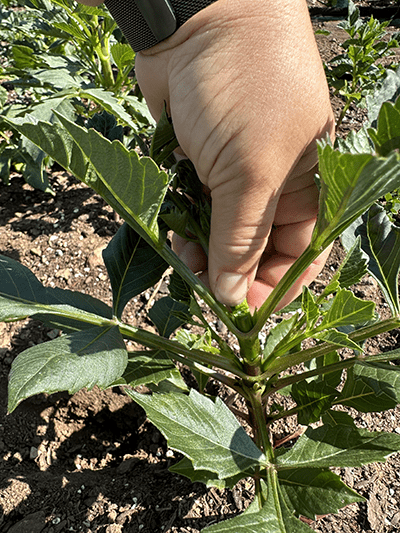
Pinching encourages side shoots and a bushier appearance by removing the plant’s dominant growing shoot (the apical meristem). When this dominant shoot is removed, it causes the plant to release auxin, a hormone that promotes growth in the axillary buds, resulting in the branching of side shoots. Many annuals, as well as some vegetables and perennials, benefit from a pinch when they are young plants (typically 4-6’ high). Some gardeners use their thumb and forefinger to pinch off the tender growing shoot, hence the name. I prefer to use a sharp pair of snips if I’m doing a lot of pinching.
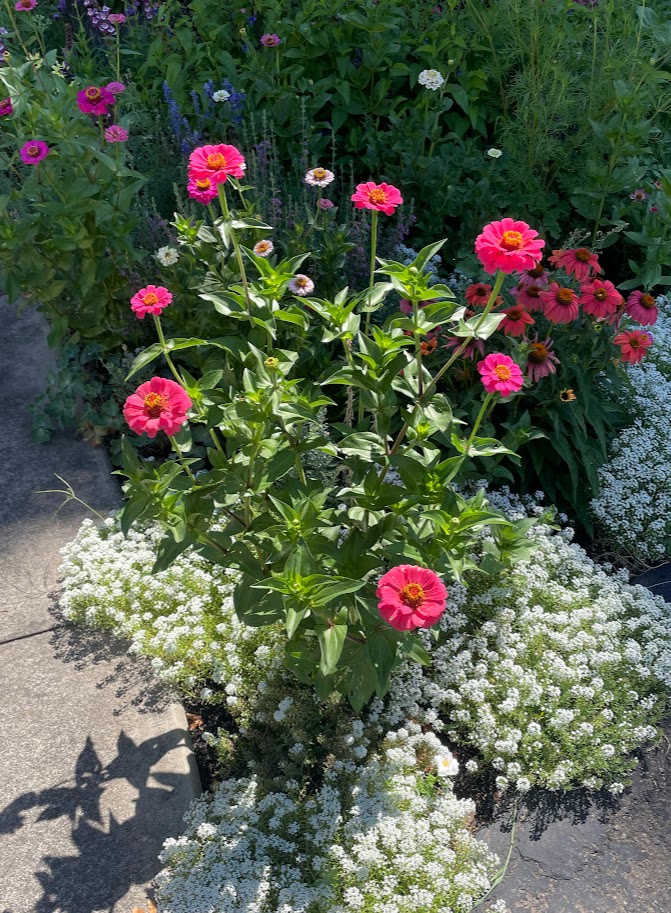
We are past the ideal time for pinching most plants now unless you have succession-sowed some summer annuals and they are only 4-6” tall. If you don’t pinch your zinnia, for example, it will produce one flower (think lollipop-style!) and then some of the shoots below that will eventually branch out. Remember to pinch next year when your plants are young and you will have more flowers with longer stems, ideal for cutting or just filling out your garden beds.
Some of the more common flowers that benefit from pinching: dahlias, zinnias, cosmos, marigolds, coleus, petunias, plume-type celosia. One basic rule is if a flower is single-stemmed, do NOT pinch. This would include most sunflowers, delphiniums, foxglove, and poppies, to name a few. Petunias can benefit from harder pruning if they get leggy in mid-late summer. Cut them back to a set of leaves by the main stem and water and fertilize well to promote new, bushier growth. Basil is one herb that comes to mind that benefits from a good pinch when young.
Now, on to deadheading. No, it’s not a title to some horror flick! The basic definition means to remove spent flowers from a plant. You do this for several reasons: to improve the appearance of your plants, to prevent seed production, and to focus a plant’s energy into producing more flowers. For this you will use your garden snips and cut the spent flower just above its first set of full leaves. Although almost all flowers benefit from deadheading, be sure to keep up with it on these: cosmos, roses, salvia, marigolds, bee balm, zinnias, and yarrow.
Remember, when you remove the flower, you are removing the seed that would form from that flower. If you have a self-seeding variety that you want to make a seed head, you would not deadhead that flower. Some of the more common flowers that are self-seeders are foxglove, hollyhock, columbine, and poppies. Plant breeders have selected newer cultivars that are easier to take care of and bloom prolifically, minimizing deadheading. Try the Supertunia petunia series or one of the million bells (Calibrachoa).
As we get more towards autumn, there are a few plants I never deadhead as their seedheads provide a source of food for birds and wildlife over the winter. Two common plants to leave for winter interest/food are Echinacea (coneflowers) and Rudbeckia (black-eyed Susan).
Neither of these tasks should add a lot of work to your garden chores, especially if you spend a little time frequently. Some people find deadheading to be “meditative and therapeutic” (not my words, saw this during some research for this article!). Taking a morning walk around your yard with a cup of coffee in hand and clipping some of the spent flowers can be a relaxing way to start your day. At any rate, you will get up close to your plants and can spot any other issues they might have. Happy gardening!
Do you have a gardening or insect question? Contact the Douglas County Master Gardeners at douglasmg@oregonstate.edu or 541-672-4461 or visit 1134 SE Douglas Ave., Roseburg. Douglas County Master Gardeners are trained volunteers who help the OSU Extension Service serve the people of Douglas County.