
Published in the News-Review September 5, 2025
By: Chris Rusch
Growing beets for Fall harvest
Question: What can I plant now in my garden for fall and winter harvest?
Answer: The benefits of growing your own vegetables can offer many rewards. There are many vegetables that can be planted now for harvest in the fall or winter. One of my favorites for late season crops is beets.
Beets originate from the wild sea beet (Beta vulgaris subsp. maritima), a plant that grew naturally along the coasts of the Mediterranean Sea and North Africa. Ancient peoples, including the Greeks and Romans, initially cultivated the sea beet for its edible leaves. Over time, particularly after the Romans cross-bred varieties around 200 AD, the taproot grew larger and more bulbous, leading to the modern beet we recognize today. The cultivation and use of beets, including both leaves and roots, spread throughout Europe during the Middle Ages. Beets were brought to America by early settlers and were a crop grown in places like George Washington’s garden at Mount Vernon. The sugar content in beets was recognized in the 18th century, leading to the development of sugar beets in the 1700’s.
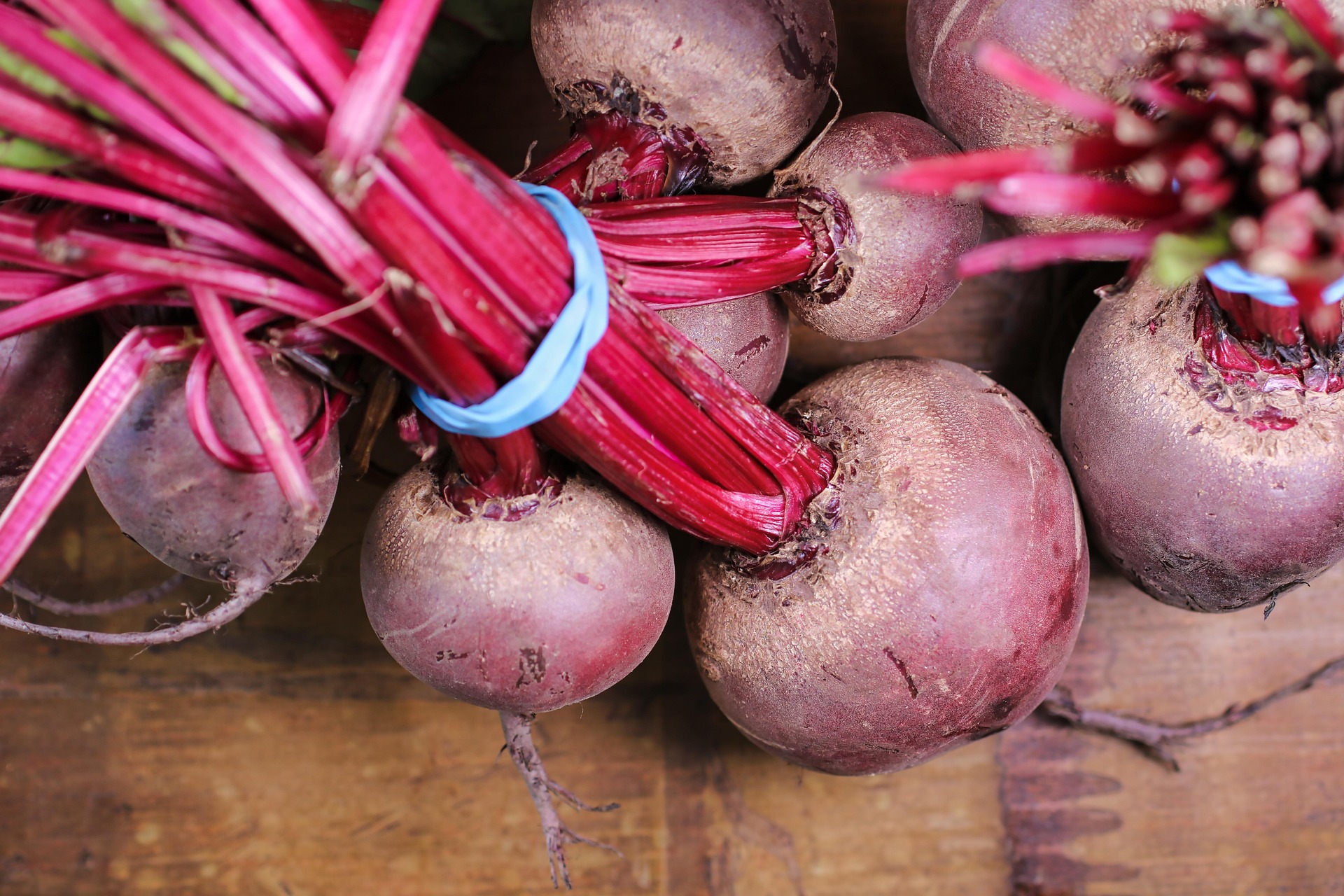
The beet (Beta vulgaris) is a sweet, earthy, nutrient-dense root vegetable (also called beetroot) that belongs to the same family as Swiss chard (Amaranthaceae). Beets are rich in vitamins, minerals like folate and potassium, and antioxidants, offering various health benefits such as reduced inflammation and improved heart health. Beets can be eaten raw, cooked, juiced, or pickled.
Beets come in many colors, most commonly red, but also golden/yellow, white, and striped (Chioggia or candy cane) varieties. Each color has a unique flavor, with red beets being earthy and potent, and golden beets generally being sweeter and milder.
Beet varieties recommended for fall planting in our area are Albina, Lutz Green, Verduna, Zeppo, and Winterkeeper.
Choose a site that gets at least six hours of direct sunlight each day. Take advantage of structures such as south-facing walls or fences that reflect and hold heat longer. Raised beds, made with wood structures or made simply by mounding soil, hold heat longer in the fall. Be sure that your site is protected from strong winds and that the soil has good drainage. Next, prepare your soil by removing any rocks and weeds, and amend the soil as needed. Clay soil can be improved by adding organic matter. Apply a low-nitrogen fertilizer to focus growth on roots and fruit, not on leaves. Ensure your beds have at least 15 to18 inches of loose soil to allow adequate room for root growth and water distribution.
Like many root vegetables, beets do not tolerate transplanting very well, so your best bet is to sow them directly in the garden. The seeds are relatively slow growing. They take up to 21 days to germinate and reach harvest anywhere from 45-90 days, depending on climate and the variety. For a better rate of germination, soak beet seeds in water for 24 hours before planting.
Sow seeds 1/2-inch deep and one inch apart (farther apart in partial shade) in the planting row, or broadcast 8-9 seeds in each square-foot block. Cover the seeds with soil and pat down firmly. Using a gentle spray, water the seeds well, and keep the soil moist until the seeds have germinated. Once the seedlings have grown to about four to five inches high, mulch in between the rows to help retain moisture and keep weeds down.
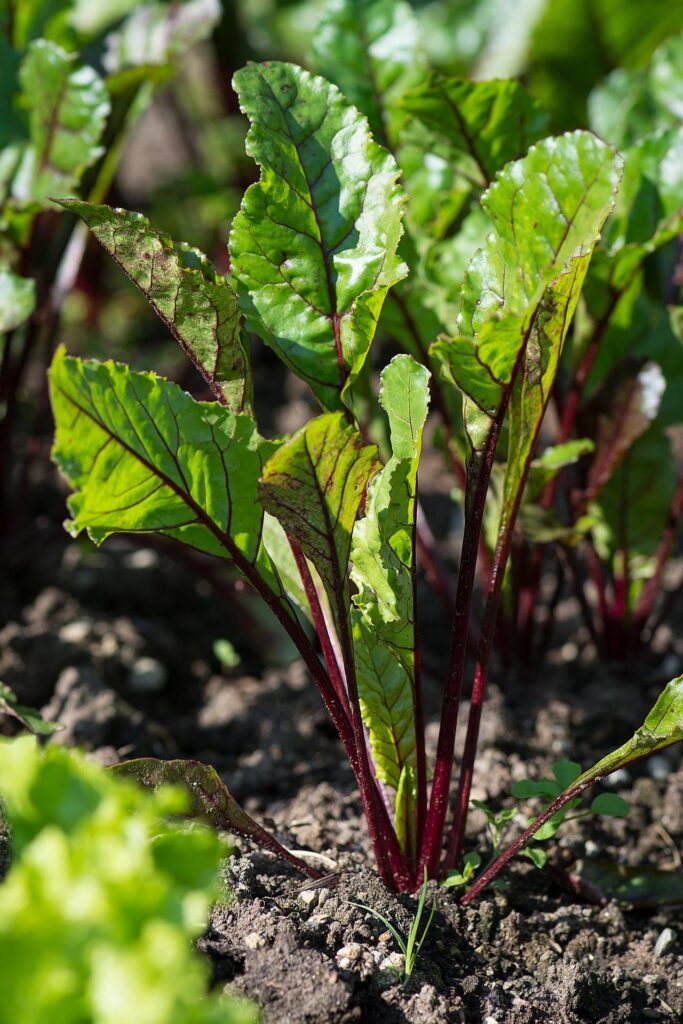
Did you know that beet seeds contain three seeds within the seed shell? This means that thinning the seedlings is crucial to keep good spacing between the plants. When the seedlings have reached three inches tall, thin the seedlings to four-inch spacing. If you’re growing in shade, I’ve found that six-inch spacing works better.
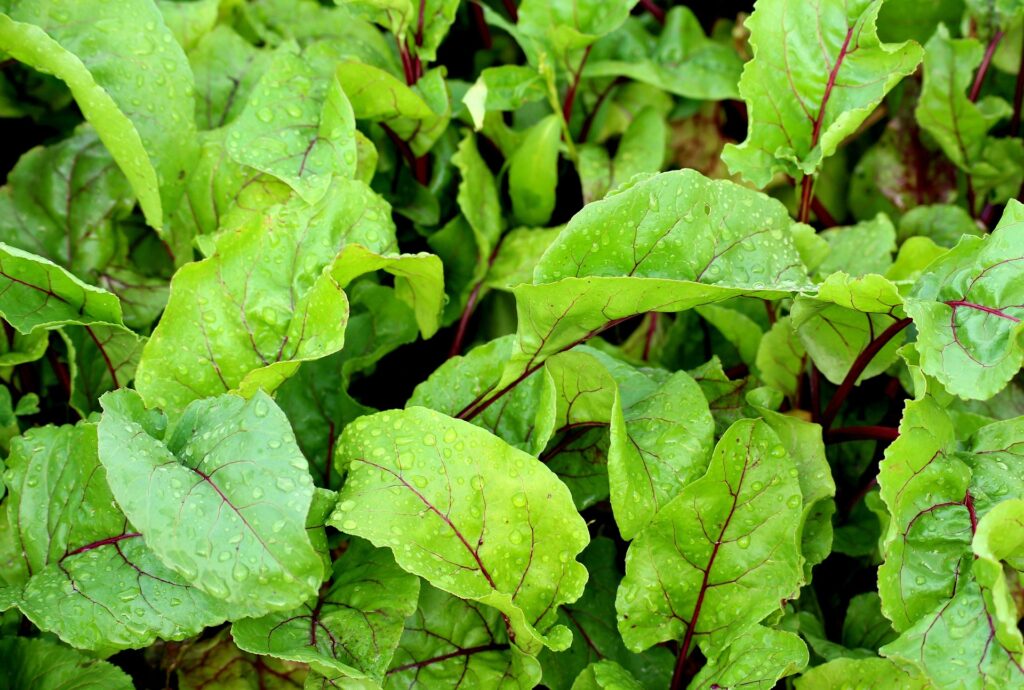
Your beet crop will yield a beautiful two-for-one harvest: Nutritious greens as well as nutrient dense roots. This makes them an efficient way to grow more produce with less work and with less space! Harvest your beets when the “shoulder” (the top part of the beetroot) sticks out above the soil. They will have the best flavor if harvested after a light frost at around golf ball size. For longer storage, harvest a little larger at tennis ball size. Cut the beet greens about one inch above the root top and store in plastic in your refrigerator for later steaming or use in salads.
Growing your own beets will lift your gardening spirits! These vibrant root veggies aren’t just pretty—they’re fast-growing, frost-hardy, and edible from root to leaf.
Do you have a gardening question? Please email, call, or visit the Douglas County Master Gardener Plant Clinic at douglasmg@oregonstate.edu, 541-672-4461, or 1134 S.E. Douglas Ave., Roseburg. Douglas County Master Gardeners are trained volunteers who help the OSU Extension Service to serve the people of Douglas County.