

Published in the News-Review September 12, 2025
By: Janet Bitter
Suggested title: “Please don’t wake the bumble bees!”
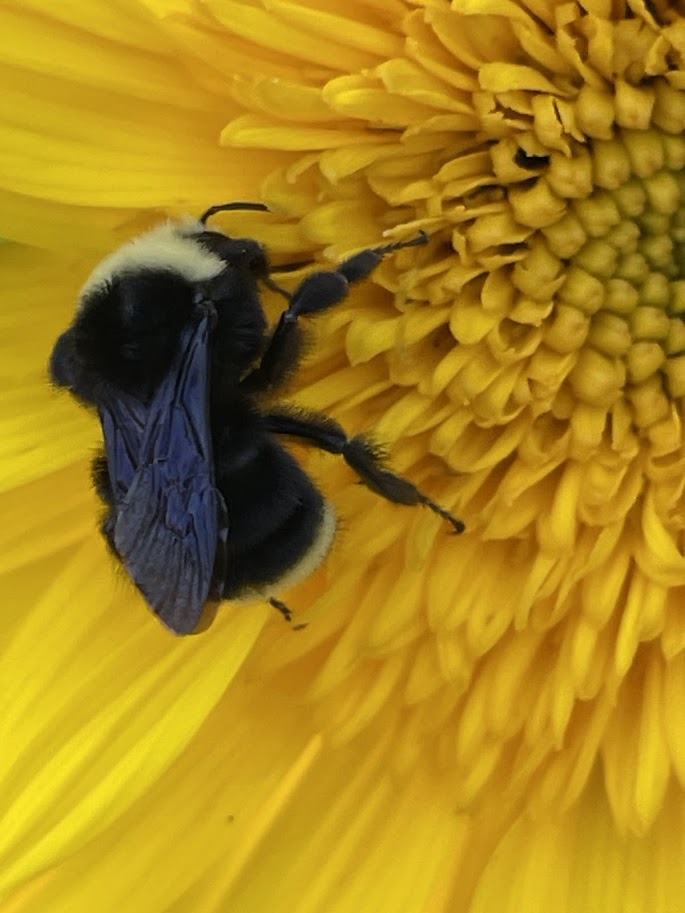
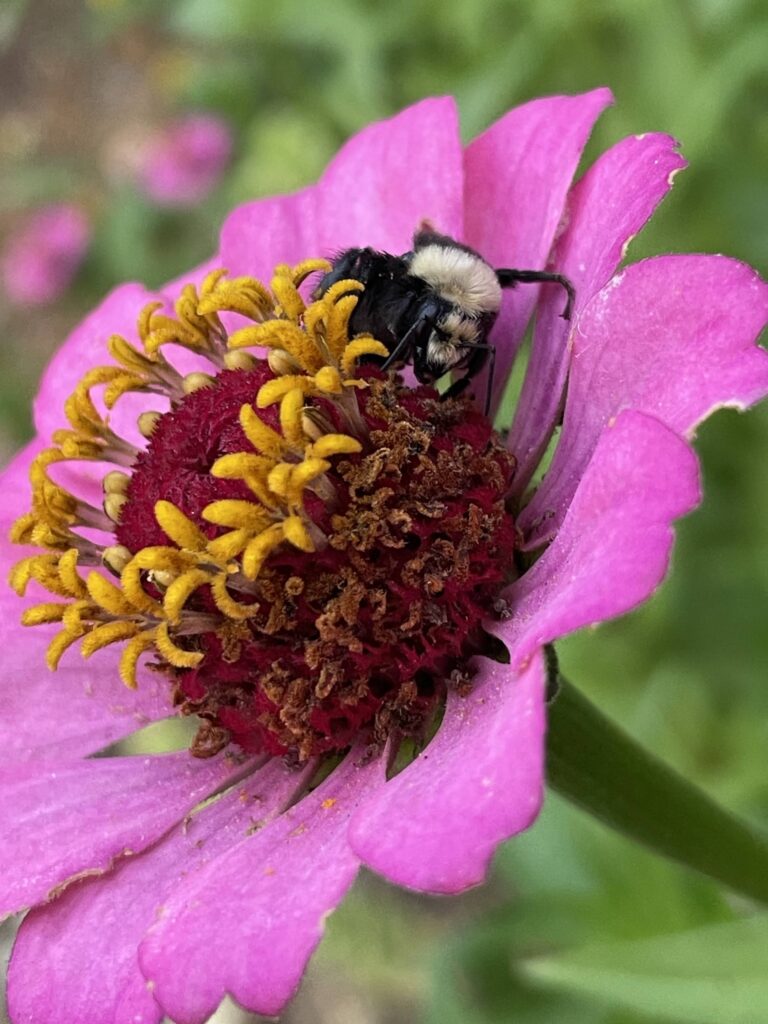
Question: When I go out early in the morning to work in my garden, I notice bumble bees that appear to be sleeping in some of my flowers. Are they asleep? Why are they there?
Answer: You have discovered one of my favorite garden sights—sleeping bumble bees! Yes, they are sleeping in your flowers. My granddaughters were enchanted when I showed them the sleeping bees this summer. As to why they are sleeping, it is important to know a little about bumble bees and their life cycle to understand their habits.
Bumble bees belong to the genus Bombus and are part of the bee family (Apidae). The name Bombus is derived from the Latin word meaning a buzzing or humming sound. There are 250 species of bumble bees worldwide, with about 30 species native to the Pacific Northwest. Several of the more common species in our area are the yellow-faced bumble bee, the Nevada bumble bee, and the white-shouldered bumble bee. They have large, fuzzy bodies and usually have coloration meant to warn—like contrasting bands of yellow and black.
They are extremely important for pollination. In fact, they do a better job of pollinating some crops than honey bees due to their fuzzy bodies collecting so much pollen. They depend on flowers for nourishment—nectar for carbohydrates and pollen for protein. One other interesting fact about bumble bees is that the workers don’t specialize in tasks like honeybees do: they all may forage for nectar, collect pollen, or help in brood rearing.
Should you be afraid of bumble bees? They can sting; however, most species are considered very mild in temperament. They are not going to sting unless their nest is seriously disturbed or you accidentally trap one in your clothing. Act calmly in their presence and if you happen to find a nest in your yard, just avoid that area. Unlike honey bees, the stinger is not barbed so they are capable of stinging more than once.
Bumble bees undergo a complete metamorphosis (like a butterfly)—egg to larval to pupal to adult stage. In Spring, the colony starts anew from an overwintering young queen that mated the previous summer. Queens come out of hibernation in late winter but don’t look for a nest area until enough flowers (food) are in bloom (late February to March). The queen will establish a nest either above or below ground in old mouse or bird nests, insulation, or anywhere there is dry, fluffy nest material.
The queen lays eggs in the new nest and that brood becomes the first worker bees in that colony. There will be subsequent worker bees raised, but the colony size is much smaller than honeybees—usually several dozen to several hundred bumble bees in a colony. The final generations raise new queens and drones (male bees) for next year’s colonies. These young queens and drones leave the nest, mate, and the cycle repeats itself as the young queen hibernates. At the end of the summer, the male bumblebees, old queen, and worker bees all die. Since the colony does not survive over winter it only produces enough honey to get through the season—in other words, you won’t find giant honeycombs if you discover a nest in an inconvenient location.
So, back to our original question: why are there bumble bees sleeping in your flowers? Well, the males are kicked out of the nest and need somewhere to shelter towards the end of summer. Sometimes tired foragers will also seek the warmth and protection of flowers overnight. I like to think of my flowerbeds as the original air BnB! Once the sun hits them in the morning and they get warmed up, they will continue their foraging. I never get tired of seeing them nose-down in my flowers. (And I have never experienced any aggressive behavior even when I’m out cutting or deadheading my blooms—I do try not to wake up any sleepyheads, though!)
It is important that our native bumble bees have a habitat that allows them a place to rear their young, a place to get food, and a place to overwinter. They can forage up to a mile from their nest so a neighborhood can cooperatively provide all three needs. You can help by planting a variety of flowers (or flowering vegetables); leaving debris like leaves, twigs, and hollow stems on the ground for overwintering; and not using pesticides while plants are blooming. We need pollinators for our food crops and bumble bees are great pollinators! Just let them get their zzzzz’s!!
Do you have a gardening or insect question? Contact the Douglas County Master Gardeners at douglasmg@oregonstate.edu or 541-672-4461 or visit 1134 SE Douglas Ave., Roseburg. Douglas County Master Gardeners are trained volunteers who help the OSU Extension Service serve the people of Douglas County.