

Published in the News-Review February 13, 2026
By: Mackenzi Hall
Question: The gray days of winter have me down. Do you have any suggestions of plants that would bring color and life to my yard sooner than the usual spring varieties?
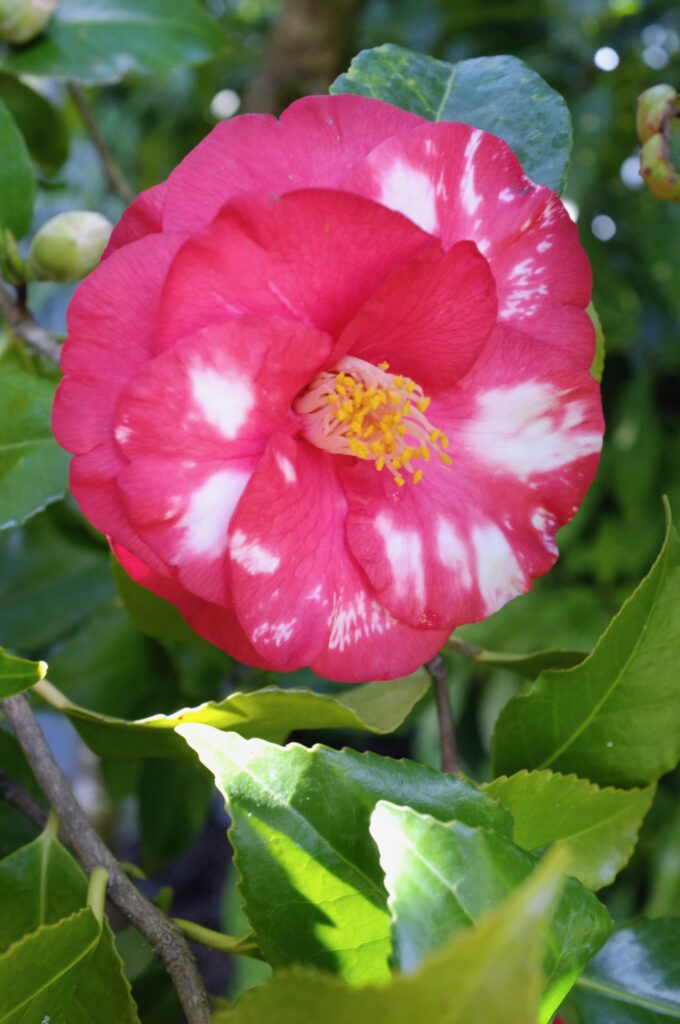
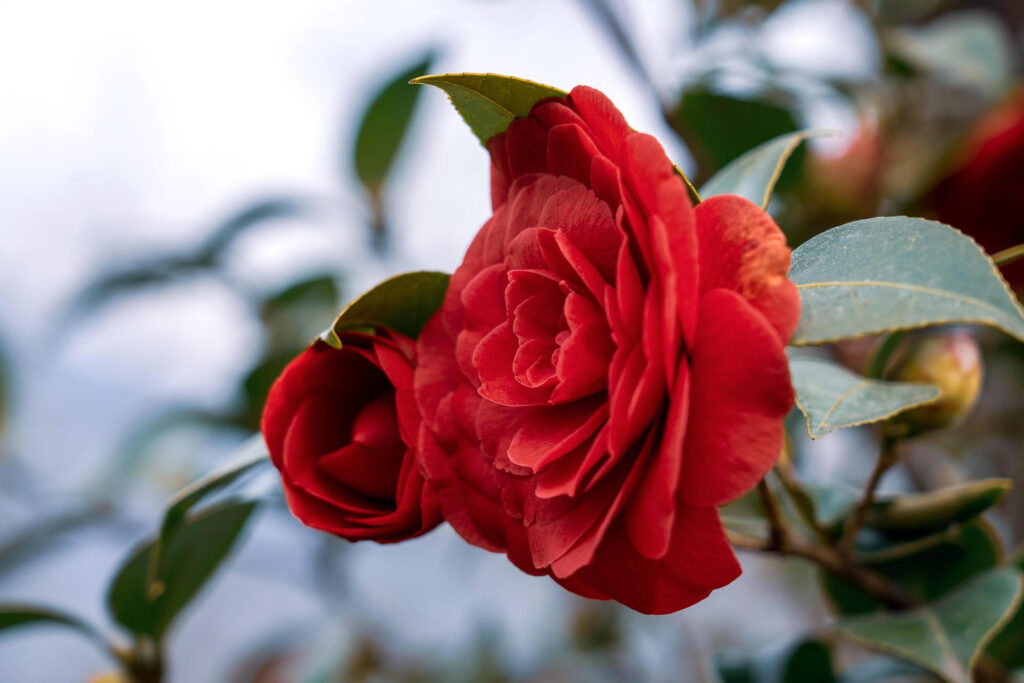
Answer: Have you noticed the pops of red, pink, and white flowers appearing around town? While the majority of plants are still in their winter slumber, camellias have emerged bringing promise that spring is just around the corner. Whether nestled beneath the trees or set as the centerpiece of a carefully designed flower garden, camellias can captivate the senses, provide a piece of history to your landscape, and reward a home gardener with beautiful color well before the last frost.
One of the greatest aspects of camellias is the variety they offer. They can range in color from pure white to dark crimson and can form blossoms from delicate, single petals or lush doubles. Their blooms can appear in early autumn and continue well into spring, depending on the species and cultivar. This extended growing season means that, by doing your research, you can have a flower bed that continuously blooms even in the colder months of the year.
Unlike many flowering shrubs that fade away once their blooms are gone, camellias maintain their presence all year. Their glossy, dark, evergreen leaves form a dense backdrop for your garden even in the depths of winter. This quality also makes them great for creating privacy screens, hedges, or simply giving your flower beds reliable color and texture.
Camellias are also remarkably adaptable. While they prefer acidic, well-drained soil and dappled shade (think where you would normally see a rhododendron), they can thrive in a variety of conditions with little care. Here are a few tips to keep them at their healthiest:
- Avoid planting them in spots exposed to harsh sun, as this can scorch their leaves and cause blooms to wither prematurely.
- The buds and flowers are fairly delicate, so they need to be kept out of windy areas.
- You should have a soil pH between 5.5 and 6.5. You can have your garden soil tested by the Master Gardeners at the Douglas County Extension Office. If you need to amend your soil, you can do so with organic matter like leaf mulch and pine needles.
- Regular mulching will keep their roots cool and moist, but keep the mulch away from the base of the plant in order to prevent rot.
- If shaping is needed, prune right after the blooms are spent in order to avoid cutting off next season’s buds.
Today, growing camellias in your own garden is a way to connect with living history. In Asia, where they are native, camellias have long been symbols of love and longevity and, Camellia sinensis is regularly used in green and black teas. Each blossom serves as a reminder of the flower’s journey through the centuries, adding a sense of depth and meaning to your landscape – even in the dreary days of winter.
Do you have a gardening or insect question? Contact the Douglas County Master Gardeners at douglasmg@oregonstate.edu or 541-672-4461 or visit 1134 SE Douglas Ave., Roseburg. Douglas County Master Gardeners are trained volunteers who help the OSU Extension Service serve the people of Douglas County.