
Published in the News-Review February 20, 2026
By: Julie Burchstead
Question: A couple weeks ago I saw a bumblebee out and about. Don’t they usually hibernate? Are there things I can plant in my yard to support them when nothing much is blooming?
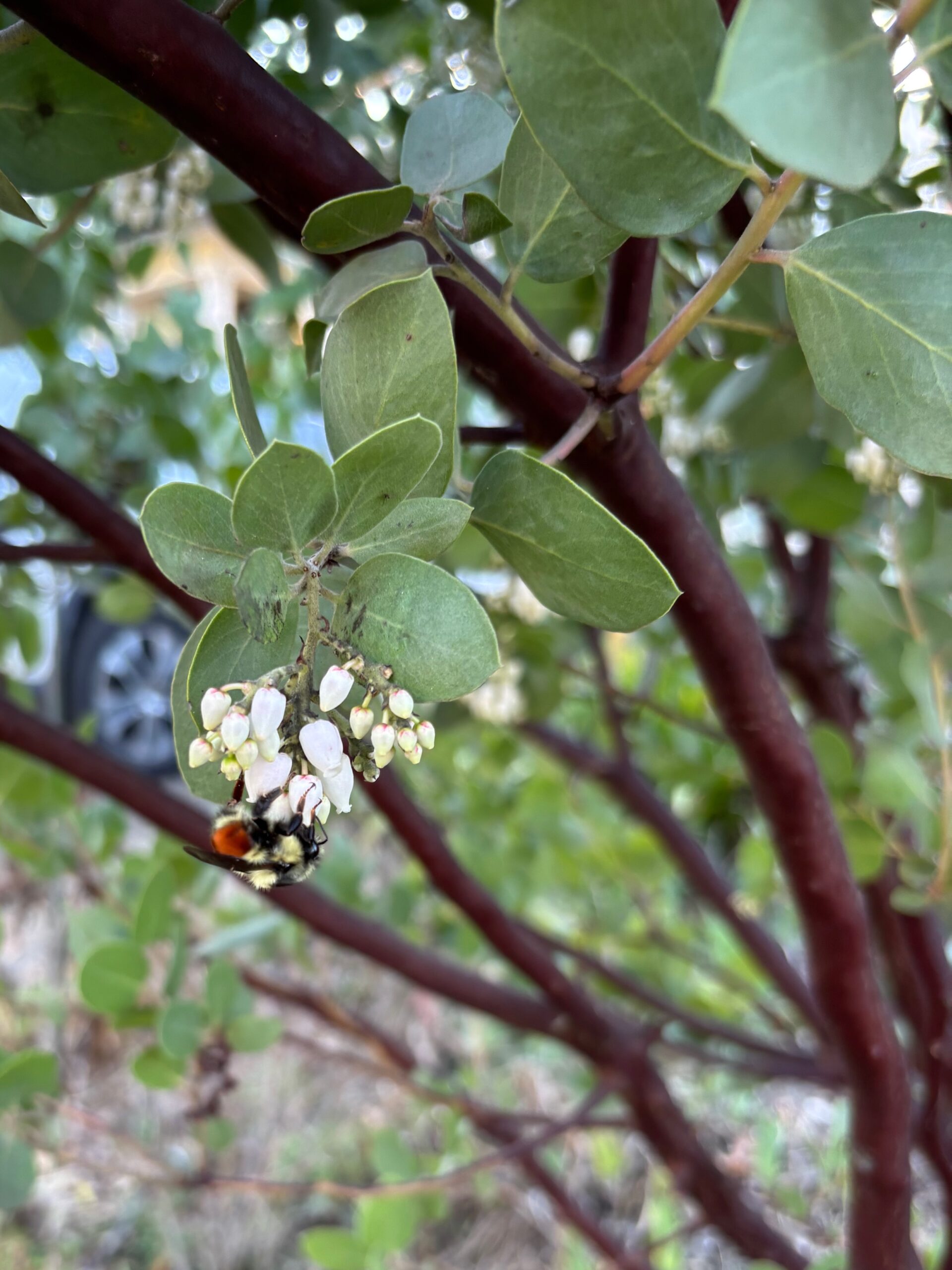
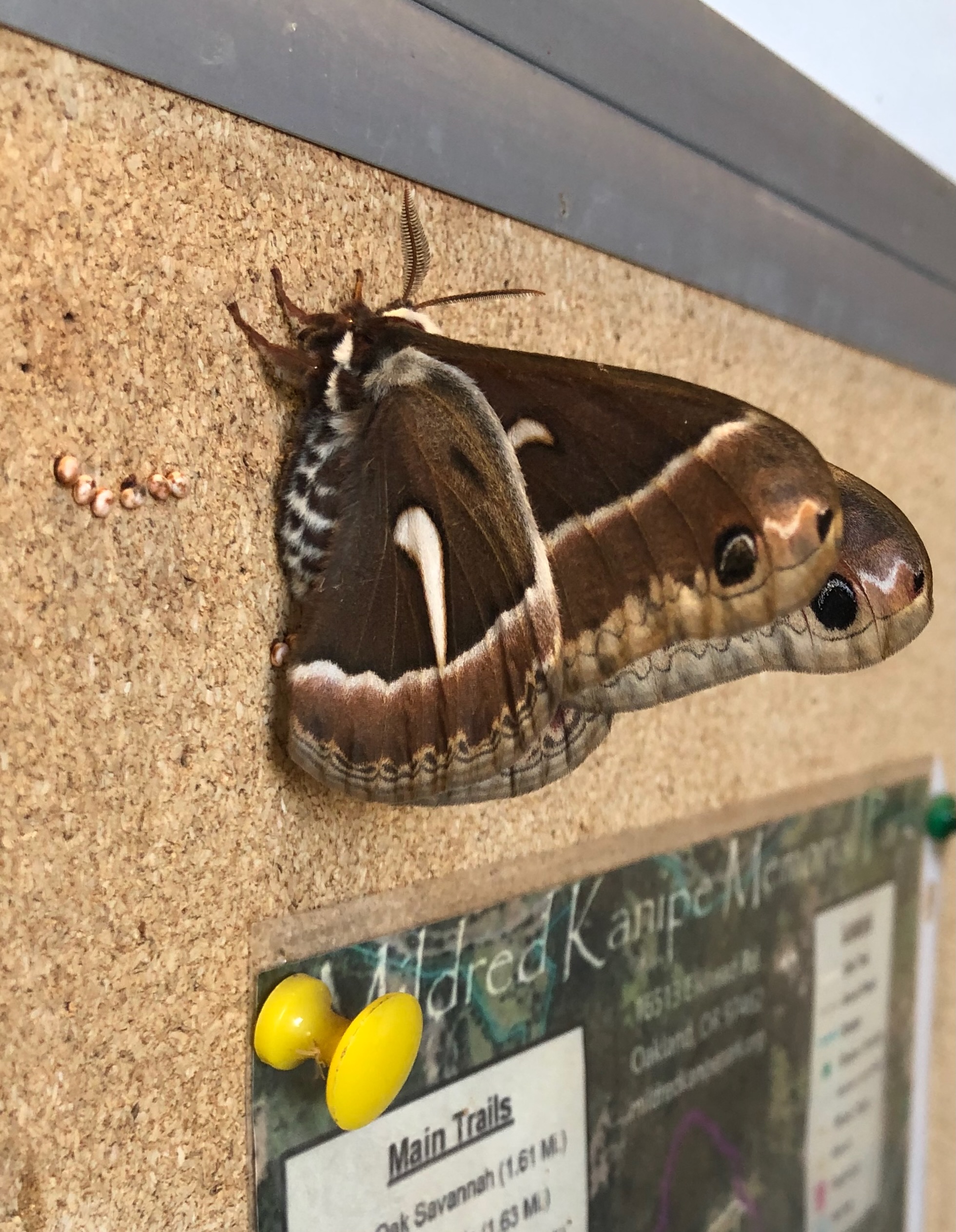
Answer: Yes, and you will want to think “native”. Though honey bees and some adult native bees are generalized feeders (can use nectar and pollen from a wider range of plants), many of our native pollinators, moths, wild bees, and butterflies, especially in their larval stages, are dependent on specific plant families, or even single plant species – relationships that have been developed over thousands of years of coexistence. Even though native pollinators and birds may be attracted to non-native plants, sometimes, due to tongue length, plant toxin incompatibility, flower shapes, or food nutrients, the partnership may not be ideal. During the recent warm days I saw a few bumbles out and about as well, happily buzzing around the blossoms of my native manzanitas. The benefit of planting a native like manzanita, is that it will not only support a variety of adult bees, it also supports native caterpillars which are often more highly specific feeders – such as the larval stage of the beautiful Ceanothus Silk Moth. Manzanita leaves are also used by leaf-cutter bees to seal off their egg chambers.
We are thankfully back into a bout of more seasonable weather this past week, one that looks to promise some much needed mountain snow. It is hard to imagine I was pruning blueberries in 62 degree weather in early February. The blueberries are still dormant, but manzanitas, lovely, evergreen shrubs in my yard and out in our surrounding woods, have been quietly blooming since the end of January, well-timed for occasional wake-ups by bumblebee queens.
Queens are the lone survivors of last year’s generation who winter in torpor under blankets of leaf litter, as the pupa of the coming spring’s workers develop underground in crevices or inside hollow plant stems. Bee survival is dependent on the perfect timing of emergence and plentiful bloom. Bees need nectar for energy and pollen to feed new brood. Abundant pollinators ensure the proper fruiting and seed production of plants. It is a critically orchestrated dance. If too much ill-timed warm weather coaxes bloom before pollinators, or pollinators before bloom, the life-cycle of plants or animals is negatively impacted.
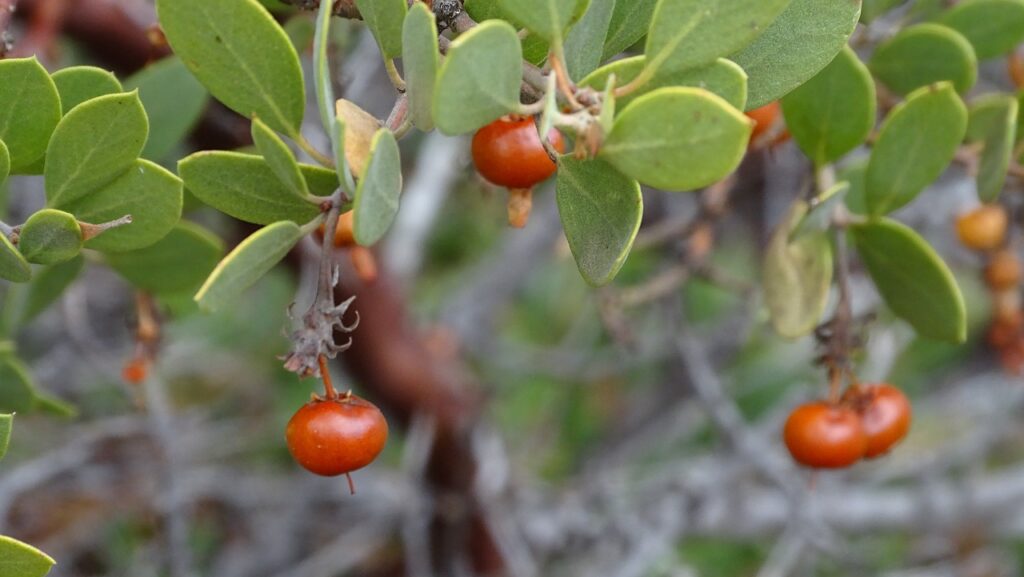
Manzanita has several growth varieties. West of the Cascades you find kinnikinnick (Arctostaphylos uva-ursi), a sprawling ground cover and hairy manzanita (Arctostaphylos columbiana), a mid-sized shrub form. East of the Cascades, very drought tolerant, spring blooming greenleaf manzanita (Arctostaphylos patula) abounds. Many more species exist, including small tree cultivars like (Arctostaphylos ‘Howard McMinn’). All have elliptical evergreen leaves and stems that mature to a reddish hue that becomes a peeling bark in larger varieties. These qualities provide visual interest and animal shelter. Manzanita blooms earliest of most other plants in the bleakest of winter. Its tiny urn-shaped white-pink blossoms mature to red, miniature apple-shaped fruits sought out by birds and other wildlife. (Fun fact: Manzanita is Spanish for ”little apple”). An easy care plant, manzanita thrives in full to part sun in well-drained soil. Whether in its native form, or cultivars, manzanita is a beautiful, pollinator-supportive addition to any Oregon garden.
Note: There is evidence bumblebees will also feed on European winter bloomers like hellebore and heather (like manzanita, part of the heath family). As it is pollinator-supportive to try to have swaths of at least three blooming plants going as close to all year round as you can, I also have these plants in my garden as well.
Do you have a gardening or insect question? Contact the Douglas County Master Gardeners at douglasmg@oregonstate.edu or 541-672-4461 or visit 1134 SE Douglas Ave., Roseburg. Douglas County Master Gardeners are trained volunteers who help the OSU Extension Service serve the people of Douglas County.