

Published in the News-Review February 6, 2026
By: Bonnie Courter
Question: I drink a fair amount of coffee each day, and seem to accumulate an abundance of leftover grounds. I’ve heard that coffee grounds can be used to lower the pH in the soil and benefit acid-loving plants like rhododendrons, azaleas and blueberries. Is that true?
Answer: Brewed coffee grounds from your morning “cup of Joe” are a great benefit to your soil. They can enrich soil and compost as well as acting as an excellent mulch. However, unlike popular belief, used coffee grounds are close to neutral when it comes to pH – around 6.5 to 6.8. The acid in coffee beans is mostly water-soluble so it leaches into the brewed coffee instead. That means that they won’t lower soil pH enough to benefit your acid-loving plants.
But don’t throw those grounds away yet! Let those throw-aways add to soil structure, suppress some fungal rots and wilts, insect pests, and enrich your compost pile. It’s estimated that 400 billion to a trillion cups of coffee worldwide each year are consumed, resulting in a huge amount of grounds! Gardeners can keep them out of landfills by wisely making good use of them.
Since used coffee grounds are about 2% nitrogen by volume, they can be safely used as a substitute for nitrogen-rich manure in compost. But be moderate in your use – only small amounts are required – too much can ruin soil, especially in raised beds. If applied directly to the soil surface before composting, the excess can temporarily tie up nitrogen and possibly inhibit seed germination or slow plant growth because of the caffeine residues. So work in 1/2” of grounds to a depth of 4 inches. And if using grounds as a mulch, cover the grounds with leaves or bark mulch to prevent the surface from drying out and repelling water.
To use grounds in your compost pile, mix 3 parts leaves to one part fresh grass clippings to one part coffee grounds by volume. You can also incorporate those used coffee filters in your compost as well. Coffee grounds should make up no more than 20% of the pile’s total volume – anything higher can be toxic to plants. Be sure to turn your pile weekly and make sure it remains moist.
Earthworms and red wigglers enjoy a good meal of coffee grounds. They pull them deep into the soil, improving soil structure. As spent grounds break down in the soil, soil microorganisms will temporarily tie up nitrogen while they reproduce and grow. To balance this, it’s suggested that you add a nitrogen fertilizer, grass clippings, or manure at the same time you incorporate the grounds into the soil. Soil microbes release compounds that bind soil particles into well-draining aggregates as they feed on the grounds which benefits drainage.
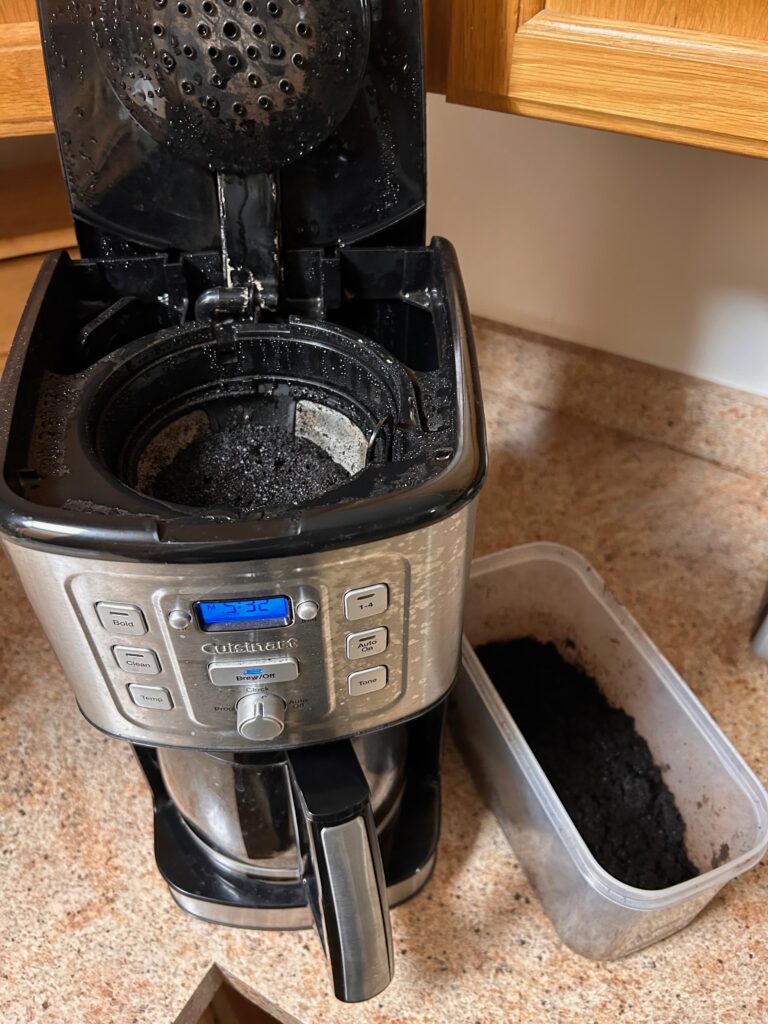
Save your used grounds in a sealed container until ready to use in your garden or your compost pile. Should mold develop in the stored grounds, no worries, as mold actually contributes to decomposition in the pile. Some local coffee shops can also be a source for used grounds if you want a larger quantity. Just make sure to make prior arrangements with them and provide a labeled, clean, 5-gallon bucket to put them in.
Brewed coffee can also be used as a natural slug control if you have any excess in the morning. Use as a soil drench, mixing one part water to one part brewed coffee. The slugs die of caffeine poisoning! You can also mix up a foliar spray, diluting the solution further to 9 parts water to 1 part coffee, and spray it on the leaves of plants.
So go ahead and enjoy that steaming cup of coffee and make good use of all those grounds to improve your soil. I’d say that’s a “win-win”!
Do you have a gardening or insect question? Contact the Douglas County Master Gardeners at douglasmg@oregonstate.edu or 541-672-4461 or visit 1134 SE Douglas Ave., Roseburg. Douglas County Master Gardeners are trained volunteers who help the OSU Extension Service serve the people of Douglas County.