
Published in the News-Review January 30, 2026
By: Janet Bitter
Question: Sometimes when I buy a plant, I notice two different names. The Latin one just confuses me. Why do we need to bother with that?
Answer: It’s January, it’s boring, and there isn’t a whole lot of fun stuff to be done in the garden right now. We might as well stretch our brains a little and discuss the whole business of why plants have all those names!
The process of naming plants is known as botanical nomenclature. It is a standardized system used worldwide. Carl Linnaeus developed binomial (2 part) nomenclature (choosing of names) in the 1700’s and is known as the “Father of Taxonomy”. Taxonomy is the branch of science concerned with classification of all organisms. During that time, Latin and Greek were the universal languages used by scientists all over the world. By using these languages, Linnaeus devised a system that was understood worldwide. This is not to say that this was the first use of Greek or Latin plant names. Ancient Greek and Roman authors as early as 300 B.C. recorded hundreds of plants by name, mostly naming those of medicinal use.
The scientific name of a plant consists of the genus and species. For writing, the genus is always capitalized and italicized or underlined. The species is not capitalized but is italicized or underlined. For example, the perennial we call lamb’s ear is Stachys byzantina. There may be other names attached such as a cultivar name. Cultivar is a contraction of “cultivated variety”. To use the lamb’s ears example, you might be interested in finding the non-flowering variety called Stachys byzantina ‘Silver Carpet’, I’m not going to go further into the weeds here, but you might see some notation of hybrid or trademark names, as well as the common name. (If I get a lot of fan mail about this topic, we can see about future, extremely detailed, taxonomy lessons.)
So why should we care about the scientific name of plants? Well, even if you’re not communicating about plants with someone located somewhere else in the world, you might be talking to a fellow gardener in another region of the United States, and if you don’t use the actual botanical name, you might be talking about two different plants.
Some of the problems with using common names of plants:
- They can change by region.
- They can be used on two different plants, or one plant may have multiple common names.
- They don’t give any hints as to the relationship between similar plants—in fact, some common names give inaccurate connections between unrelated plants.
- No authority oversees common names.
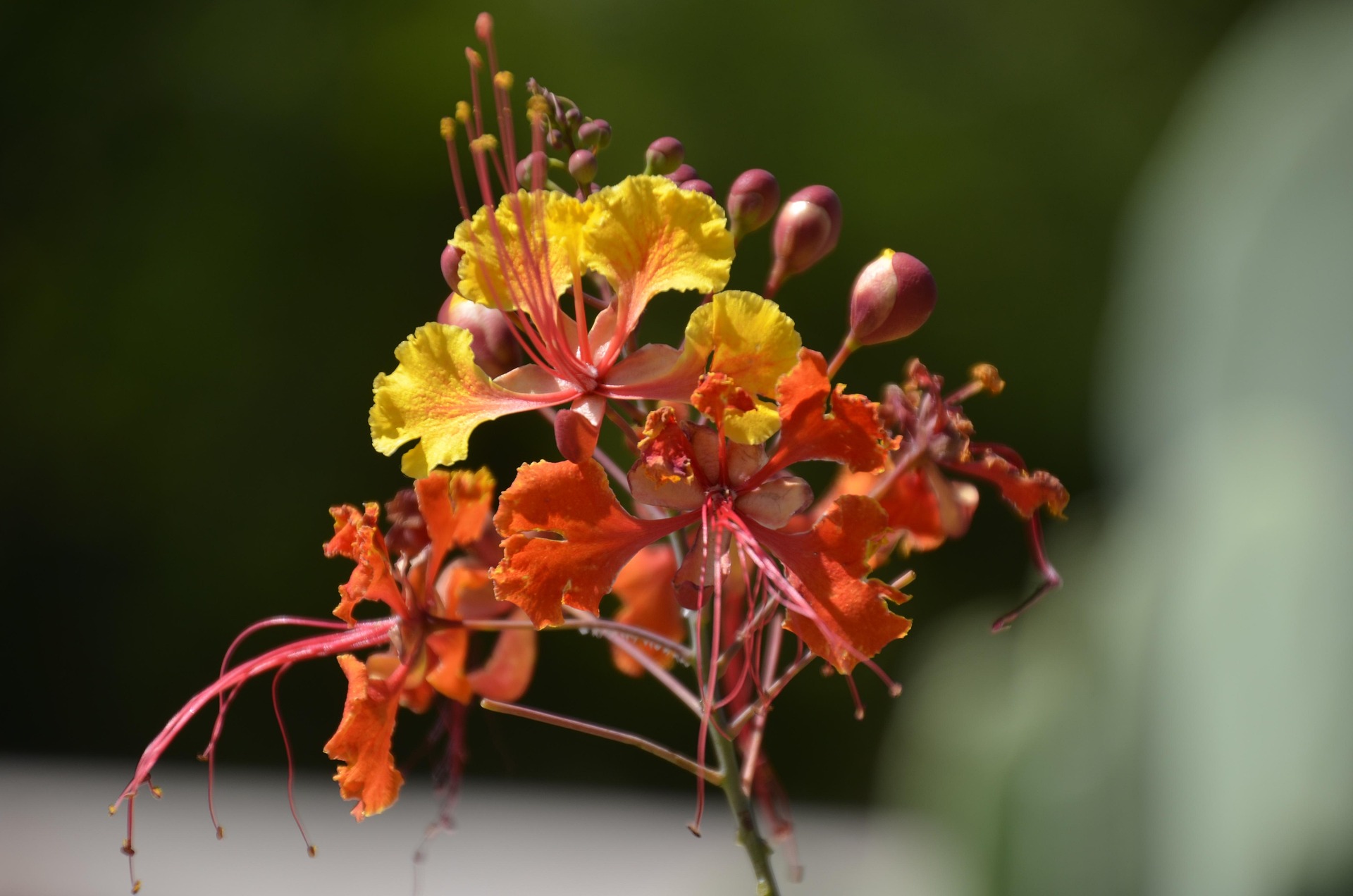
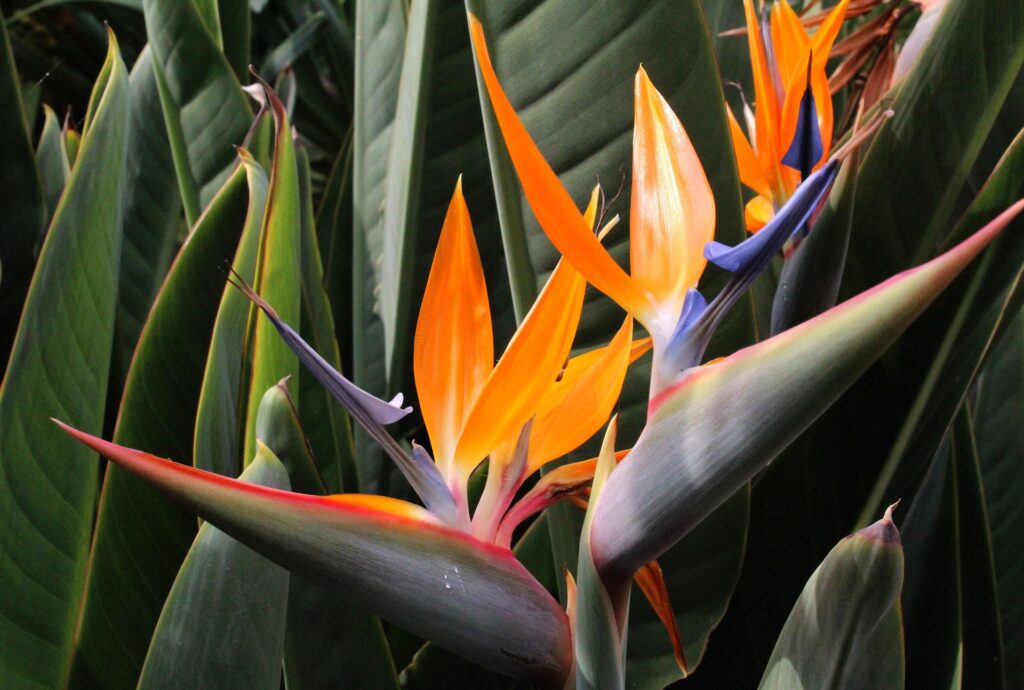
Probably the problem I’ve come across most in my gardening life has been the difference of names regionally. I’ve spent some time down in Arizona in the last few years and got very confused when I heard people talking about their bird of paradise plants. To me, that plant is the one you see in tropical areas like Hawaii with the interesting bird-like orange blooms (Strelitzia reginae). I didn’t see any of those around so finally figured out that gardeners here were referring to another plant called bird of paradise, or sometimes red bird of paradise (Caesalpinia pulcherrima) – a very different plant! Another common example: I kept hearing about these wildflowers in Texas called bluebonnets. One day I decided to look up a picture and found out Texans are just talking about what we call lupines (Lupinus)! There are many examples of plants going by different common names.
Do you know there are 22 plant genera (plural of genus) which contain at least one flower commonly called daisy? That could be confusing! For an example of non-related plants being grouped inaccurately by common names, we have some imposter cedars. Deodar cedar is, in fact, a true cedar in the genus Cedrus. Other non-cedar “cedars” include Port Orford cedar (Chamaecyparis), Western red cedar (Thuja), and Japanese cedar (Cryptomeria). I find it handy to know when plants are related by genus and sometimes that gives a clue as to their cultural requirements or other traits of the plant.
There is an international authority, the International Association of Plant Taxonomy, which serves as a clearinghouse when a scientist wishes to name a new plant discovery. This provides a stable, uniform system—a necessity in the scientific world.
I hope you have a better understanding of basic plant nomenclature and why it is important to have a standard naming system. Well, back to January and making plans for when the weather warms up and I am back out into the garden. I am looking at seed catalogues and dreaming about those great bacon, Lactuca sativa, and Solanum lycopersicum sandwiches this summer!
Do you have a gardening or insect question? Contact the Douglas County Master Gardeners at douglasmg@oregonstate.edu or 541-672-4461 or visit 1134 SE Douglas Ave., Roseburg. Douglas County Master Gardeners are trained volunteers who help the OSU Extension Service serve the people of Douglas County.