

Published in the News-Review March 6, 2026
By: Janet Bitter
Question: I have seen plants marked “catnip” and “catmint” in my garden center. Are they the same plant?
Answer: Actually, both catnip and catmint are in the same genus, the genus Nepeta. They have some similarities but many differences. Both are in the mint family, attract a wide variety of pollinators, are easy to grow, and are drought tolerant and deer resistant. They prefer full sun. However, it depends on what you are wanting to accomplish in your garden as to which one you should plant.
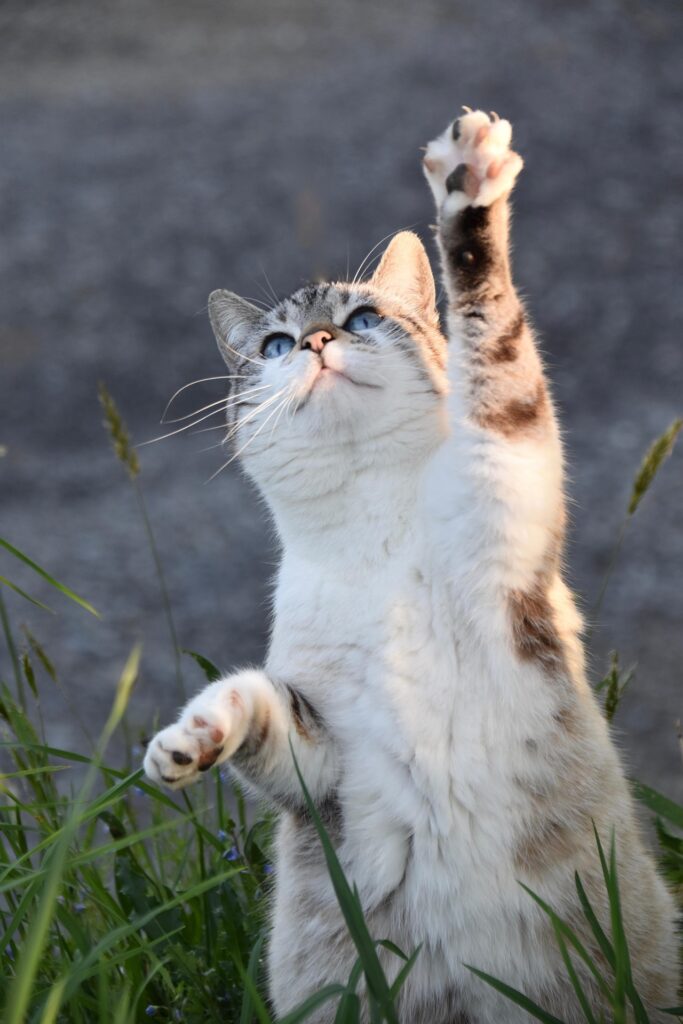
Let’s discuss catnip first. If you have a cat and enjoy watching them go crazy playing with catnip toys, and you don’t necessarily need an ornamental plant, then you might like to grow some catnip. Catnip, Nepeta cataria, is the herb that contains a compound called nepetalactone in its leaves. This volatile oil is thought to bind to a cat’s nasal receptors and stimulate sensory neurons. In other words, most cats go a little crazy for the stuff! It produces a temporary euphoria. Sorry to say, it doesn’t produce the same reaction in humans (or dogs, for that matter). Catnip has a rather weedy appearance, with white flowers, and can be very aggressive in its growth. It is probably best grown in containers or raised beds to keep it under control. It’s up to you to keep your cat under control!
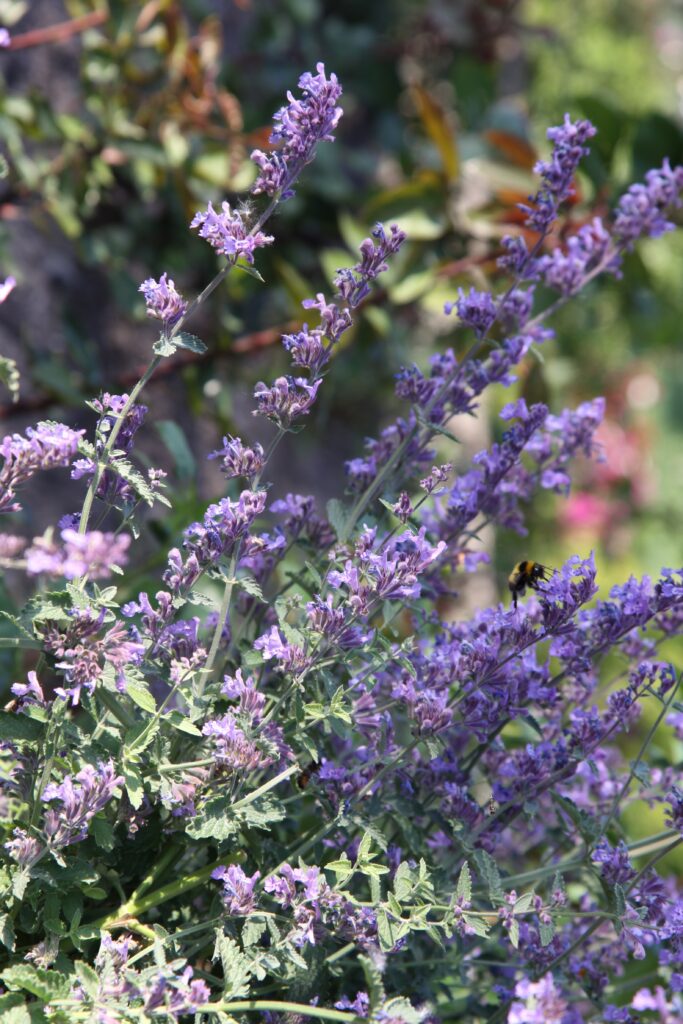
Catmint, Nepeta faassenii, is grown more for its ornamental qualities. It has a tidier appearance and can be used in mixed borders, edging for pathways, and mass plantings. The flowers are usually lavender-blue, but there are some varieties with pink or white blooms. It really thrives on neglect. It is drought tolerant, which is more and more a trait we should be looking for here in our area. It will appreciate regular water when newly planted, but once established it needs very little water. Catmint does contain some of the nepetalactone compound, but in lower concentration than catnip and most cats don’t pay any attention to it.
Both catnip and catmint look tidier and will produce more flowers if you cut them back after their initial bloom. It’s best not to cut them back in late summer or fall as that may stimulate them to produce new growth which may be susceptible to winter damage. In late winter or early spring, you can prune them again to encourage a nice flush of blooms. There are several varieties of catmint growing in the Douglas County Master Gardeners’ demonstration garden out at River Forks Park. They get very little water, yet they bloom all summer with minimal pruning.
You will be able to find several varieties of catmint at your local garden center. Note that many of these are hybrid varieties which have sterile seed and will not reseed:
‘Purisian Blue’ – compact, tidy mound, periwinkle blue flowers
‘Walker’s Low’ – 2’ tall, lavender-blue flowers
‘Six Hills Giant’ – 3’ tall, lavender flowers
‘Cat’s Meow” – 20” tall, sturdy mounded form, intense lavender-blue flowers
I enjoy the catmint I have in my front mixed flowering bed. It attracts loads of pollinators, and the deer who wander through never pay any attention to it. If you have a problem area in your garden and want a fairly carefree plant, give catmint a try. If you have a beloved feline friend, grow them some catnip. Happy gardening!
Do you have a gardening or insect question? Contact the Douglas County Master Gardeners at douglasmg@oregonstate.edu or 541-672-4461 or visit 1134 SE Douglas Ave., Roseburg. Douglas County Master Gardeners are trained volunteers who help the OSU Extension Service serve the people of Douglas County.