
Published in the News-Review January 2, 2026
By: Bonnie Courter
Question: My garden is being overrun by uninvited cats. They dig up my raised bed vegetables, defecate in the soil, and chew on my plants. What can I do to keep them out?
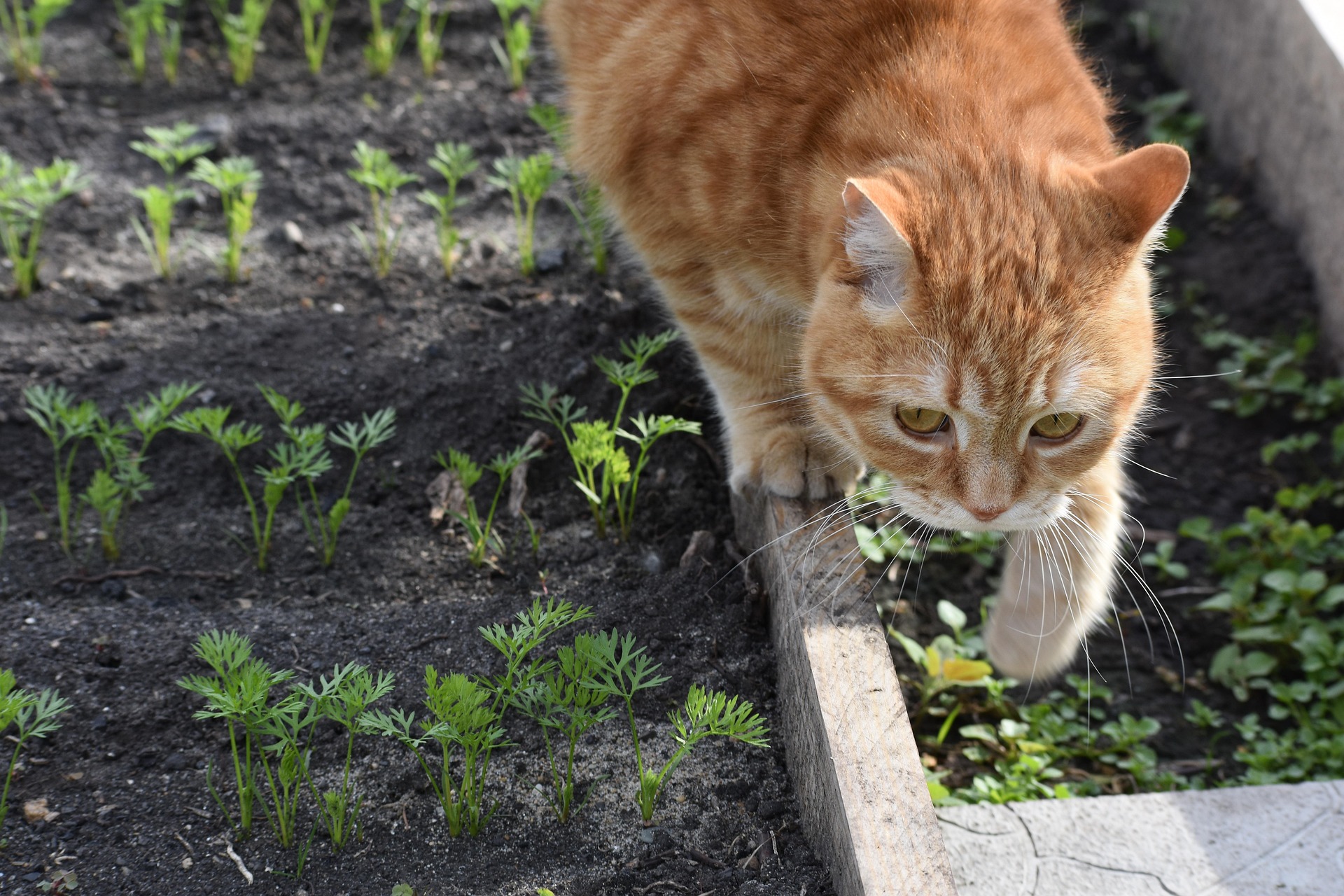
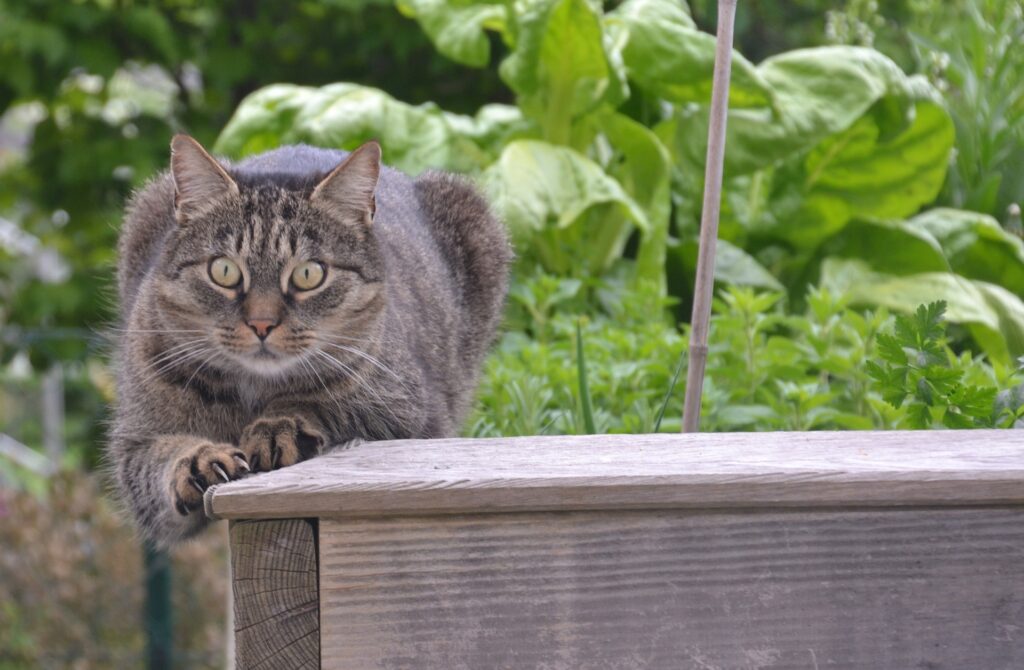
Answer: Cats can be a challenge for any gardener who wants to keep their garden looking nice and tidy. Whether you’re dealing with your own pets, neighborhood or feral cats, they can cause headaches for gardeners with their natural habits of exploring, scratching, digging and defecating.
Cats love to dig in the fresh, soft soil of freshly planted garden plots, disturbing new seedlings or uprooting small plants. Cats can smash down tall or delicate plants by lying on them or playing and running through your beds. Cat waste can carry germs and parasites like ringworm and toxoplasmosis, and their urine acts as a herbicide due to its high acidity and toxic compounds, burning plant roots and altering soil pH balance. Besides that, the urine contains pheromones that attract other cats, compounding your problem. Outdoor cats are also responsible for billions of bird deaths each year, so understand that while bird baths and feeders are great at attracting wildlife, they also can attract cats. Have you observed a cat waiting patiently by a tray of birdseed for its next feathered snack?
So what to do? It’s important to first take an assessment as to why cats are attracted to your garden area in the first place. There are ways to safely and humanely deter cats from your garden area using physical barriers. Here are a few suggestions:
- Netting above the soil: Put up black bird netting 1-2” above the soil surface, using stakes or garden staples. Cats don’t like to walk on unstable surfaces. The netting allows the plants to grow through, and as they mature, you can gently guide their stems and leaves through the openings which can be set aside without harming young shoots. This is effective for vegetables, flowers and small shrubs.
- Mulch: Rough textured mulch is uninviting for cats, so use coarser mulches to cover bare soil.
- Chicken wire, when laid flat and lightly covered with soil, prevents cats from digging as do plastic carpet runners placed spike-side up. Other materials such as pinecones, crushed eggshells or hazelnut shells, or rough-edged rocks will do the same trick.
- Fencing using netting or mesh mounted on angled extended arms can keep cats out. Single or double strands of electric fencing at low voltage can also be used. Place at heights of 4-9”.
- Natural scent repellants: Most cats dislike the smell of citrus, so by putting citrus peels from oranges, lemons or limes around your garden beds is an easy deterrent, but be aware that they can also attract slugs, rodents or raccoons, so avoid leaving large amounts of peels out for long periods. There are also essential oil sprays you can use such as eucalyptus, lavender peppermint or lemongrass. If you have a dog that sheds, dog hair spread on the ground or hung in bags around the garden can often keep cats away.
- Motion-activated deterrents: These can shoot out a spray of water when sensors spot movement from an animal up to 40 feet away. The detectors can be set to work only during certain hours like night or early morning when cats are most active. They use very little water, but enough to surprise the cat and discourage it from returning.
- Ultrasonic devices: These devices work by emitting a high-pitched sound heard only by cats. When selecting one, look for models that have proven effectiveness resulting from rigorous trials.
Other techniques involve the following: Avoid feeding pets outdoors as food is an open invitation for strays and wildlife. Since cats can be attracted to open compost piles, use a covered and walled compost bin and bury fresh materials deep in the pile. If you’re being visited by feral cats, contact your local animal control officer or animal shelter. If neighborhood cats are the problem, try to negotiate with your neighbors to keep their pets indoors.
If you find that a cat has done some damage in your garden, you need to act quickly to prevent bigger problems. Always wear gardening gloves when gardening to protect yourself. Remove any cat waste immediately, placing it in a biodegradable bag to be disposed in the garbage – never add it to your compost as it can carry harmful parasites and germs. Check your plants for any damage – you may need to trim off any damaged leaves or stems. Flush with water any areas where the cat urinated to wash away the urine and reduce the smell.
Cats are creatures of habit. Stopping them early by using deterrents and preventative measures helps discourage them from making your garden their regular cat haven.
Do you have a gardening or insect question? Contact the Douglas County Master Gardeners at douglasmg@oregonstate.edu or 541-672-4461 or visit 1134 SE Douglas Ave., Roseburg. Douglas County Master Gardeners are trained volunteers who help the OSU Extension Service serve the people of Douglas County.