

Published in the News-Review December 24, 2025
By: Janet Bitter
Question: Why is holly associated with the Christmas season?
Answer: When I started looking into the history of holly, I had no idea that there was so much folklore about one plant! Since medieval times, it has been associated with Christian symbolism. Holly represented Jesus with the crown of thorns as well as the blood-red berries. As an aside, ivy represented Mary, mother of Jesus. There is a well-known song, “The Holly and the Ivy”, that you may be familiar with. These two plants have a shared history when it comes to a lot of these legends.
Since it maintains its green color during the winter season, holly was used by pagans during winter solstice celebrations and was thought to ward off evil spirits. They believed the bad spirits would get caught up in the branches of the holly tree and be snagged on the prickly leaves. During Roman times, holly was used to celebrate Saturnalia, the ancient mid-winter celebration of feasting and gift-giving. (Ivy also had an interesting role here: wearing a wreath of ivy on your head was thought to prevent you from getting drunk. Also, Romans used ivy to mark a place where wine was sold.)
By far the favorite legend I found came from the midlands area of England. Whichever plant (holly or ivy) entered the house first in winter dictated whether the males or females ruled the house for the following year. Let’s just say I’ll make sure I bring ivy into my house before holly in the off-chance this legend has some merit! (Sorry, honey!)
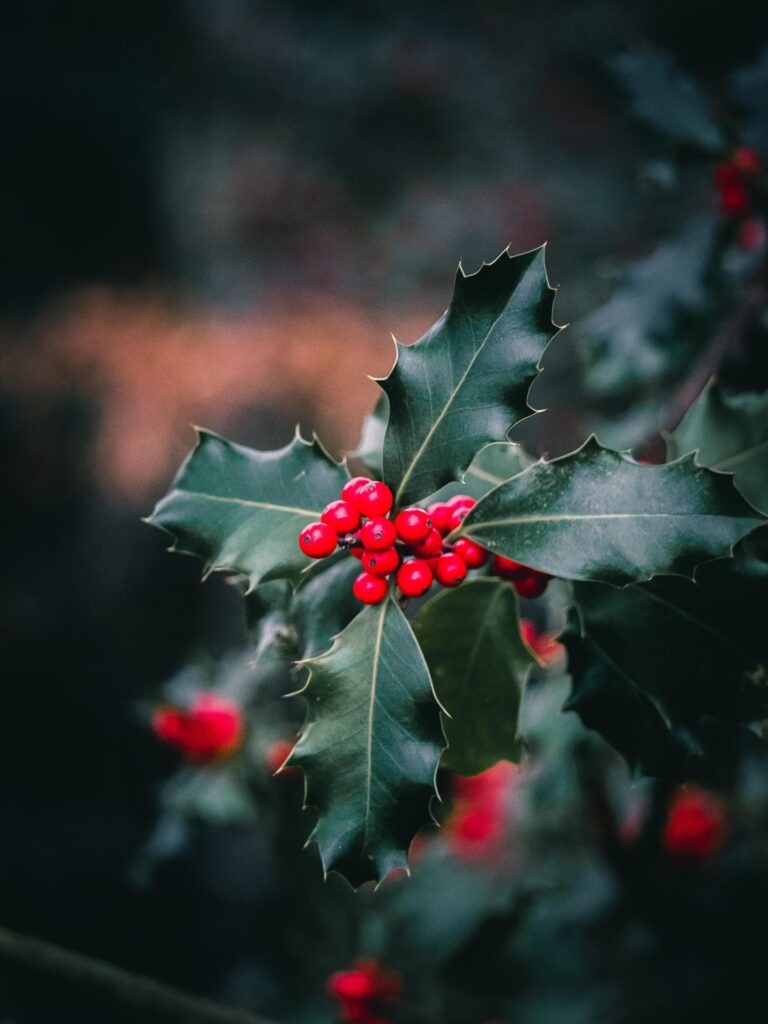
Holly belongs to the genus Ilex. There are over 400 species in that genus. They are found in temperate, subtropical, and tropical regions all over the world. Their sizes range from dwarf shrubs to trees over 50 feet tall. Most produce small white flowers in spring and summer, and berries in the fall and winter. Foliage can vary from large, spiny leaves to smooth, small boxwood-like leaves. Berries can be red, pink, blue, orange, yellow, or white. The majority are evergreen, although winterberry loses its leaves in the fall. Four common species are English holly (Ilex aquifolium), winterberry holly (I. verticillata), Japanese holly (I. crenata), and American holly (I. opaca). American holly is the only species native to the United States.
As far as cultural requirements go, most hollies prefer a well-drained, slightly acid soil. They need water in the first year of planting, then moderate amounts after that. They are fairly pest and disease-resistant, although aphids, spider mites, or scale can be a problem. Usually, these insects can be managed with proper cultural practices such as avoiding overcrowding, proper water, etc. They are considered deer resistant. Hollies look the best when allowed to maintain a natural form, so pruning should usually be used to remove dead, diseased, or damaged branches (exception: English holly, as I’ll explain below). Japanese holly can take heavier pruning and can even be used as topiary.
One other interesting thing about hollies is that they are dioecious, meaning there are male plants and female plants. To have berries, you must have a female plant and have a male plant in the vicinity. When you purchase a holly, the plant tag should identify its sex. Keep in mind that holly berries are toxic when consumed by humans or pets.
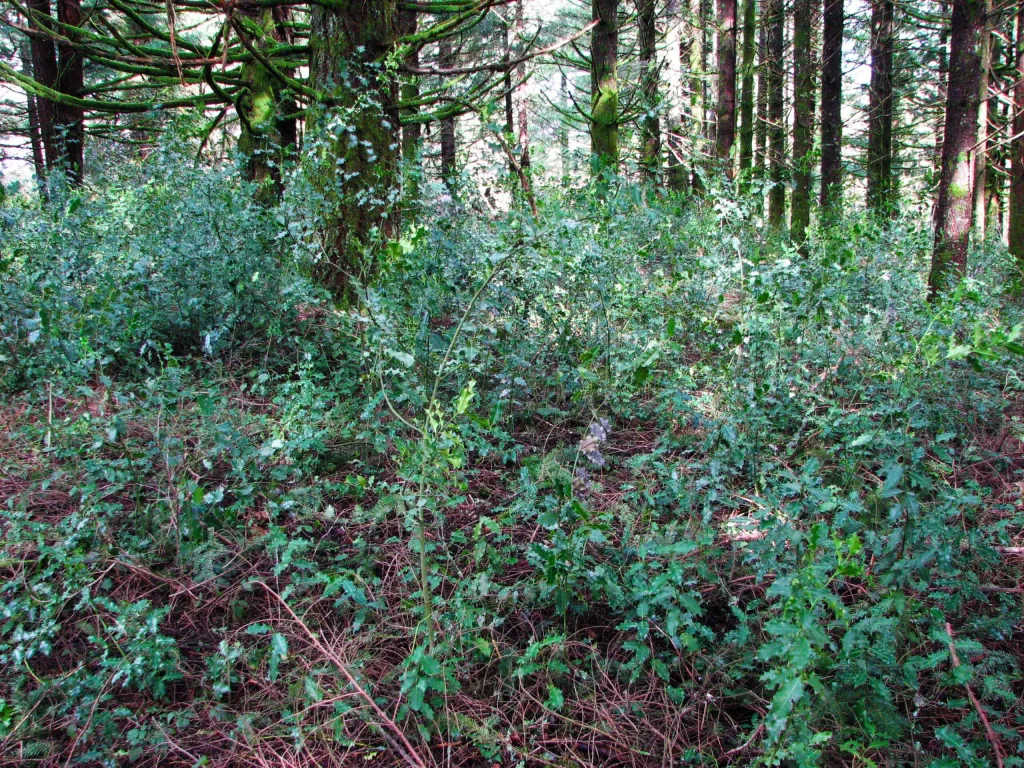
After hearing about all this holly information, here is one important takeaway: DO NOT plant English holly in Oregon! It is considered invasive in the Pacific Northwest. It is not currently a state-listed noxious weed so can still be legally sold in Oregon, but that could change in the future. Washington has recently listed it as a noxious weed. English holly thrives in our climate and is frequently found growing in the understory of our native forests. It competes with our native shrubs to the detriment of our native forest health. Plant one of the other types of holly or consider the Oregon grape, Berberis aquifolium (formerly Mahonia aquifolium). If you do have a female English holly tree, the recommendation is to shear off all its flowers so it doesn’t produce berries. Birds love to eat the holly berries and that is how it spreads to areas in which we don’t want it to grow.
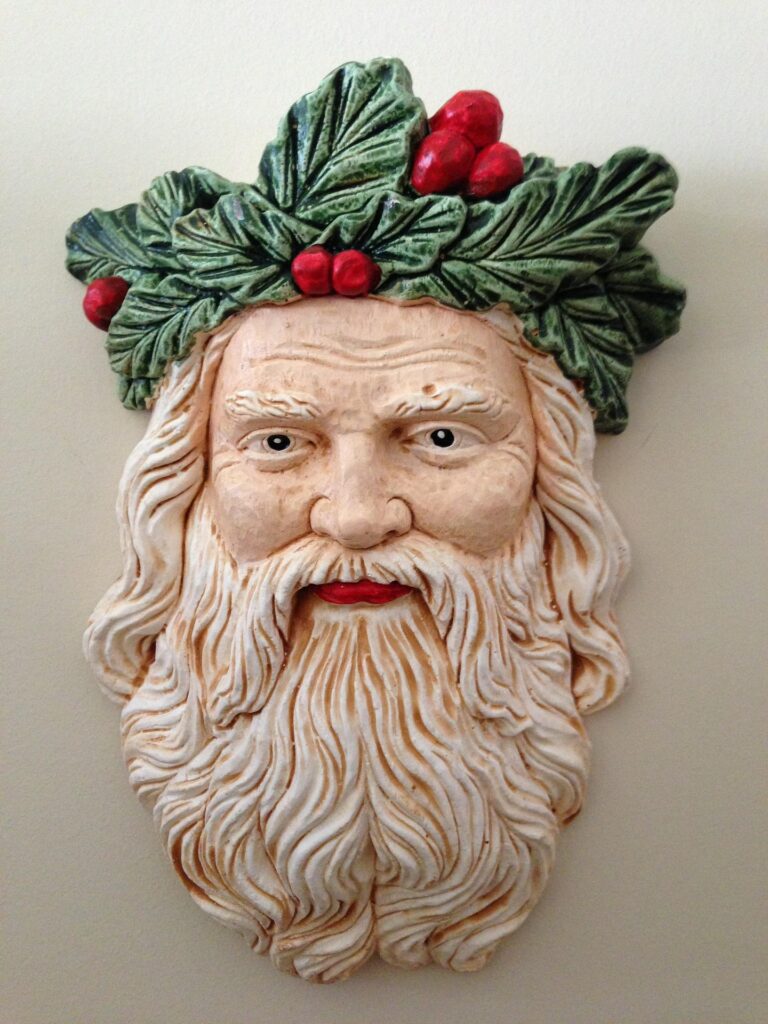
When you see sprigs of holly adorning Christmas cards or décor, think about all the legends associated with it. When you see English holly sprouting in your yard voluntarily, you can ignore the myth that it is bad luck to cut down a holly tree and help keep this plant out of our native forests. Have a holly, jolly holiday!
Do you have a gardening or insect question? Contact the Douglas County Master Gardeners at douglasmg@oregonstate.edu or 541-672-4461 or visit 1134 SE Douglas Ave., Roseburg. Douglas County Master Gardeners are trained volunteers who help the OSU Extension Service serve the people of Douglas County.