
Published in the News-Review May 30, 2025
By: Janet Bitter
Question: I want to start growing some flowers for bouquets around my home. Can you give me some tips for growing a cut flower garden?
Answer: I love to grow flowers. Many of us grow a vegetable garden to help put food on the table, but growing some flowers can also bring some joy to our busy lives. There’s something satisfying about walking into a room and seeing a fresh arrangement of your own home-grown flowers. Sorry to say, I don’t quite get the same feeling about seeing a mound of zucchini on the kitchen counter!
Most flowers take about the same growing requirements as a vegetable garden–a sunny area (6-8 hours of sun per day), well-drained soil, and an adequate water supply delivered at the base of the plants, not overhead. You may have room in or around an existing vegetable garden. I like to grow flowers with my vegetables. Having flowers mixed in with your vegetables helps attract pollinators, especially helpful with cucurbit plants (squash, cucumbers, etc.). Other reasons to grow your own flowers include knowing they are chemical-free, saving money from buying flowers, and just smiling when you see your garden!
So, what makes a good cut flower? First of all, what colors or styles do you like? Choose varieties of flowers with long stems for cutting. For example, some varieties of zinnias are best used as bedding plants. The ‘Profusion’ series are short plants with many flowers on short stems—good as a bedding plant but not too useful in most arrangements. There are many other varieties of zinnias which are better for cutting.
When you shop for plants or seeds, seek out the ones identified as good cutting flowers. You might find some to purchase as plants, but to get a good assortment, you may need to purchase seeds to either direct-sow when the soil is warm or start early and transplant out after danger of frost. Most seed companies identify flower varieties useful for cutting in their descriptions.
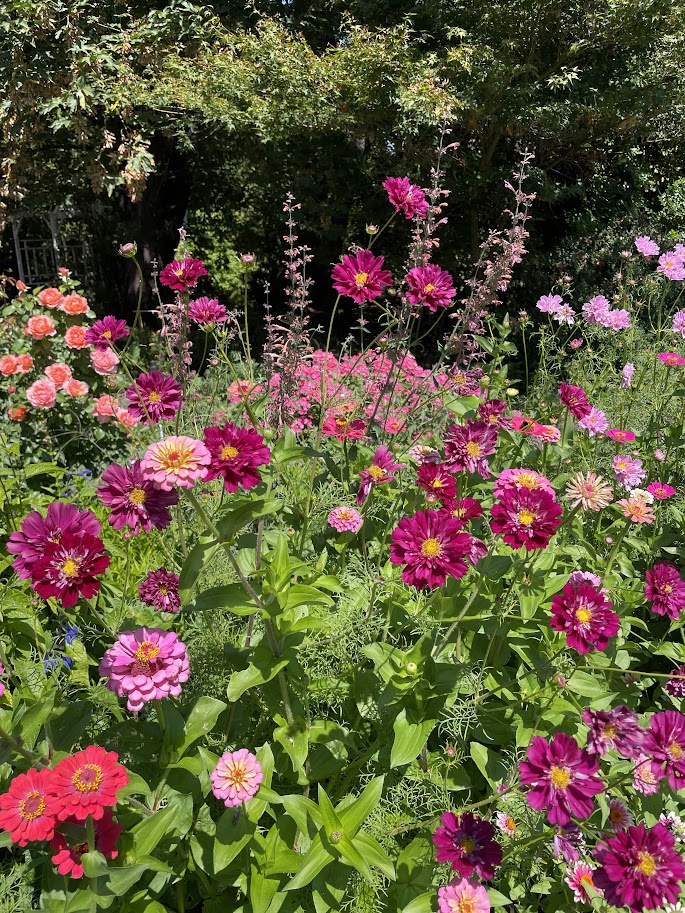
Make sure and grow a variety of shapes and styles of flowers to make the most attractive bouquets. Much like the concept of “thriller/chiller/filler” used in designing patio pots, select some flowers to grow which are a focal point, a linear/spike, and a filler flower. Here are some of the easiest flowers to grow in the summer here in the Umpqua Valley:
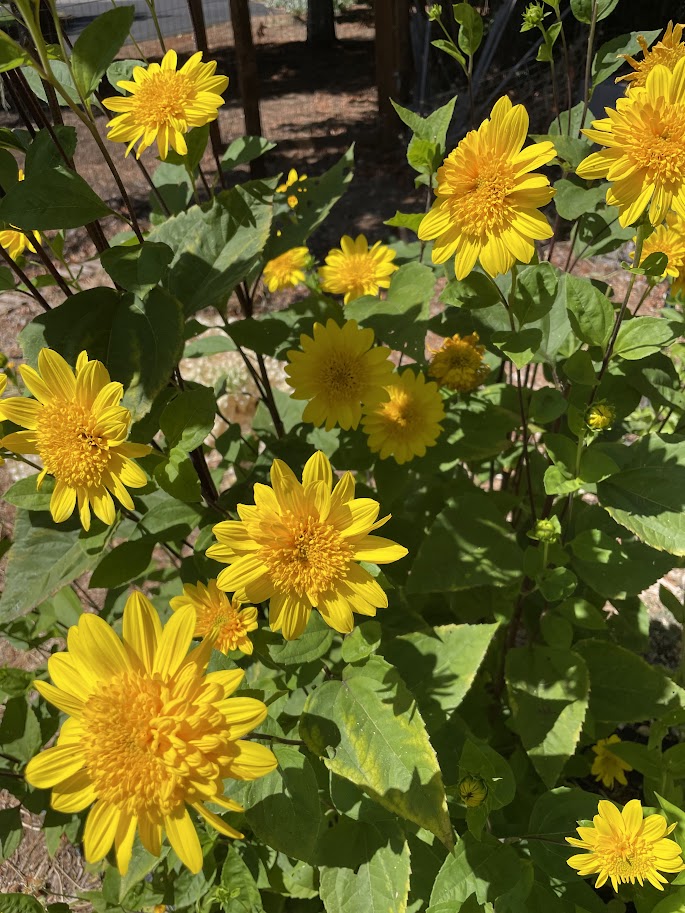
- Sunflowers – these can be single-stemmed which you cut once and they’re done, or multi-branched with multiple flowers. There are also pollen-less varieties available which don’t shed pollen all over your counters.
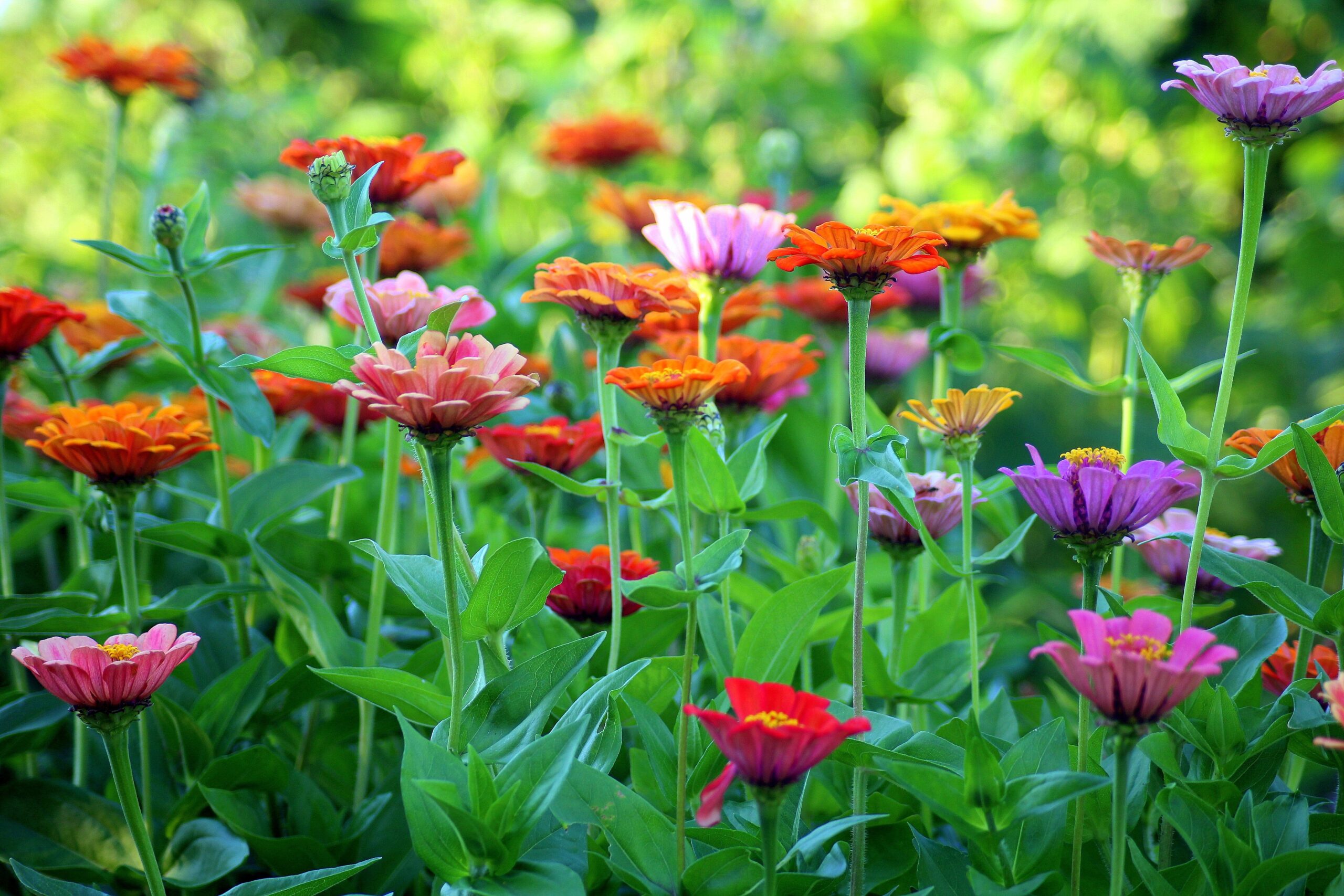
- Zinnias – such a vast array of choices here! Benary’s Giant is a good cutting variety, as are the Queeny and Oklahoma series. They come in many forms and colors and are easy to grow. There are flower breeders working on new colors featuring more muted shades.
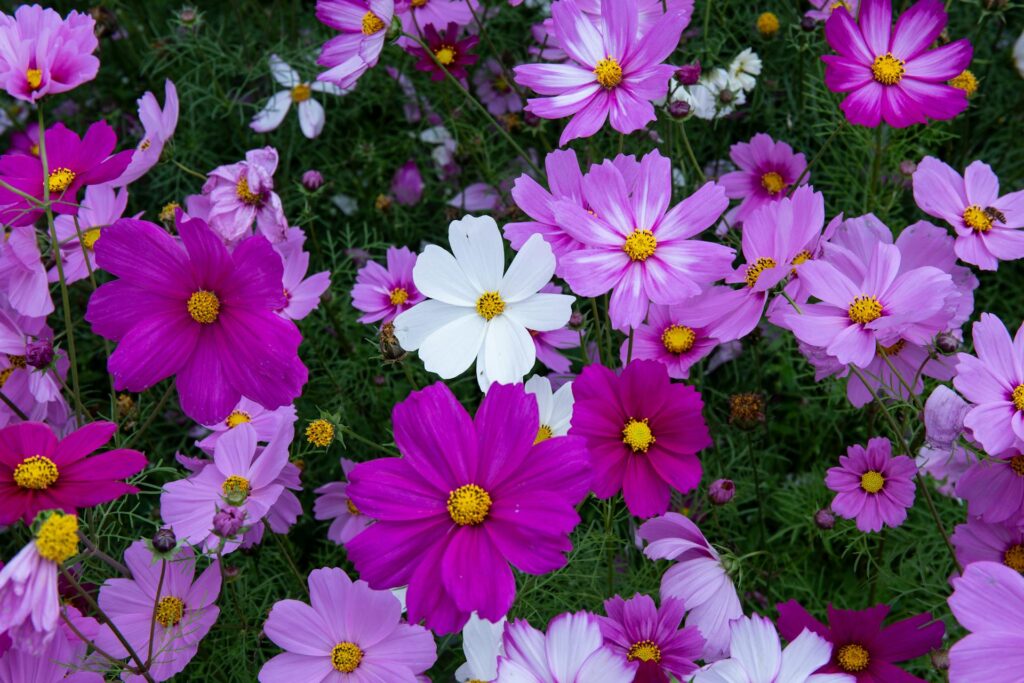
- Cosmos – easy to direct seed in your garden. I love the ‘Double Click’ variety, but you can’t go wrong with almost any cosmos.
- Dahlias – almost every color and style of flower from huge plate-sized blooms to little pompoms.
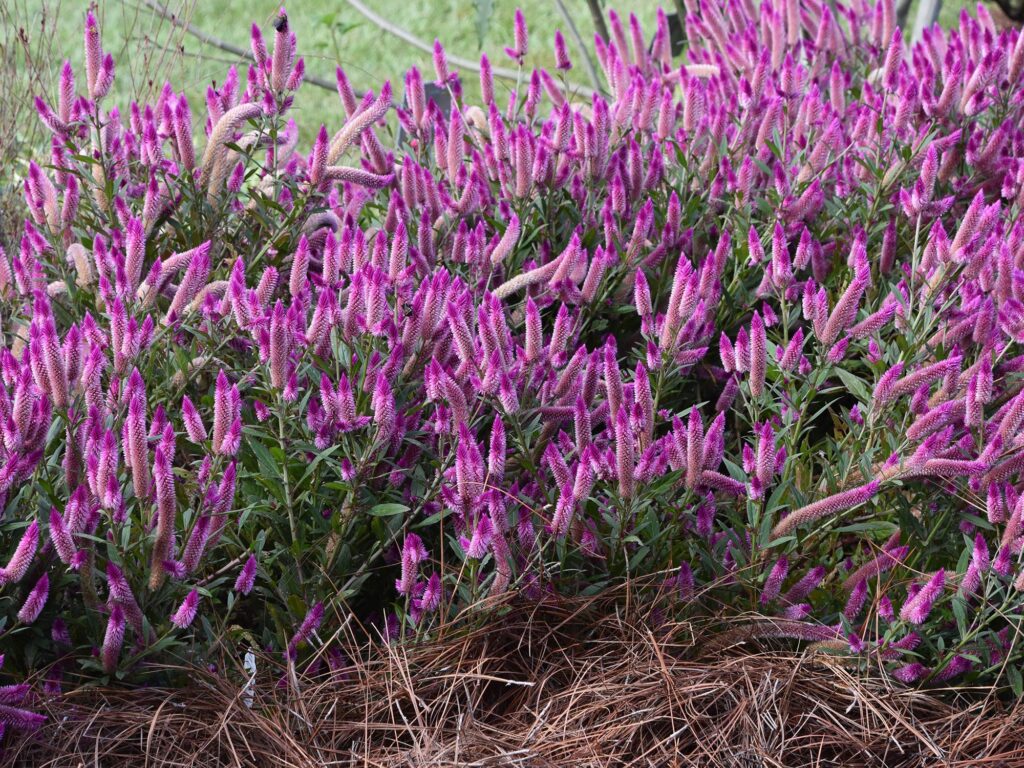
- Celosia – these come in the old-fashioned crested or cockscomb type, but more useful for arrangements are the spike type such as ‘Flamingo Feather’, or the plume type. They add an airy, linear form to your designs. Make sure the variety you plant has stems long enough to be useful as a cut flower. Bonus: they can be dried and used in dried arrangements.
- Others to try: snapdragons, bachelor buttons, calendula, gomphrena, bells of Ireland.
When it comes time to harvest your flowers, make sure and pick them early in the day and immediately put them in cool water. It is best to let them take up the water for several hours before re-cutting them and designing your arrangements. You can extend vase life by making sure the arrangement is not in direct sun and away from any significant airflow from air conditioners or heaters.
The varieties mentioned above are all summer flowers—their season usually extends into the first autumn frost. If you get hooked on having your own cut flowers, you may wish to branch out into growing varieties for early spring (think tulips, daffodils) or later in the fall. Whatever you decide, I’m betting that planting a few flowers for cutting will bring some joy into your home!
Do you have a gardening or insect question? Contact the Douglas County Master Gardeners at douglasmg@oregonstate.edu or 541-672-4461 or visit 1134 SE Douglas Ave., Roseburg. Douglas County Master Gardeners are trained volunteers who help the OSU Extension Service serve the people of Douglas County.