
Published in the News-Review May 16, 2025
By: Julie Burchstead
Question: On a recent hike I saw many beautiful wildflowers. Is it possible to grow them at home?
Answer: Yes. For the patient gardener, many wildflower species can be propagated and grown in your home garden.
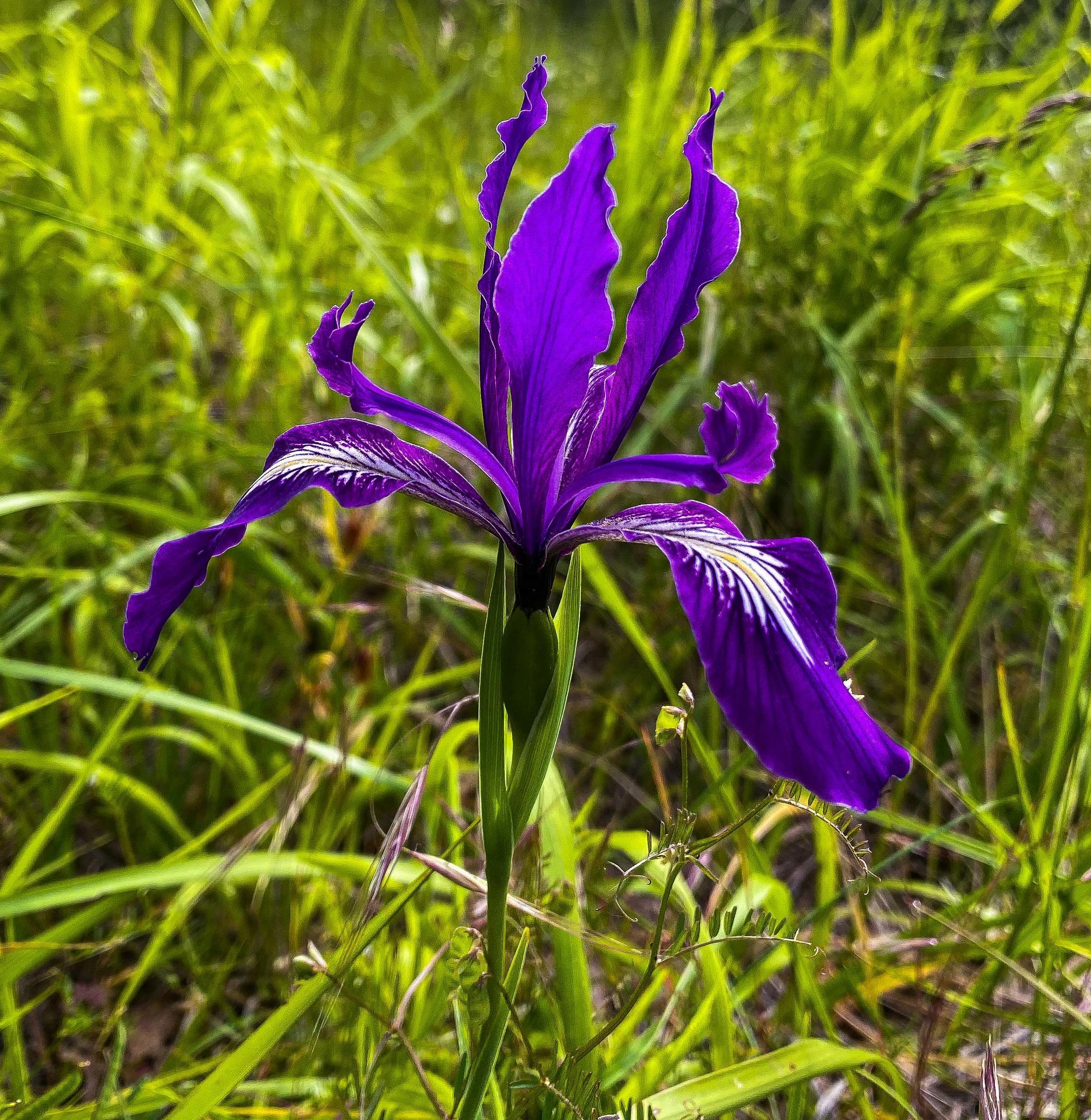
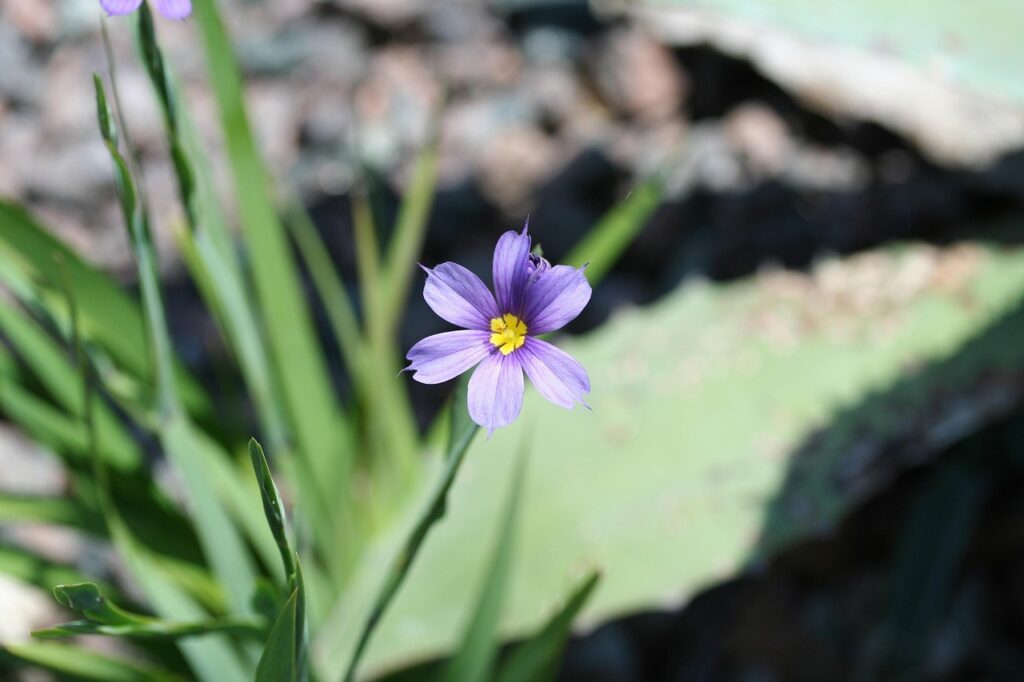
May is wildflower season in Douglas County. On a gentle kiss of a recent afternoon, a friend and I took our horses to ride the woods at Mildred Kanipe County Park, just outside of Oakland. It was a perfect day. Soft sunshine, a light breeze, blue skies, and each turn of the trail revealed a dazzle of wildflowers. Purple Douglas Iris, diminutive, star-shaped, yellow centered Blue-eyed Grass, quiet sprinklings of cream colored Mariposa Lilies with their lavender throats…and so many more. This ephemeral display is a fleeting feast for the eyes. If you are unable to get out into the woods at the right time, you miss them altogether. But it is possible to bring the magic home.
Wildflowers on public lands have regulations protecting them. Some are rare. Picking reduces next year’s seed and in some cases can delay a return bloom. And even if you were able to obtain a permit or permission to dig some, most do not like to be moved. The best way to enjoy wildflowers in your home garden is to grow your own.
Fortunately these days, there are two ways to do that. The easiest is to buy mature plants someone else has already started from seed. The other is to start your own. The Umpqua Native Plant Society often offers native wildflower plants in their sales. There were also a few local vendors selling locally grown wildflower starts at the recent Master Gardener sale. But don’t despair if you have missed those opportunities. You can begin your own from seed. Elder Oaks sells a wide variety of wildflower seeds both locally and via their Etsy shop. Klamath Siskiyou Native Seeds is also a source for many varieties. A little online research will locate other sellers as well.
- Research the flowers you want to grow and find the place in your yard compatible for them to flourish. Some require moist conditions, some drier, some do well in sun, and some require more shade.
- Access some seed. The more local the source, the better.
- Read the seed germination requirements carefully. Some require months of cold stratification. Those seeds might be better planted in the fall. Some seeds need scarification – a gentle rub on a light sandpaper will do. Other seeds have no special requirements.
- Planting seeds initially in trays allows more control. Trays can be moved away from harm, to monitor light, and can be protected from birds, etc.
- When the seedlings begin to develop second leaves, gently prick them out of the trays and put them into a larger pot. Be sure to get all of the delicate roots.
- Once the tiny plants are large enough they won’t get lost, you can plant them into their new home. I have also had success setting tiny clumps of seedlings from the tray directly into prepared areas of my garden.
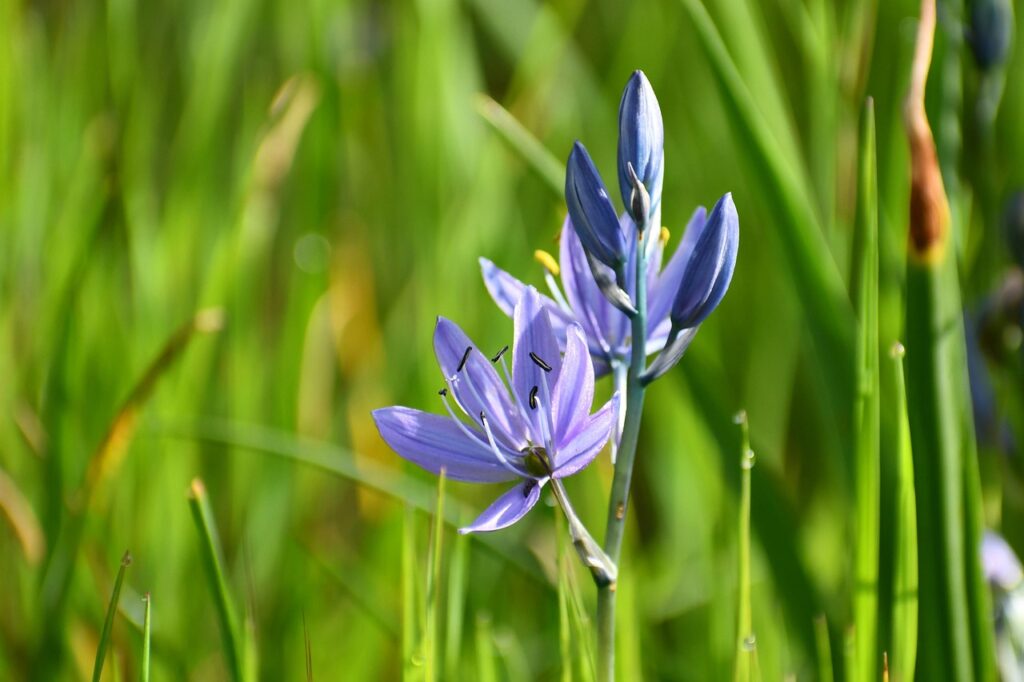
- Have patience. Some wildflower seeds grow more readily than others. Seep Monkey Flower has been one of the easiest to start from seed for me. It will also bloom the first year. Other wildflowers, such as perennial Camas, take years to mature before they bloom.
Our native wildflowers are a delight. There is something truly satisfying about being able to nurture such delicate plants with success. Planting wildflowers in your garden brings nature home, and in the words of Lady Bird Johnson, “Where flowers bloom so does hope”.
Do you have a gardening or insect question? Contact the Douglas County Master Gardeners at douglasmg@oregonstate.edu or 541-672-4461 or visit 1134 SE Douglas Ave., Roseburg. Douglas County Master Gardeners are trained volunteers who help the OSU Extension Service serve the people of Douglas County.