

Published in the News-Review October 10, 2025
By: Chris Rusch
Growing and caring for Hebes
Question: Can you suggest a small shrub I can add to my landscape now for fall and winter color?
Answer: Hebes are a great shrub choice for adding fall and winter color to your landscape. Hebes are a group of diverse evergreen shrubs, ranging from tiny alpine plants to larger bushes. Hebes are renowned for their foliage, but less widely known is that a few show a dramatic color change in their leaves as the season progresses from summer to winter, much like certain conifers.
The genus Hebe belongs to the plant family Plantaginaceae (Plantain family). The genus Hebe is now considered section Hebe within the larger genus Veronica, with its origins tracing back to New Zealand about 5 million years ago from an ancestor that likely arrived from Australia or Asia. The genus was established in 1789 and named for the Greek goddess of youth, Hebe. Today, Hebes are the largest genus of flowering shrubs in New Zealand with hundreds of cultivars. It is found in diverse habitats from seashores to alpine regions.
Fall is considered an ideal time for planting most shrubs including Hebes. This cool season planting window generally falls between late September and November. Planting in the fall allows the Hebe’s roots to grow and establish themselves in the cool, moist soil before the onset of winter. Choose a location with full or partial sun, out of direct scorching afternoon sun. Avoid too much shade as it makes Hebes leggy in appearance and may cause their blooming to stop.
A well-drained soil is a must for most Hebe shrubs. They like moist soil. The Hebe genus doesn’t do well with extremes in soil pH. Most withstand slightly acidic to slightly alkaline soil conditions, but neutral soil is generally best. Though somewhat drought tolerant, the Hebe shrub still requires a good amount of water to maintain optimal growth and healthy foliage.
A weekly watering schedule will keep in-ground plants happy, full, and bright. Fertilizer is generally not needed, though a small amount of evergreen-type fertilizer or compost in early spring can benefit the plant.
Prune your Hebe after it finishes flowering to shape it and remove any dead material. Right after the shrub has finished blooming is the best time to prune it. If you miss that time window, skip pruning that year altogether, otherwise, you risk that the Hebe won’t bloom next summer.
There are close to 100 different species within the genus and even more cultivars. Do your research to make sure the type you select will work well with your garden conditions and design requirements. What follows is a description of some of the best choices for our area:
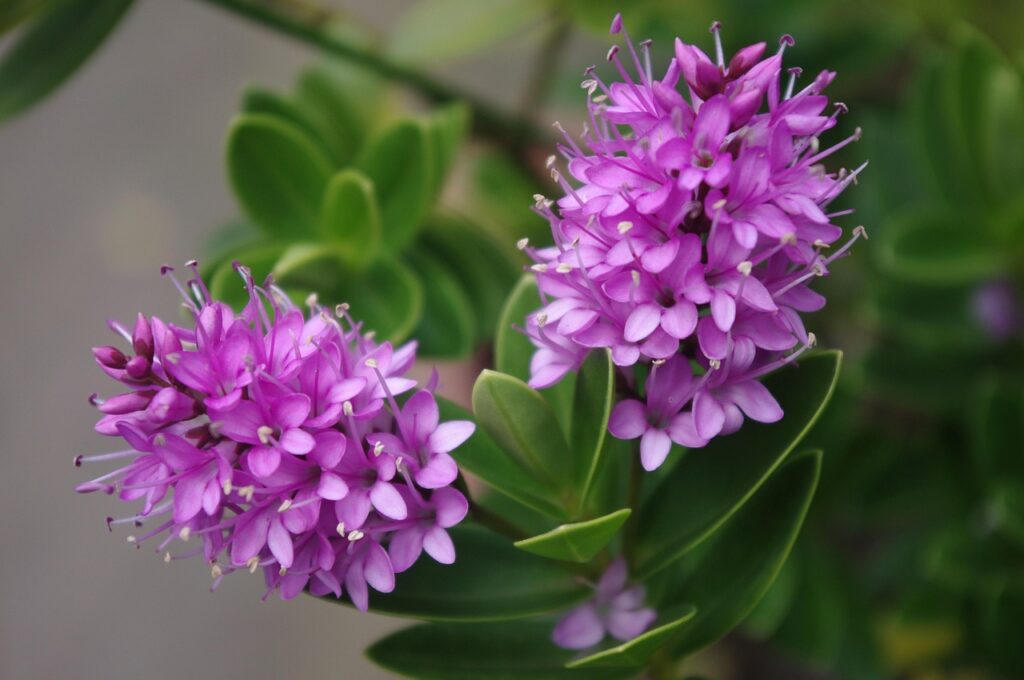
Hebe speciosa ‘Variegata‘: As this cultivar’s name suggests, it has variegated leaves with a green-gray center and cream edges. When they are in bloom, purple flower spikes appear. This is a rather tall garden variety of Hebe shrub, with a mature height of 5 to 6 feet.
Hebe ‘Western Hills’: This Hebe shrub has a frosty, clean appearance with a combination of silver-gray leaves and bright white or pale lavender-colored flowers.
Hebe ‘Red Edge’: This eye-catching variety sports silver blue-green leaves. When flowering, the tips of the bush explode in beautiful red-maroon colors as the flowers bloom.
Hebe ‘Grace Kelly’: Famous for its lovely variegated white and green leaves, this is a very popular Hebe shrub. To complement its cheerful leaves, this variety boasts bright purple flowers when blooming.
Hebe ‘Coed’: This variety stands out by its maroon-burgundy stems, forming a striking backdrop for the lavender-pink flowers.
Hebe ‘Quicksilver’: This small-leaved Hebe cultivar is hardy, complete with beautiful and unusual foliage with small silvery leaves.
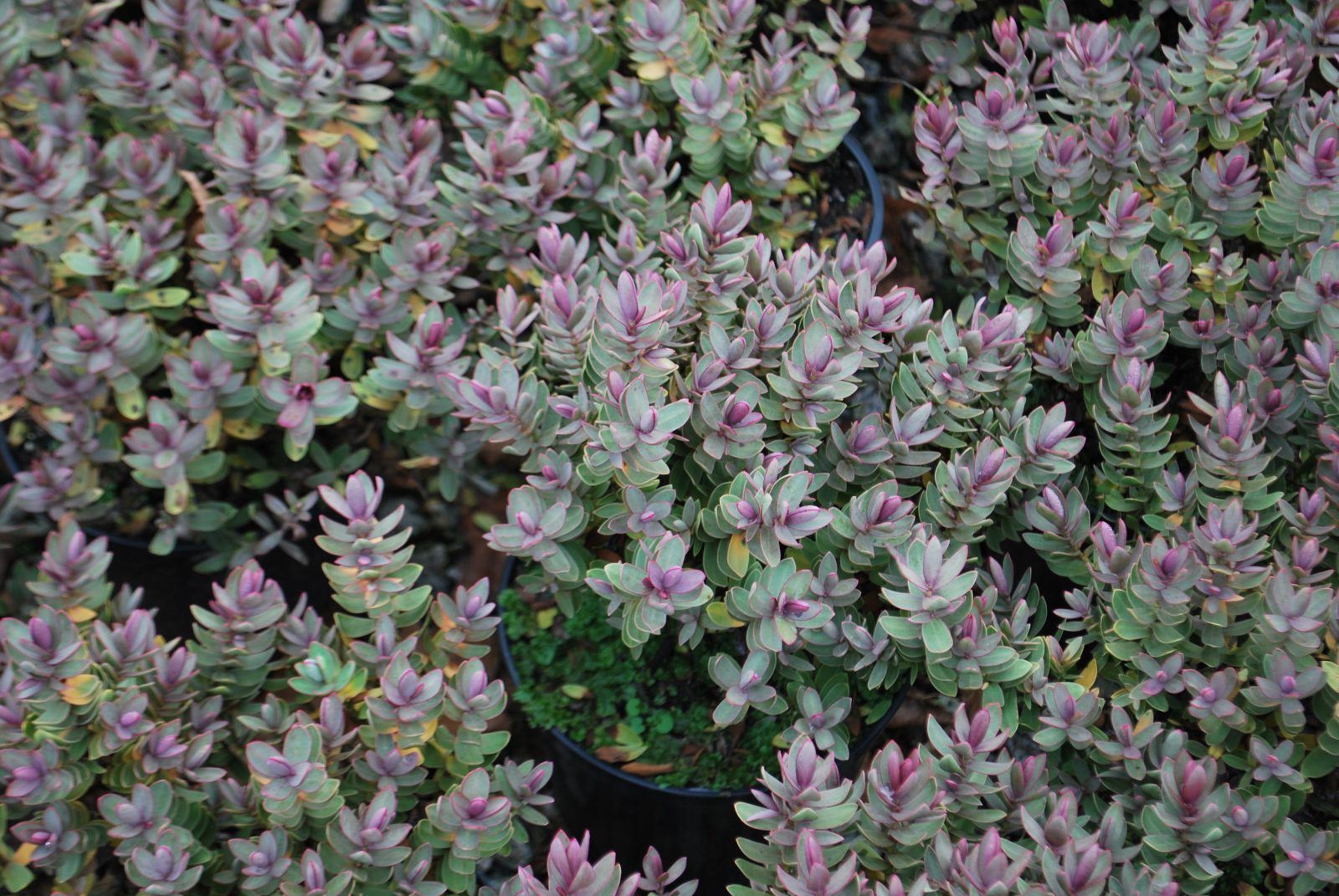
Another unusual characteristic of some Hebes is a noticeable change in foliage color from summer to winter. Some cultivars take on a purplish or reddish cast during winter. Perhaps the best known is ‘Caledonia’, which turns purple. ‘Sapphire’ has shoots that turn bright red at the tips in the winter.
Hebe shrubs look fantastic in the garden but also make lovely potted plants—and this means they can also be moved indoors during cold winter weather. Smaller varieties make the best potted Hebe shrubs.
If you like to prolong color in your landscapes through the summer and into the fall and winter, consider planting evergreen shrubs called Hebes for vivid color in both flowers and foliage. The Hebe shrub family is a favorite of many gardeners because of the plant’s easy cultivation and care requirements.
Do you have a gardening question? Please email, call, or visit the Douglas County Master Gardener Plant Clinic at douglasmg@oregonstate.edu, 541-672-4461, or 1134 S.E. Douglas Ave., Roseburg. Douglas County Master Gardeners are trained volunteers who help the OSU Extension Service to serve the people of Douglas County.