
Published in the News-Review October 17, 2025
By: Janet Bitter
Question: As I look around my yard and try to get it prepared for winter, I see all my hydrangeas with fading blooms. I’m trying to get ahead of the game and clean up my yard. Should I just cut them all back?
Answer: This has to be the most common gardening question I have been asked over the years. Another question, related to this one is, “Why aren’t my hydrangeas blooming?” These are related problems because if you prune your hydrangea incorrectly, you will get reduced or no blooms. Now that it is fall and we are in clean-up mode for our gardens, it’s important to not get carried away and indiscriminately hack away at all the shrubs in your yard. Different types of plants benefit from being cut back or pruned at various times of the year, and you should try to identify your plants and their various cultural needs.
First, let’s see what kind of hydrangeas you have. You must identify the general type of hydrangea in order to know when to prune it or if pruning is even advised.
There are over 70 species of in the genus Hydrangea. For purposes of this article, I’ll only talk about the groups most commonly grown in our area:
- H. macrophylla – bigleaf or mophead hydrangea; foliage is large, waxy, and oval shaped with a serrated edge. Blooms can be blue, white, or pink in either the large ball shape or the flat lace-cap shape. This group also includes many of the re-blooming varieties.
- H. arborescens – smooth hydrangea; usually white, sometimes pink. Foliage is heart-shaped and more of a matte finish.
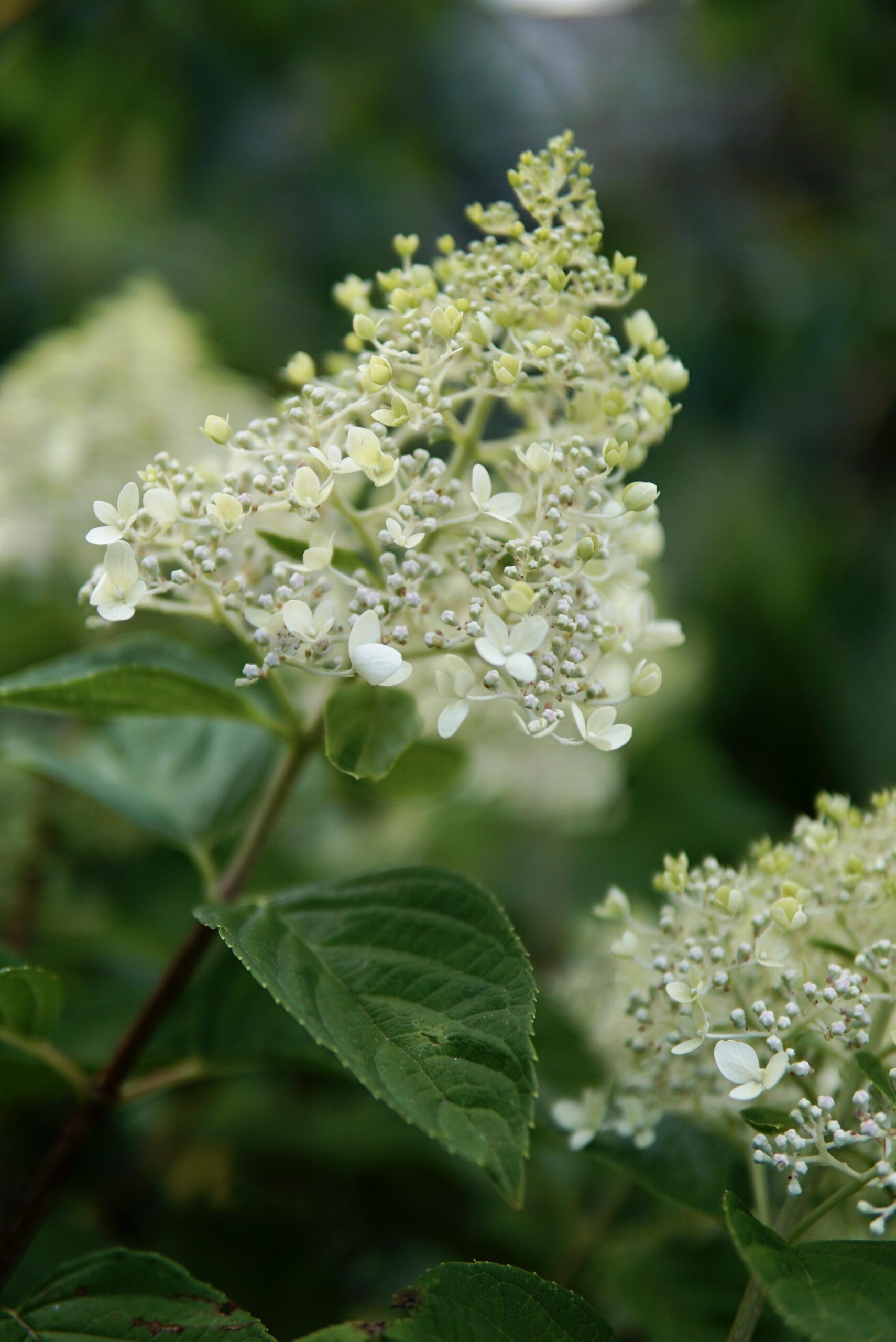
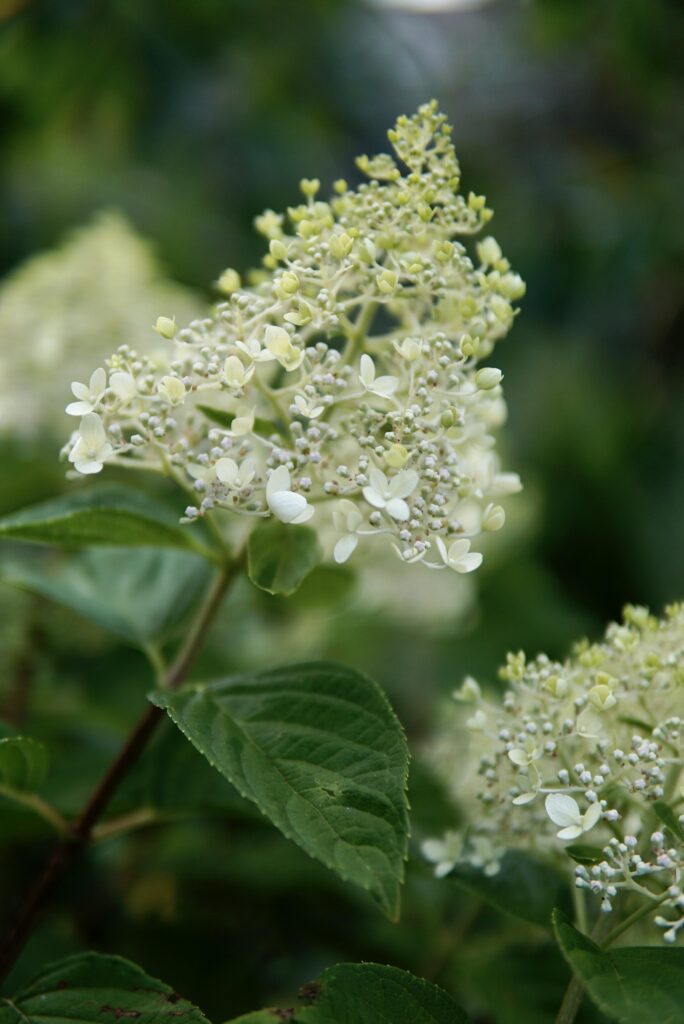
- H. paniculata – panicle hydrangea; blooms are conical-shaped.
- H. quercifolia – oakleaf hydrangea; foliage is lobed and resembles an oak leaf.
- H. serrata – mountain hydrangea; lace-cap blooms, foliage smaller than bigleaf, plant is more rounded and compact than bigleaf.
Now that you have identified what type of hydrangea you have, we can group them by whether they bloom on new wood or old wood—this is the key in deciding when and how much to prune your plant. Old wood bloomers: Bigleaf, Oakleaf, Mountain. New wood bloomers: Smooth, Panicle.
The good news here is that many hydrangeas benefit from almost no pruning, unless you are trying to reduce their size (and realize you may be sacrificing blooms and plant vigor if you cut them back.) For the old wood bloomers, if you need to prune for some reason, do it immediately after flowering. Since many of these bloom late into the summer and fall, if you prune then they still might not have enough time to set the new flower buds for next year and you will have no blooms. The best practice for this group is to avoid general pruning and only remove completely dead branches in the late winter or early spring, right as the plant begins to leaf out and you can easily see which branches are dead. At that time, you can also trim any remaining old blooms as you can see the emerging buds for the current season.
For the group that blooms on new wood, they can be safely pruned in the fall once the plant is completely dormant or wait until late winter/early spring when you can easily see the new buds and won’t be cutting them off.
There is also one other type of hydrangea, which is the group of re-blooming varieties such as ‘Endless Summer’. These bloom on both old and new wood, so can be pruned if needed right after bloom or in late winter/early spring much like other bigleaf types.
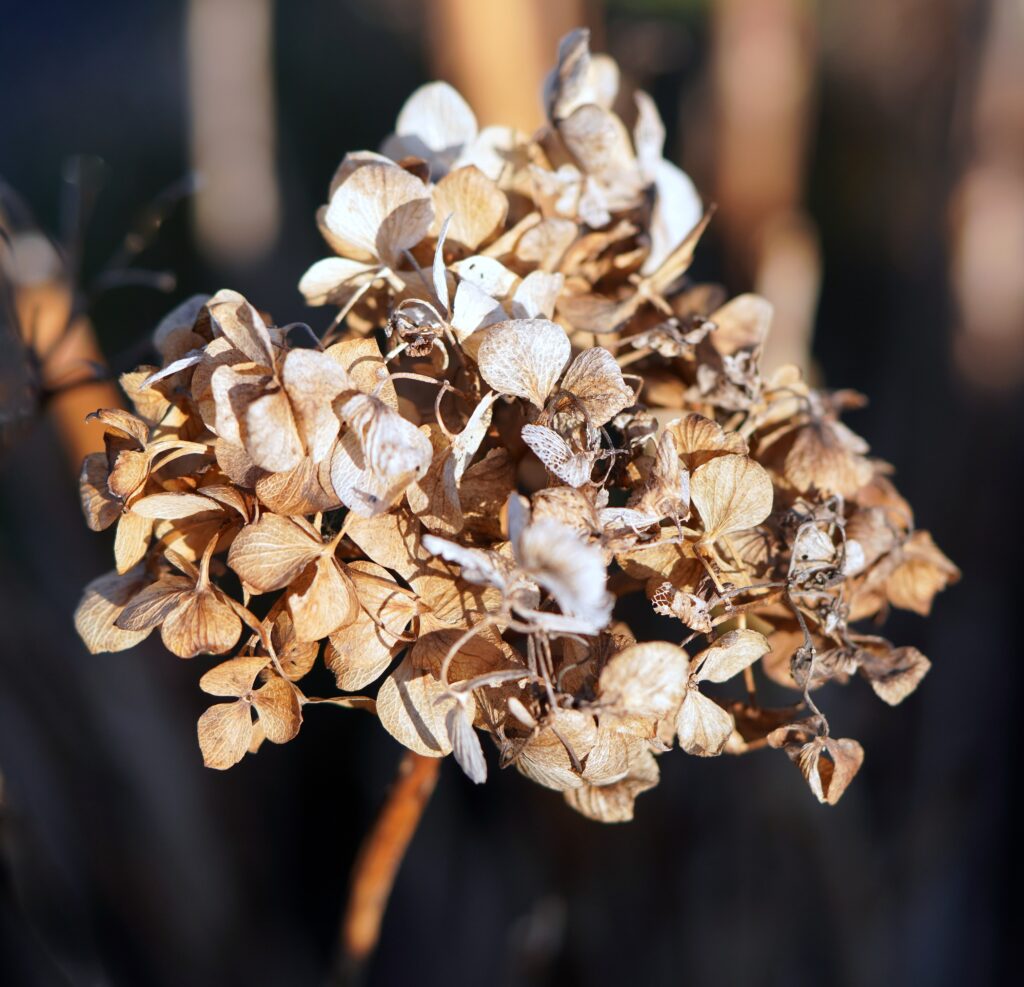
Hydrangeas are beautiful shrubs that grow well in our area. Leaving the drying blooms on your plants over the winter provides some interest in your landscape, as well as giving beneficial insects a place to shelter. Knowing what type of hydrangea you have will give you the guidance on when you should prune so you can keep all those beautiful blooms coming next summer.
Do you have a gardening or insect question? Contact the Douglas County Master Gardeners at douglasmg@oregonstate.edu or 541-672-4461 or visit 1134 SE Douglas Ave., Roseburg. Douglas County Master Gardeners are trained volunteers who help the OSU Extension Service serve the people of Douglas County.