
Published in the News-Review July 11, 2025
By: Bonnie Courter
Question: I suspect I may have a rat problem. I’ve found some droppings in my outdoor garden shed. What are some ways to rid myself of these pests?
Answer: There are two species of rats found in the Pacific Northwest: Norway rats (Rattus norvegicus) and the roof rat (Rattus rattus). Rats are not native to America, but originally came from Europe as stowaways on ships filled with early immigrants. Rats are active mostly at night so you may have trouble identifying which kind you may have, but they differ in how you can control them.
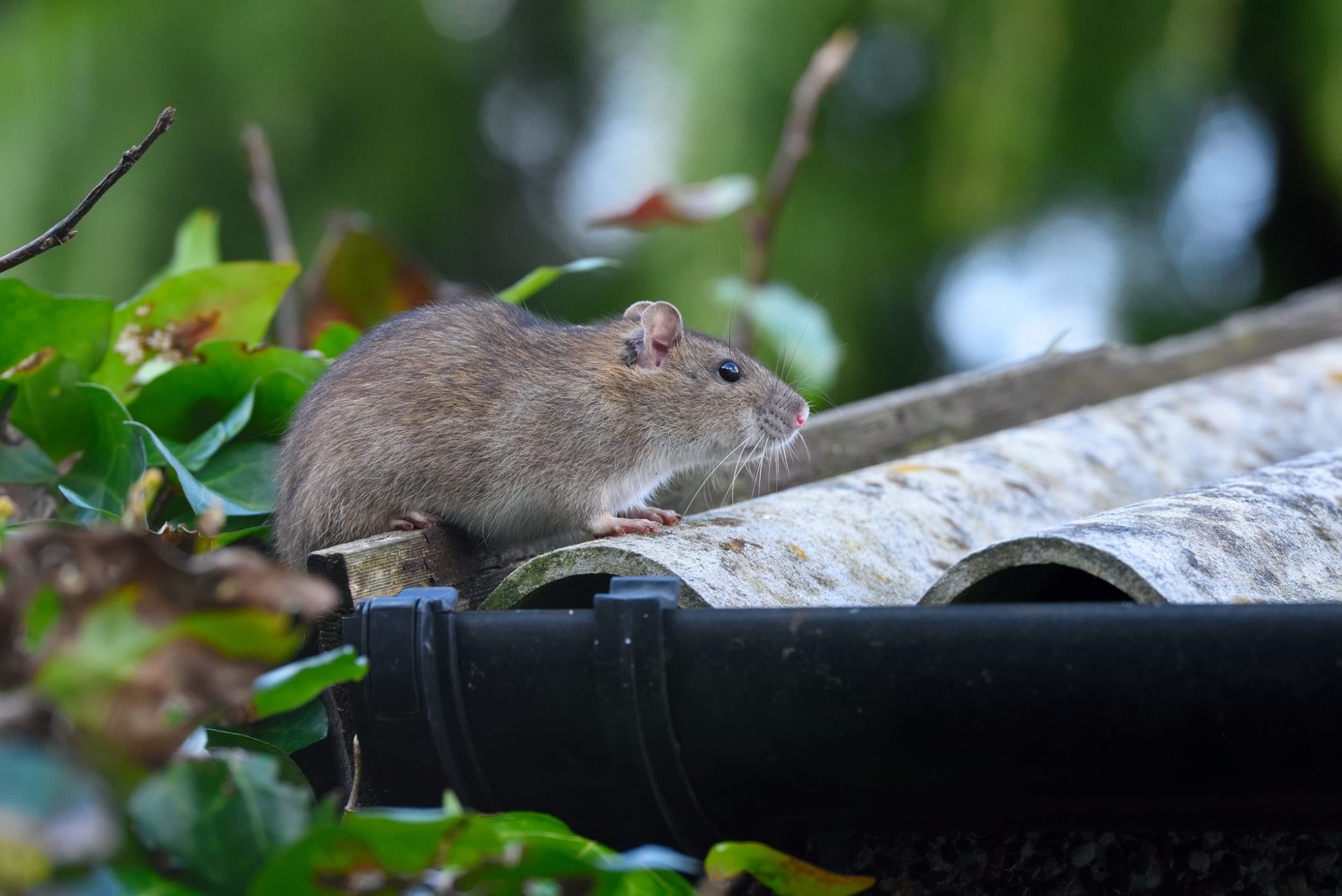
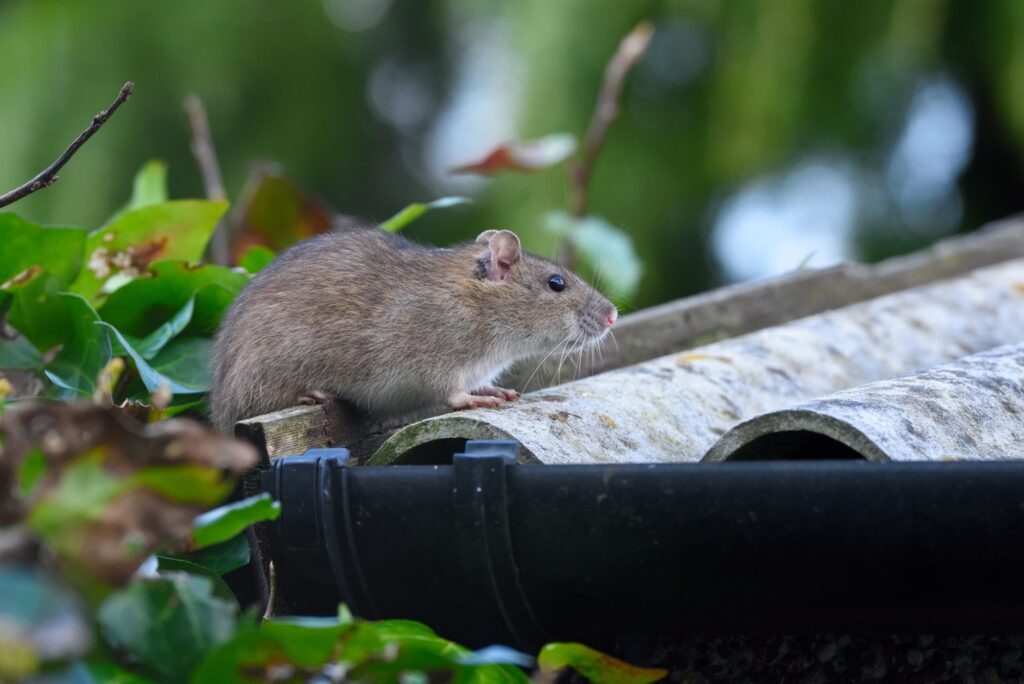
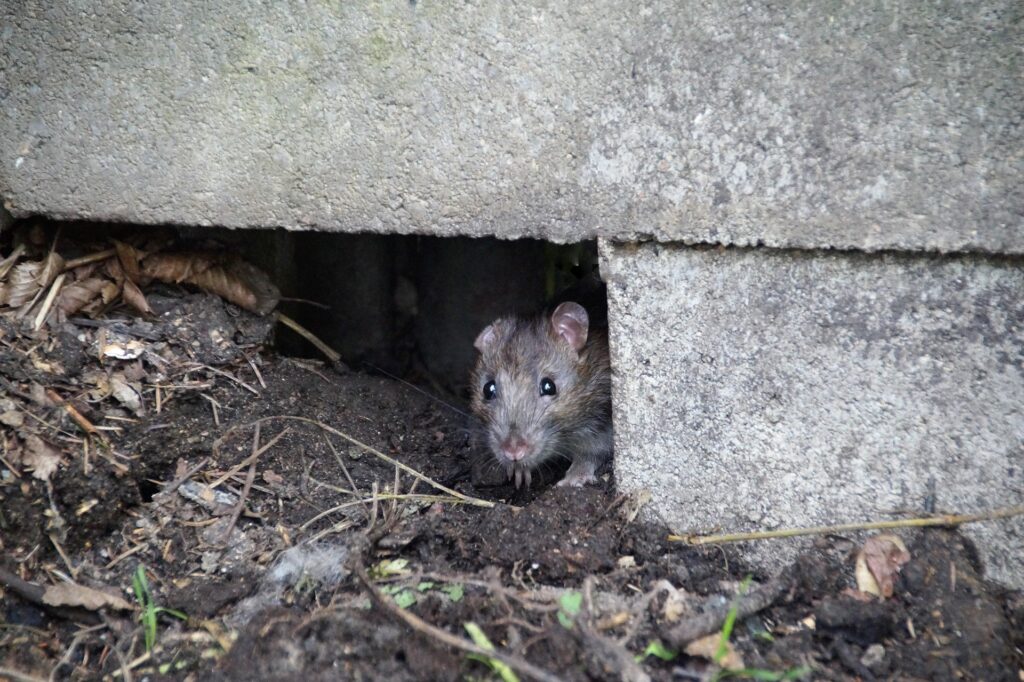
Roof rats are slender with a longer tail and have a pointed snout, whereas Norway rats are more sturdy in shape with a shorter tail, smaller ears and eyes, and a rounded snout. Roof rats, like their name, are agile climbers and nest above ground in structures or vegetation while Norway rats build burrows near the ground along buildings, beneath wood and debris piles, adapting to crawl spaces like sewer/utility passages. Norway rats are hoarders, transporting their food to caches.
Rats have no known benefit for the environment. They are a health hazard to humans as they can carry diseases (remember the bubonic plague?). Their gnawing, nest building and excessive urine and droppings can cause property damage. They can chew through insulation on electrical wires and have been known to cause fires as a result. Rats ruin stored food and belongings by gnawing through plastic bags or boxes. Plus they breed year-round! One female roof rat produces 3-4 litters of 4-8 pups while the Norway rat has a higher reproductive rate of 8-9 pups per littler, one female able to produce more than 20 pups. Since they reproduce so quickly, it’s important to take action to control them right away.
Rats are best controlled using an integrated pest management approach (IPM) that includes sanitation and exclusion, trapping, and the use of rodenticides.
Sanitation
- Use trash cans that have secure lids and place away from your home
- Don’t leave trash exposed such as an overflowing garbage can
- Secure pet food and bird seed in thick plastic or metal containers with secure lids
- If you use a compost system, make sure you don’t place in it bread, milk, meat or products that don’t break down quickly. Keep your compost pile turned often and “hot” so it breaks down material fast.
Exclusion
- Use door sweeps to seal gaps between the threshold and door base of your house or outbuildings.
- Seal gaps in construction (rats can squeeze through a gap as small as a dime)
- Seal around water, gas, and utility pipes in walls and floors
- Seal exterior vents
- Declutter storage areas where rats can hide, moving items away from the wall.
Trapping
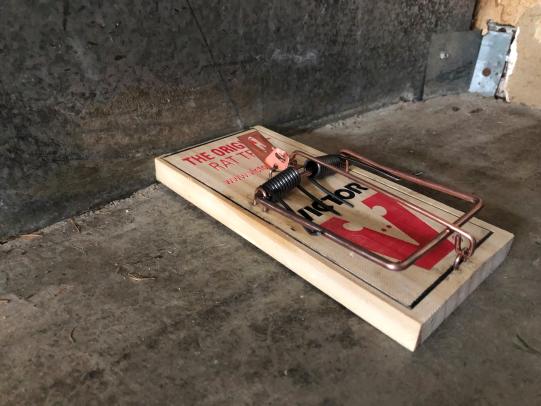
Snap traps are an effective way to control rat populations, but you must be persistent and set multiple traps, resetting them daily until you no longer see fresh evidence of rat activity. The prebaiting method places baited unset traps out for several nights to see if the bait is taken, then you start setting the traps. This ensures that the rats, who are cautious around new things, begin to feel comfortable around the traps.
Nuts, peanut butter, cheese, dried fruit and pet food are good baits to use. Fasten the bait securely to the trap trigger using a fine wire and set them so the trigger will spring easily. Place traps where rats tend to travel by following their droppings along walls, behind boxes, or, in the case of roof rats, in elevated locations near their nests such as an attic or fence tops. Check the traps every day, removing and disposing of killed rats wearing gloves that can be disinfected.
Other trap options are battery-operated “electrocution” traps which are effective but considerably more expensive. Live traps are another option, but you must remove the live rat and kill it with a blow to the head (not very pleasant), and releasing the rodent defeats the whole purpose. Glue boards don’t kill the rat right away, so if you find a live rat stuck on the board, you’re going to have to humanely euthanize it as well.
Rodenticide Chemical Control
Using toxic baits and poisons, though effective, have some risks. If the rat ingests the poison and dies in a crawl space, you’re stuck with a horrible smell of decomposition for a long time. Never leave toxic baits unsecured as they are poisonous to pets, wildlife and children. Pets and wildlife that feed on rats that have been poisoned can be poisoned themselves. Keep bait in tamper-proof bait stations. Place bait stations along travel routes. Always read and follow the label – the label is the law.
Hope this gives you some direction on how to control your rat infestation.
Do you have a gardening or insect question? Contact the Douglas County Master Gardeners at douglasmg@oregonstate.edu or 541-672-4461 or visit 1134 SE Douglas Ave., Roseburg. Douglas County Master Gardeners are trained volunteers who help the OSU Extension Service serve the people of Douglas County.