


Published in the News-Review November 28, 2025
By: Bonnie Courter
Question: A friend was telling me they had a strawberry tree growing in their garden. I’d never heard of such a thing – can strawberries grow on trees?
Answer: I’m pretty sure strawberries can’t grow on trees, but wouldn’t it be awesome if they did? No more bending over to pick the fruit!. No, I think what your friend was referring to is a tree or shrub with the scientific name, Arbutus unedo, also known as Strawberry Tree, Killarney Strawberry Tree, Madrono, or Strawberry Madrone. It’s in the heath family, native to southwestern Ireland (hence the name “Killarney Strawberry Tree”) and western Europe down to the Mediterranean regions.
One of the most attractive small trees available for residential use, it can be grown as a shrub, used as a hedge or screen, or as a small tree. It is slow-growing, only about 12-24” a year, reaching a height of 15-35 feet.
Leaves are simple, alternate, elliptic-oblong to ovate and have serrated margins. They are glossy dark green above and paler below. Their petioles are glandular and red in color.
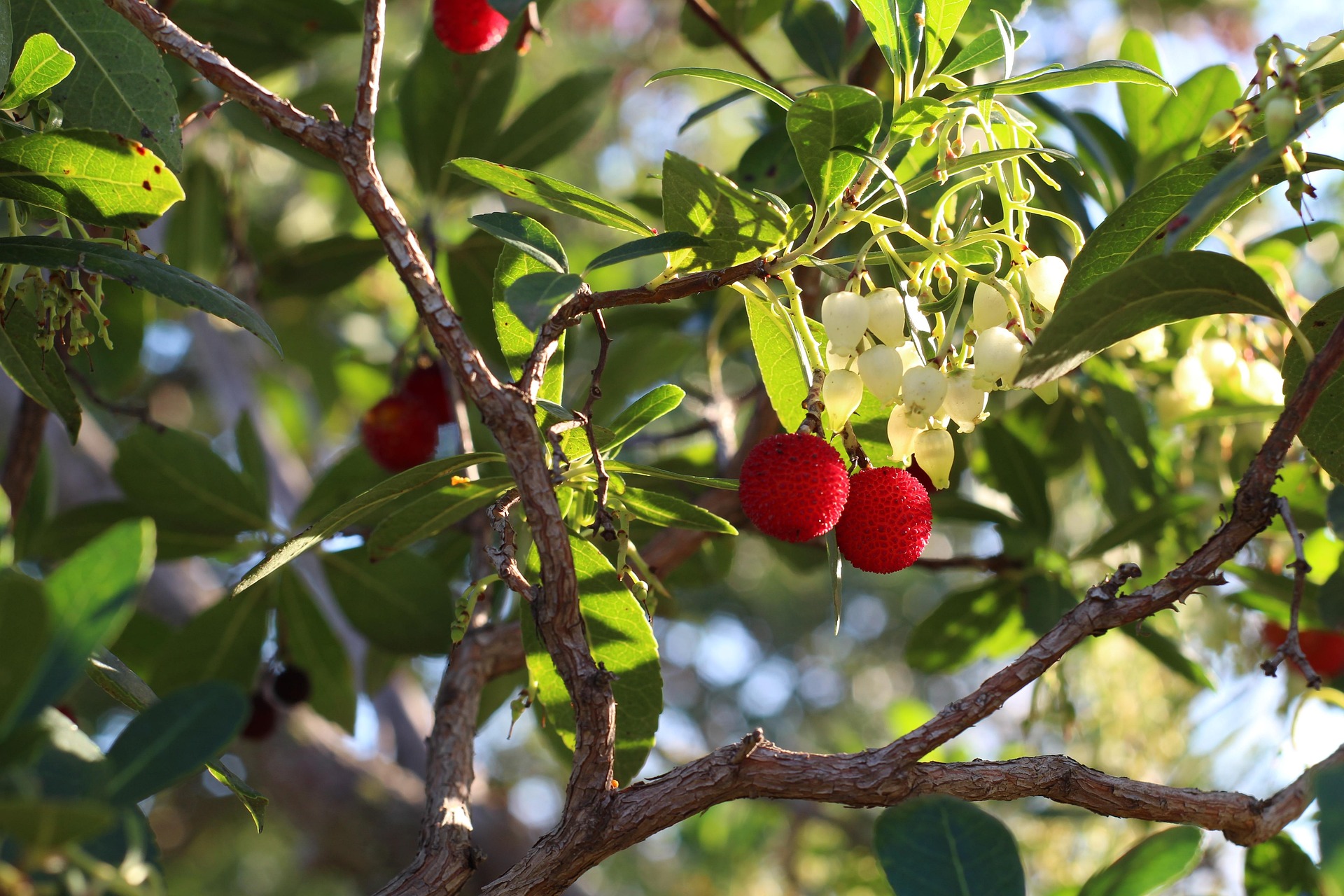
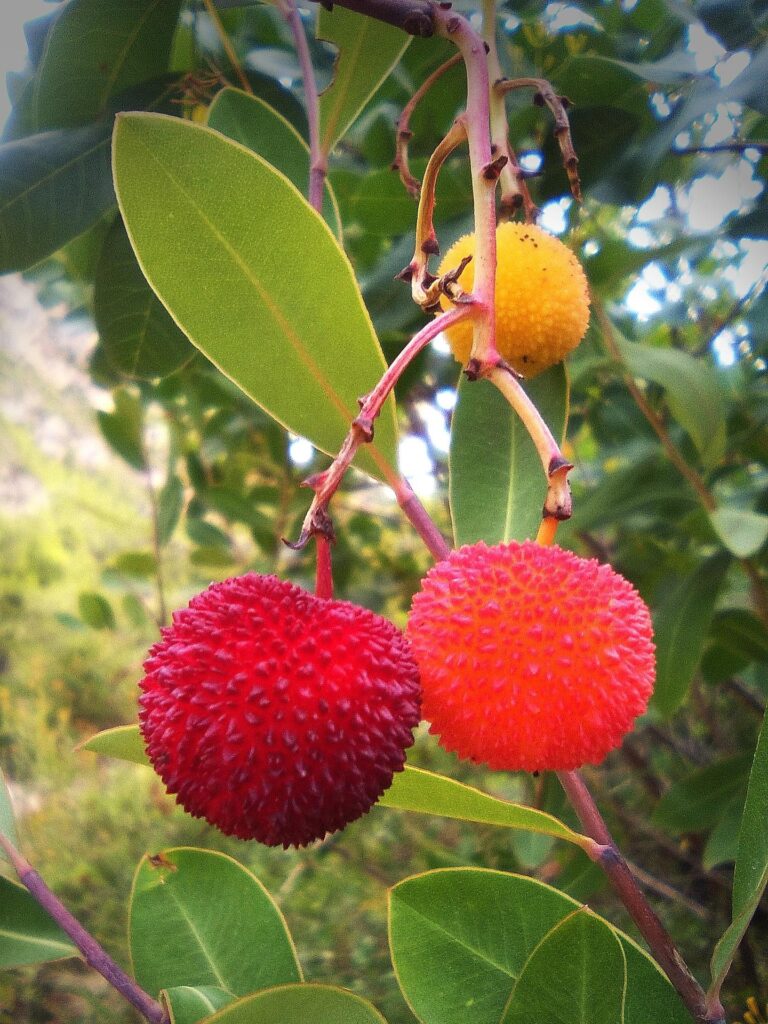
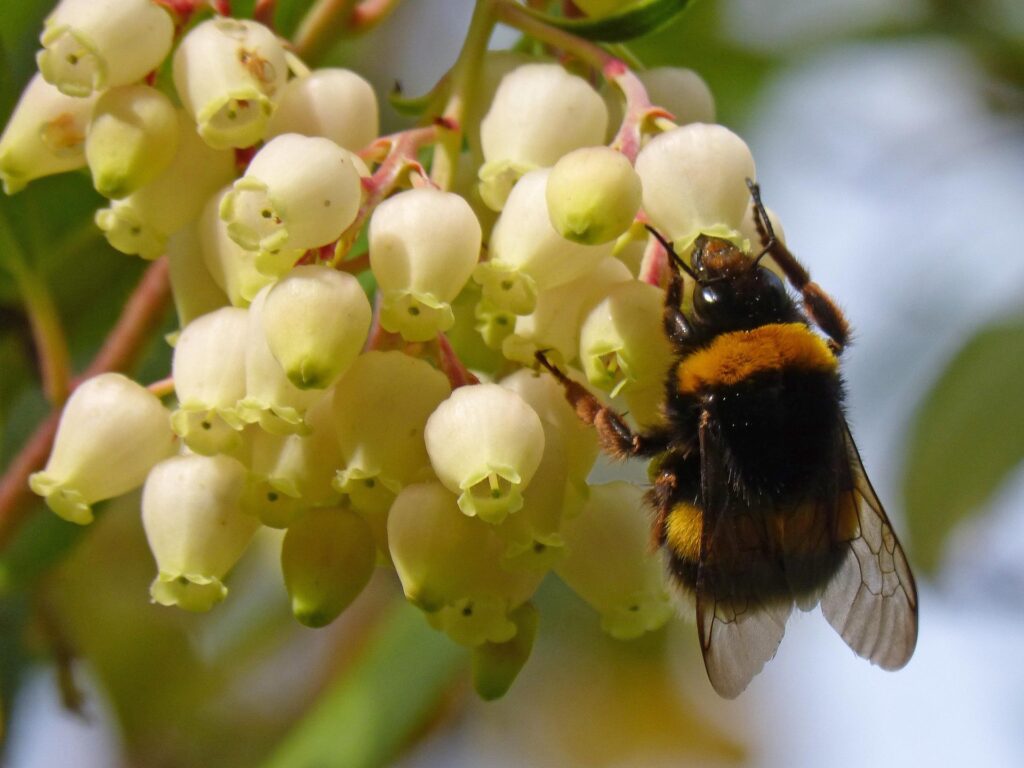
What makes it so attractive are the urn-shaped flowers which resemble blueberries in flower, in white to pinkish clusters. Strawberry tree blooms in the winter and early spring. However it’s the showy fruit which gives it such a unique look. The fruit are spherical, orange-red balls which look like strawberries, and are about an inch across. Maturing in the fall, the red globes can sometimes be covering the tree at the same time as the white flowers, making for a striking appearance.
The fruit is edible, having a high sugar content, but very bland in taste. It’s been said that the specific epithet “unedo” in its name is from the Latin “unum edo”, meaning, “I eat one”, suggesting the fruit is so poor tasting that a person wouldn’t eat more than one! However, the fruit from the strawberry tree surprisingly produces excellent jellies and jams. Its high pectin content gives rapid setting without additives. The fruit even has a “strawberry-like” taste, though gritty and lacking in much flavor. The balls bruise easily, so aren’t used in commercial production, but In Portugal, they make brandy from the fruit.
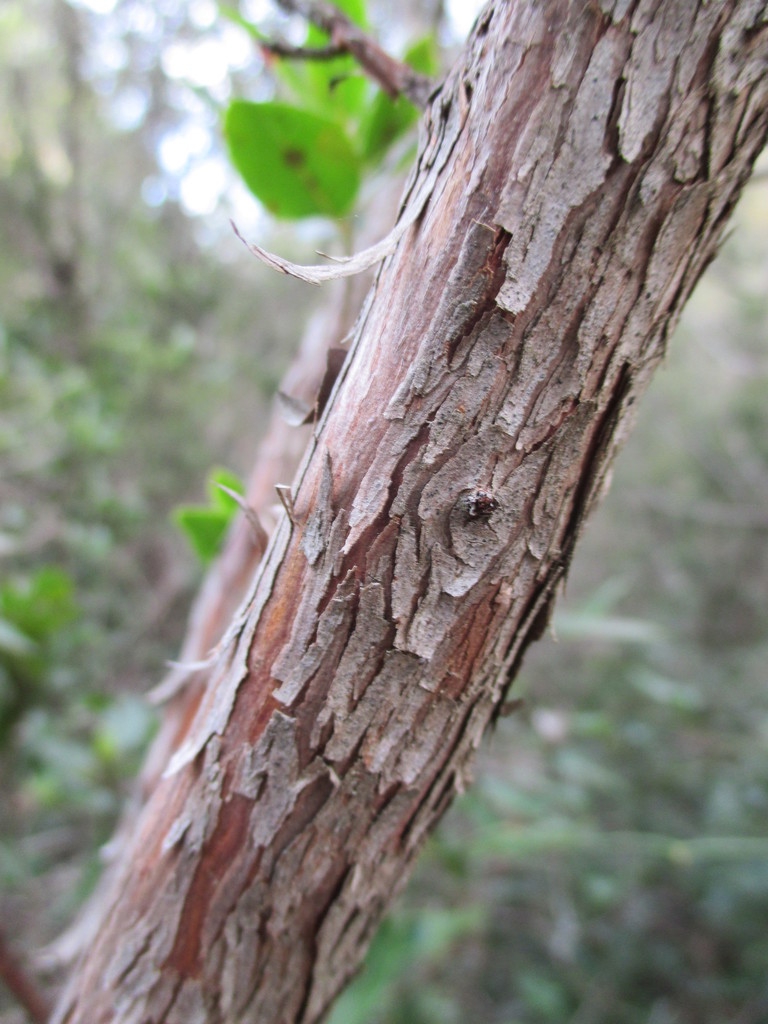
The bark on the strawberry tree is red-brown in color and has an attractive shaggy look to it. By training it to be a tree, you can more readily emphasize the unique exfoliating bark.
Strawberry tree is easy to grow, adaptable to various climates, hardy to USDA Zone 6-7, and can grow in poor soils as well as well-drained ones. It likes a more acid pH, being from the heath family. Full sun to partial shade is best, and it is drought tolerant once established, not needing summer watering due to a good tap root.
With its evergreen, glossy leaves, white flowers, red fruit and shaggy bark, this plant can provide year-round interest in your landscape.
Do you have a gardening or insect question? Contact the Douglas County Master Gardeners at douglasmg@oregonstate.edu or 541-672-4461 or visit 1134 SE Douglas Ave., Roseburg. Douglas County Master Gardeners are trained volunteers who help the OSU Extension Service serve the people of Douglas County.