

Published in the News-Review April 25, 2025
By: Chris Rusch
Growing Sunflowers in the Umpqua Valley
Question: What can you tell me about growing sunflowers in the Umpqua Valley?
Answer: There are so many reasons to grow sunflowers that it is hard to know where to begin. The sunflower (Helianthus annuus) is a species of one of the largest plant families, Asteraceae. Sunflowers are native to North America and were first cultivated by indigenous people in the Southwest, dating back around 3000 BC. The seeds were collected and ground into flour, eaten as snacks and used for dyes and medicine. The oil from the seeds was used for cooking, skincare and hair care. Sunflowers were introduced from North America to Europe by Spanish explorers around 1500. They became popular in Russia in the 18th century for their usefulness and beauty.
Today, sunflowers are a major crop worldwide, used for oil, flour, birdseed, and other purposes. Although we usually think of only the seeds as edible, the bright yellow petals make a colorful salad garnish. In addition, sunflowers can be grown for microgreens. Sunflower microgreens are harvested during the early vegetative stage of a sunflower’s life cycle, when they reach 3-4 inches tall, around 10-14 days after planting. Since they mature so quickly, you can grow many crops of sunflower microgreens in a year.
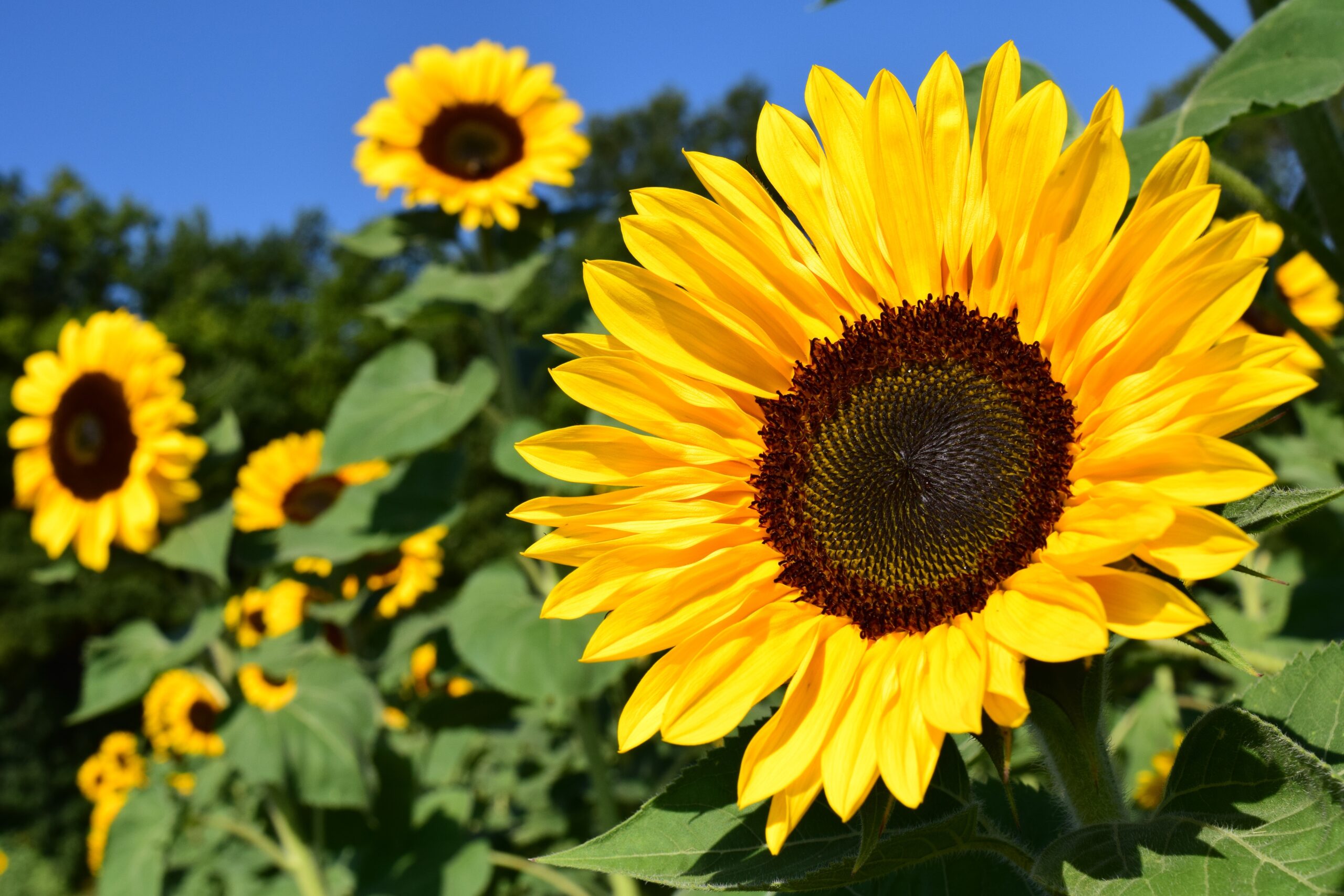
Sunflowers aren’t just one flower like they appear; they contain 1,000 to 2,000 smaller flowers. Each petal on the head of a sunflower is what botanists call a ray floret. The inner “eye” is made up of disk florets, which are arranged in mesmerizing patterns of interconnecting spirals. Only the disk florets develop into seeds—they can either pollinate themselves or cross-pollinate with other sunflowers with help from wind or pollinators like bees and butterflies.
Sunflowers should be planted in the spring after the danger of frost has passed. If you want the biggest and most productive sunflowers, amend your soil with compost or aged manure before sowing the seeds. Sunflowers grow best when they receive about 1 inch of water per week. While some varieties are bred to be smaller, sunflowers can grow quite tall, reaching heights of 12 feet or more. Sunflowers can be top-heavy plants, and tall varieties are particularly vulnerable to wind damage. Staking sunflowers over 3 feet tall is a good way to prevent them from toppling over in bad weather.
Young sunflowers exhibit heliotropism, meaning they move to face the sun as it moves across the sky from east to west, maximizing sunlight absorption for photosynthesis. The name of this bloom is no coincidence: sunflowers truly need sunlight to thrive. Sunflowers should receive at least 6-8 hours of sunlight a day, but even more time soaking up the rays is ideal. Once the buds open into flowers, their stems stiffen and remain in place, with the flowers facing east all day long.
Some varieties recommended for our region include:
Mammoth Sunflower: This giant among sunflowers is a fast grower whose single stalk can reach 12′ tall and produce one 10″-12″ flower! Not fussy about soil, it’s very easy to grow and drought tolerant. Grow in a tight row to make an attractive screen. Sow monthly for continual bloom.
Red Sun Sunflower: This variety is a favorite mix for long bloom-time displays in the garden and the vase. Tall, strong plants reach 5–8 feet tall with well-branched stems for lots of buds and flowers. You’ll get a variety of blooms from straight yellow to all red, streaked red and yellow and red with a deep corona—all exquisite!
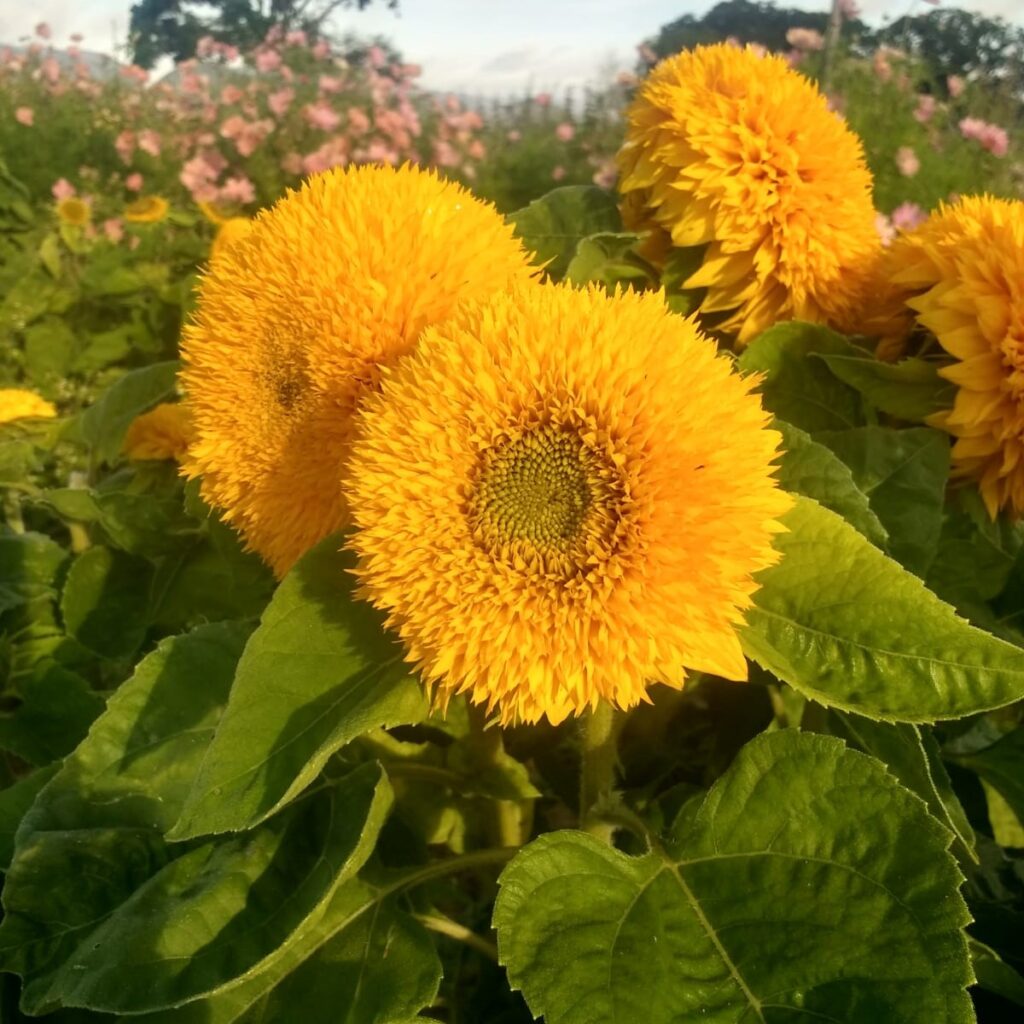
Teddy Bear Sunflower: The ‘Teddy Bear’ sunflower gets its name from looking just like a soft, fuzzy, huggable stuffed toy. The versatility of this short, 2-3 foot tall sunflower cultivar with its extra-large, double, golden blooms gives it equal weight no matter where you plant it. It stands out in the vegetable garden, flower beds, decorative borders and even grown in patio pots.
Lemon Cutie Sunflower: This variety grows to a knee-high bushy plant that is bursting with semi-double lemon flowers on multiple branches. It can be used in mass plantings, borders, and in pots.
Sunflowers enhance garden beauty, attract bees, butterflies, and birds, improve soil health, are great for companion planting and much more! Sunflowers, with their iconic golden blooms reaching toward the sky, are a symbol of summertime cheer. Sunflowers are beginner-friendly plants that are easy to keep in gardens or container planters. Provide them with the proper balance of light, water, and nutrients, and the sunflowers will reward you with bright blooms and tasty seeds. Sunflower seeds are a rich source of protein, potassium, magnesium, calcium, iron and vitamin E. The next time you’re looking for a healthy snack, grab a handful of sunflower seeds and get cracking.
Do you have a gardening or insect question? Contact the Douglas County Master Gardeners at douglasmg@oregonstate.edu or 541-672-4461 or visit 1134 SE Douglas Ave., Roseburg. Douglas County Master Gardeners are trained volunteers who help the OSU Extension Service serve the people of Douglas County.