
Published in the News-Review April 18, 2025
By: Julie Burchstead
“The Small but Mighty Syrphid Fly”
Question: I keep seeing fast moving, tiny bees in my garden. Do I need to worry about my grandchildren getting stung?
Answer: For a definite ID, send a photo or two to the Master Gardener Plant Clinic. But I suspect, what you might be seeing is not actually a bee, but a syrphid fly. This bee mimic is an under-appreciated, hardworking pollinator. And no worries, they do not sting.
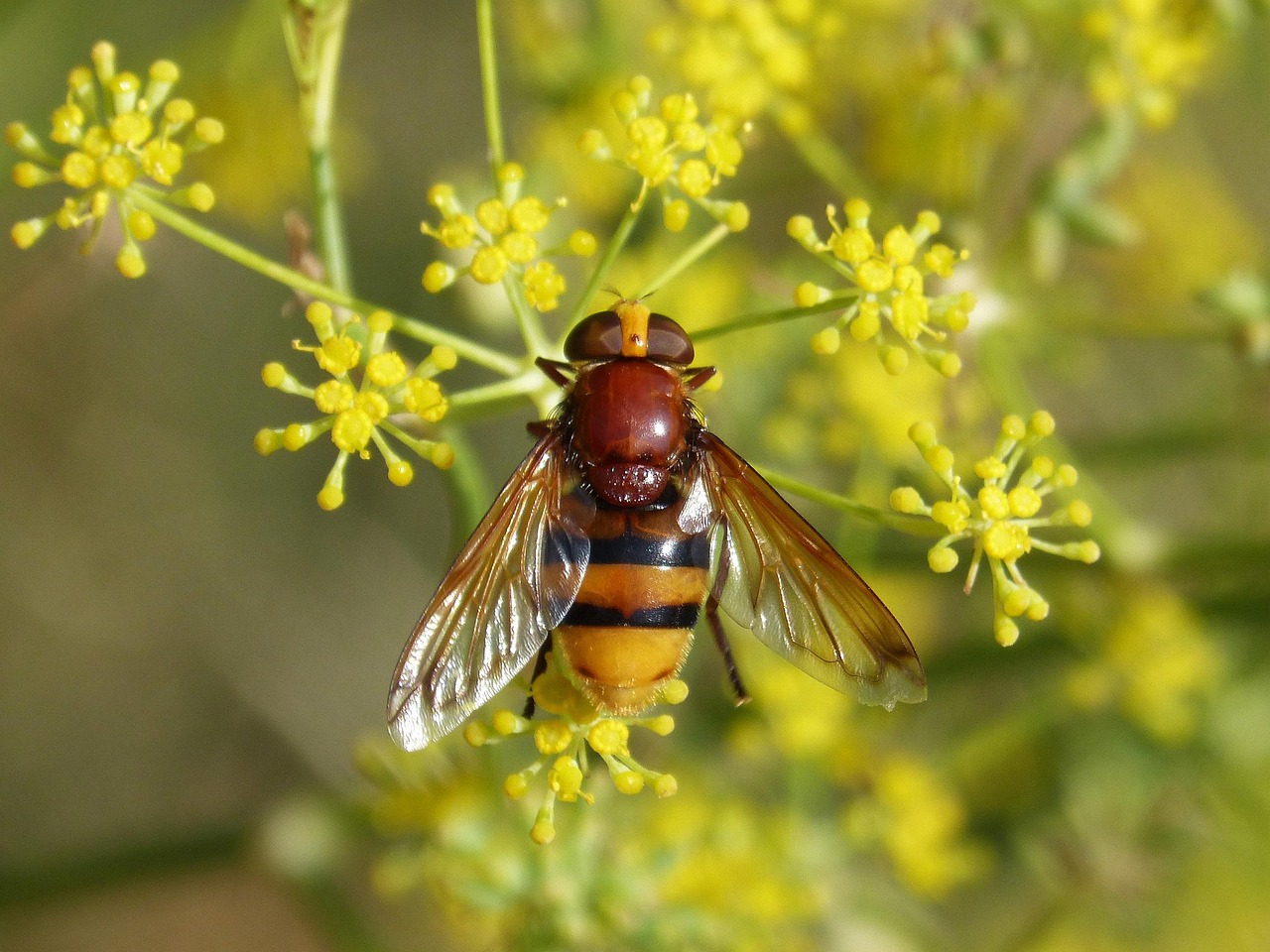
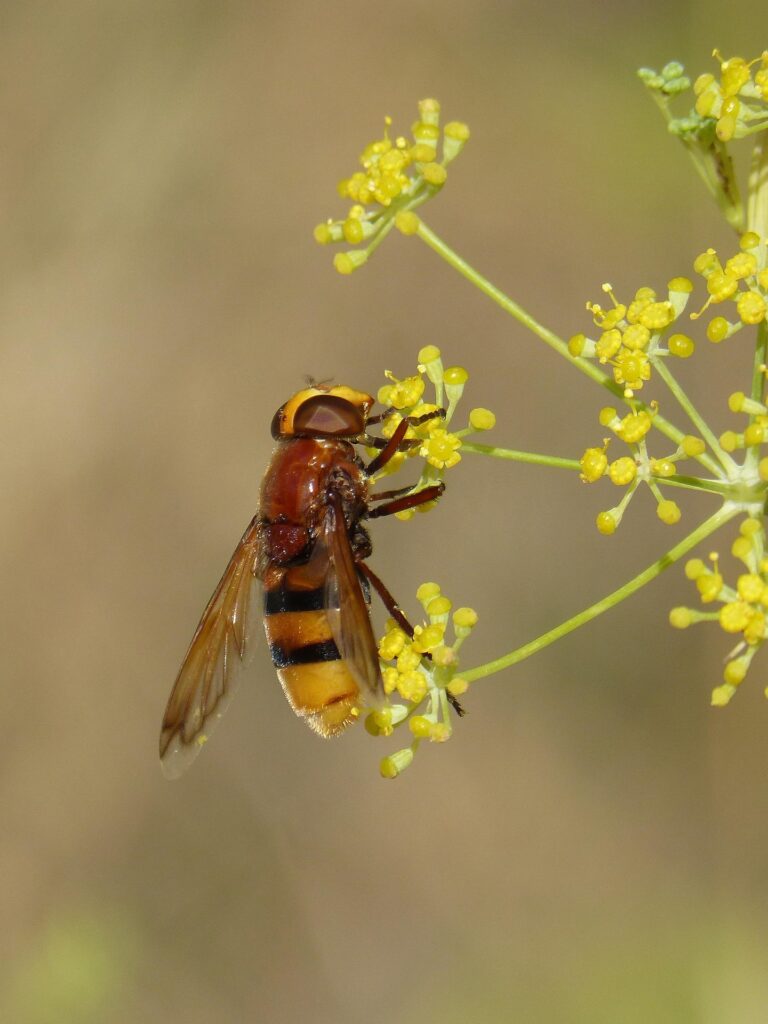
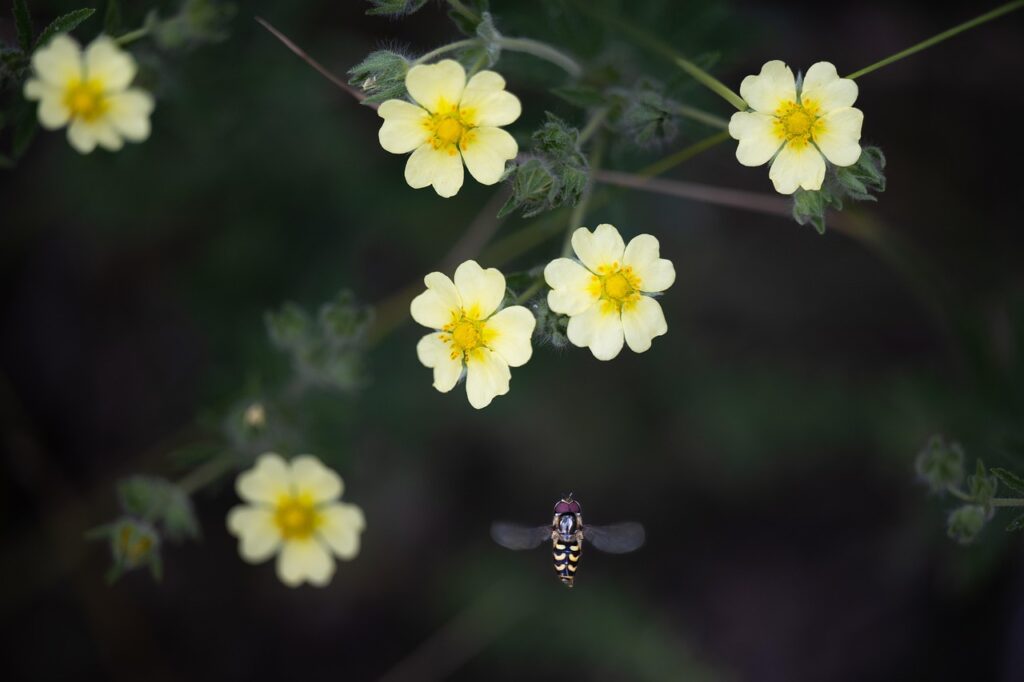
On a recent sunny afternoon my red-flowering currant was definitely the place to “bee”. Everyone was there: bumblebees with full baskets, familiar honeybees, and mason bees flitting flower to flower before beelining to their nearby house where they deposit their pollen into a reed cavity. And if I looked closely, tiny striped insects zipped through the crowd so quickly they were hard to identify. When one finally landed, yellow and black stripes were evident, but also a single pair of wings (bees have two pairs), short antennae, and large compound eyes. These tiny bee mimics are syrphid flies. In Oregon, the most common are Scaeva pyrastri, also known as flower or hover flies.
When we hear the word fly, our first reaction is often disgust. We have an uneasy relationship with house flies. They land on gross things (then treat our food like a mosh pit), dot our clean surfaces with icky fly spots, and don’t even get us started on maggots. The yuck factor for house flies is huge. Though entomologists would argue that flies (even maggots) have their place, for most of us, flies are a hard sell. But syrphid flies actually fulfill a similar role to beloved butterflies and ladybugs.
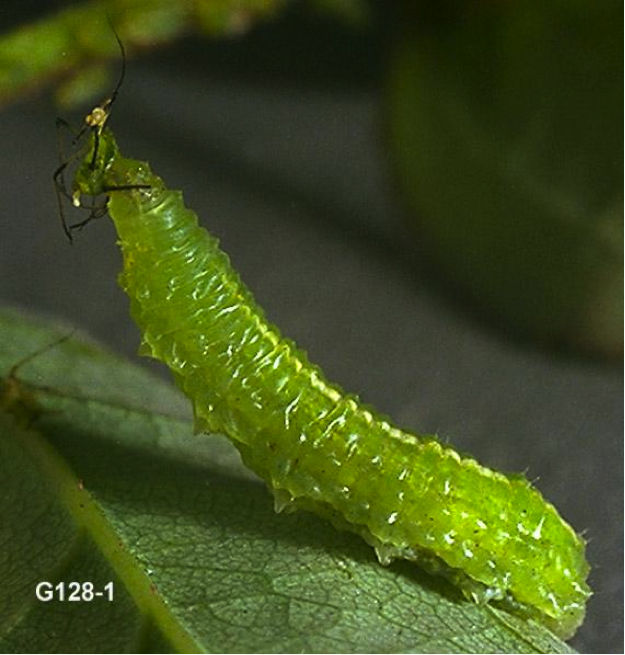
Adult syrphid flies are tiny and feed on nectar or pollen. Many resemble bees in color and body shape, though some species have more elongated bodies. Syrphid flies lay their rice-like eggs near food sources. But unlike butterfly and moth caterpillars, the voracious habits of the syrphid fly larvae aren’t focused on munching our plants. Syrphid fly larvae, like those of ladybugs, are beneficial predators. They feed on aphids, lacewings, thrips, and scales. Scale insects are especially active here in Roseburg. I have seen them the past couple summers on my rhododendrons and olive trees. Scale insects are difficult to find in their vulnerable (and most treatable) stage before they form brown, hard-shelled lumps on branches. Having syrphid fly larvae on the hunt is a good thing.
Syrphid flies are attracted to a variety of flowering plants, especially yarrows and alyssum. Research by Oregon State University indicated they prefer white and yellow flowers and will visit those colors in greater abundance. Syrphid flies will not fly in windy weather, so having multi-layers of plants (trees, shrubs, flowers, groundcovers) in your garden provides protective shelter. Depending on the species, syrphid flies overwinter as adults or larvae in leaf litter and plant debris. Above all, if you want to have these beneficial pollinators and predators working for you, you need to use chemicals sparingly, if at all. Syrphid flies are extremely susceptible to pesticides.
Gardening inevitably steps us into the fascinating, alien realm of insects. Many beneficial insects begin in less well known, sometimes less appealing larval stages. Indiscriminate elimination of all grubs, caterpillars, and insects can inadvertently contribute to the loss of beneficials. Our choices in how we frame our relationship with insects we encounter – as foe or friend, as conqueror or cohabitant, with vengeance or curiosity – in our own gardens, multiplied by all gardens that exist in our world, have a real impact. Shifting from vengeance to a stance of curiosity leads to knowledge. Knowledge can lead us to tolerance. Tolerance can lead us to new delight in the diversity around us.
Note: The Douglas County Master Gardener Plant Clinic offers free insect identification for gardeners at the Douglas County Extension Office. For best ID, a contained live or intact dead insect is preferred. But you can also email clear photos at douglasmg@oregonstate.edu. The Plant clinic is open M-G, 1-4 PM. Phone number is 541-236-3052.