
“Water Conservation in the Home Garden and Landscape”
Linda Estep
Ask a Master Gardener
Question: Each year, I long to plant a large vegetable garden with beautiful flowers in every nook and cranny, but I limit the size of my garden because of water. My water bill increases dramatically, and the task of watering becomes labor intensive. What are some steps I could take to conserve water and make the task easier?
Answer: As summer temperatures rise, vegetable gardeners face the challenge of keeping their crops healthy while conserving water. The focus needs to be on the right amount of water, the time of day you water, and the method that the water is applied. If you can follow a few simple steps, you will water more efficiently and save many gallons of water over the course of the summer growing season.
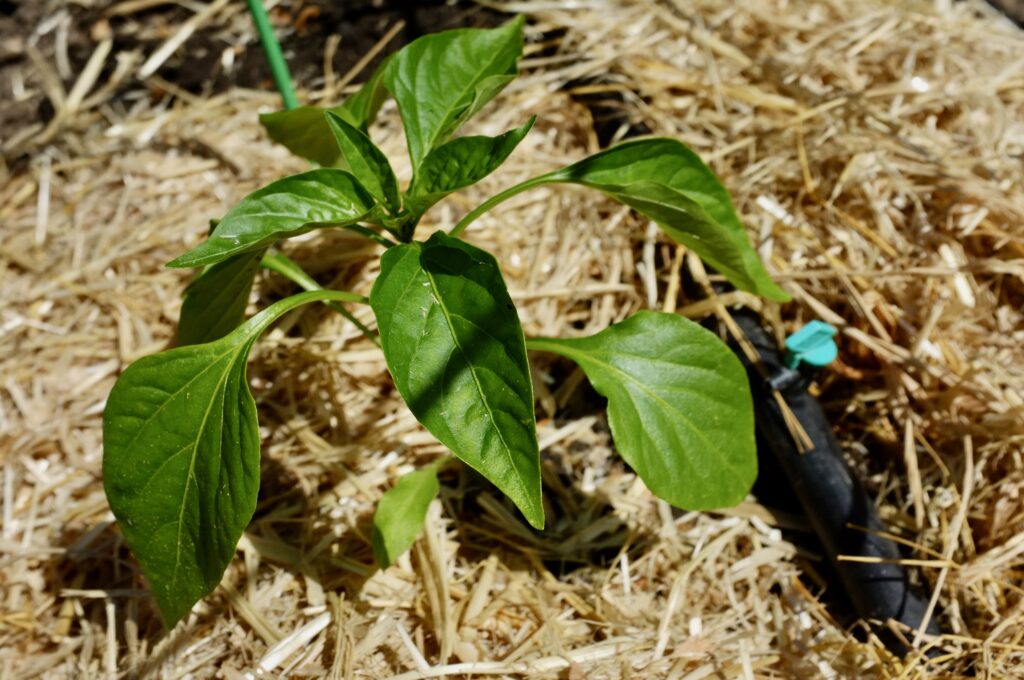
Mulching is an essential strategy for water conservation. A 3- to 5-inch layer of mulch will reduce evaporation by 70 percent. Apply mulch evenly and leave a few inches bare around the base of your plants. Mulch has the added benefit of reducing the number of weeds that will compete with your plants for water and nutrients. Keep an eye on your mulch layer. It can form a crust that prevents water from getting to the roots. If a crust forms, break it up with a rake to allow water in.
Giving your plants the right amount of water should be a thoughtful process. You need to avoid overwatering. Too much water can kill plants. Roots need air as well as water. The soil should never be soggy. Soggy soil can favor diseases and pests such as slugs, snails, and earwigs. Too much water during the ripening period of fruits and vegetables such as tomatoes, melon, and sweet corn can impair flavor and quality by reducing sugar content.
On the other hand, frequent, light sprinkling needs to be avoided. For plants that are established, it is best to water slowly, deeply, infrequently, and directly to the root system. This allows the water to soak into the ground instead of running off the surface. There is an easy method to test the moisture in your soil. Take a large straight blade screwdriver; poke it into the soil about two inches. The drier the soil, the more resistance you will feel. You will also see if the soil is moist two inches below. You can also purchase an inexpensive water level gauge and simply poke that into the soil.
The best time of day to water is early in the morning or late in the day when temperatures are lower, humidity is higher, and the air is calmer. Avoid watering bare areas of the garden and focus your watering at the base of your plants. There are several methods to accomplish this task.
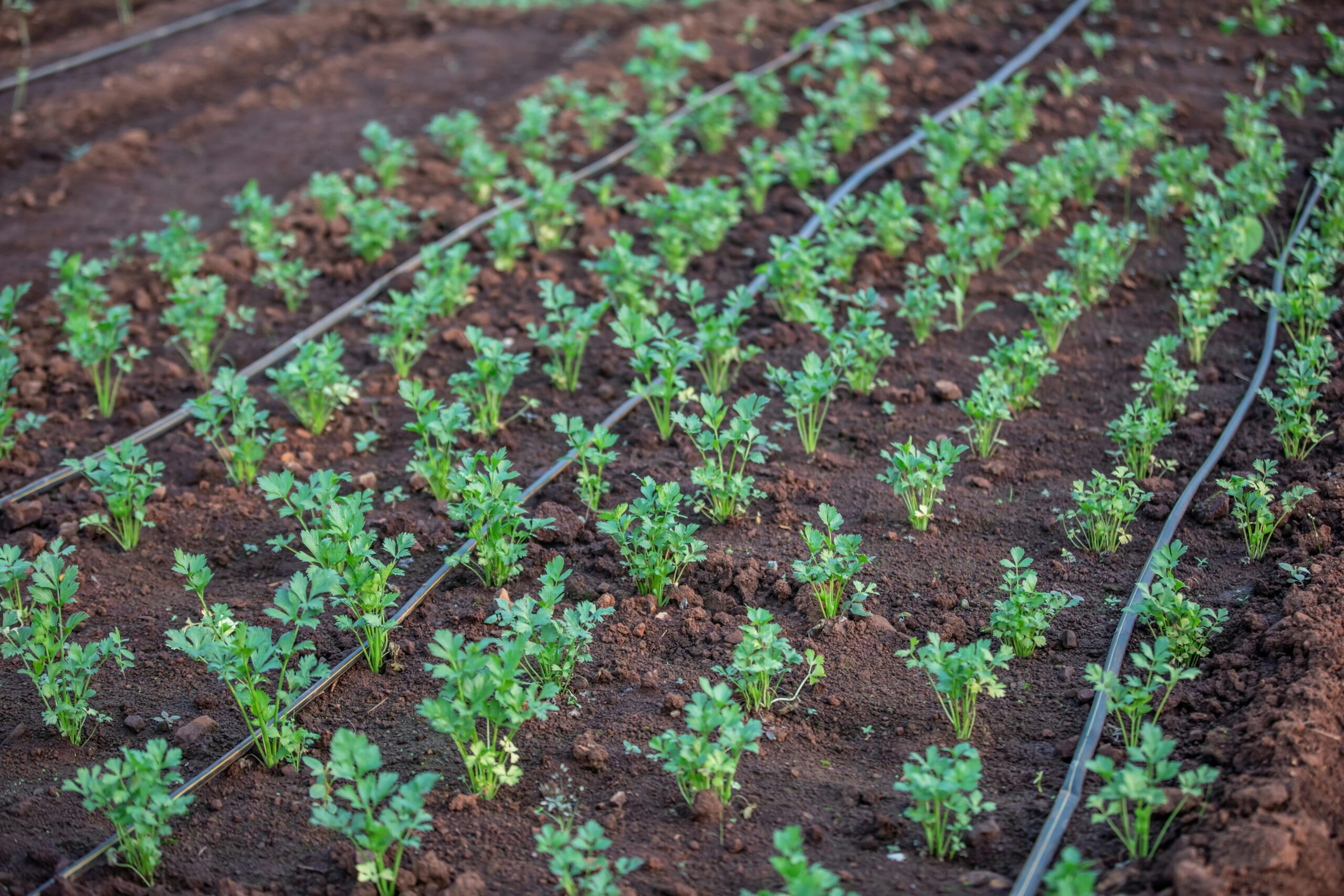
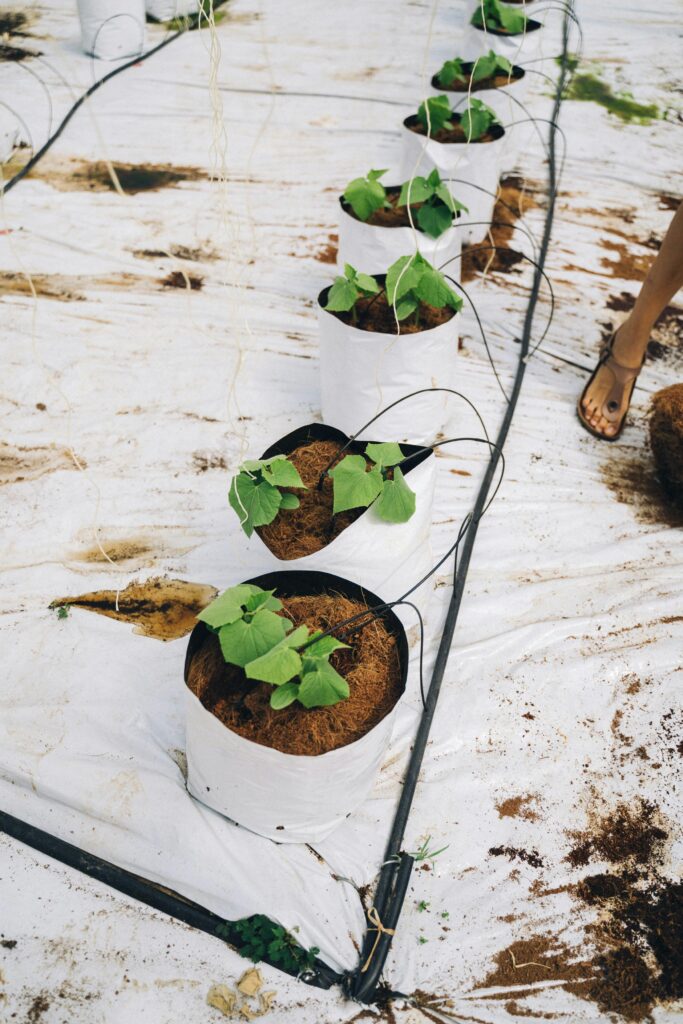
If all you have is a simple garden hose, make sure it provides a slow stream of water. Many gardeners use a hose-end attached sprinkler, but this is not efficient because water is lost to evaporation, and water may be applied to areas where nothing is growing. Drip systems are very effective and those with individual emitters spaced along the hose are the most efficient. Drip systems are an excellent method to water vegetable gardens grown in soils with higher levels of organic matter. Soaker hoses slowly release water along their entire length and are another efficient method of watering.
Another option is to apply water below the soil surface. You could purchase olla clay irrigation pots. You can also make your own “below the soil surface” watering containers by punching holes in the bottoms of juice or coffee cans. Once the holes are punched, push the cans 6- to 12- inches into the soil. Fill the cans with water The water will seep out at the bottom into the soil directly surrounding the plant roots. This is an excellent method to reduce evaporation.
With thoughtful planning and these practical techniques, gardeners can enjoy a productive harvest while conserving water and making the task less labor intensive.
Do you have a gardening or insect question? Contact the Douglas County Master Gardeners at douglasmg@oregonstate.edu or 541-672-4461, or visit 1134 SE Douglas Ave., Roseburg. Douglas County Master Gardeners are trained volunteers who help the OSU Extension Service serve the people of Douglas County.