

Published in the News-Review November 14, 2025
By: Chris Rusch
Why do leaves change colors in the fall?
Question: This has been a beautiful fall. I have noticed so many beautiful fall colors on our trees and shrubs this year. Can you tell me why some trees turn red, and others turn yellow in the fall?
Answer: For most of us, the sight of leaves changing color is our annual signal that fall is officially here. There’s no doubt that seeing a sudden change in the color of the foliage surrounding our homes is exciting.
Here is how it happens: It’s the chlorophyll in leaves that gives them their signature green color. During spring and summer, the ample daylight provides plants with plenty of time in direct sun. Consequently, the plants produce chlorophyll regularly and convert this sunlight into energy through photosynthesis to grow. This explains why the leaves appear lusher and greener in the summer.
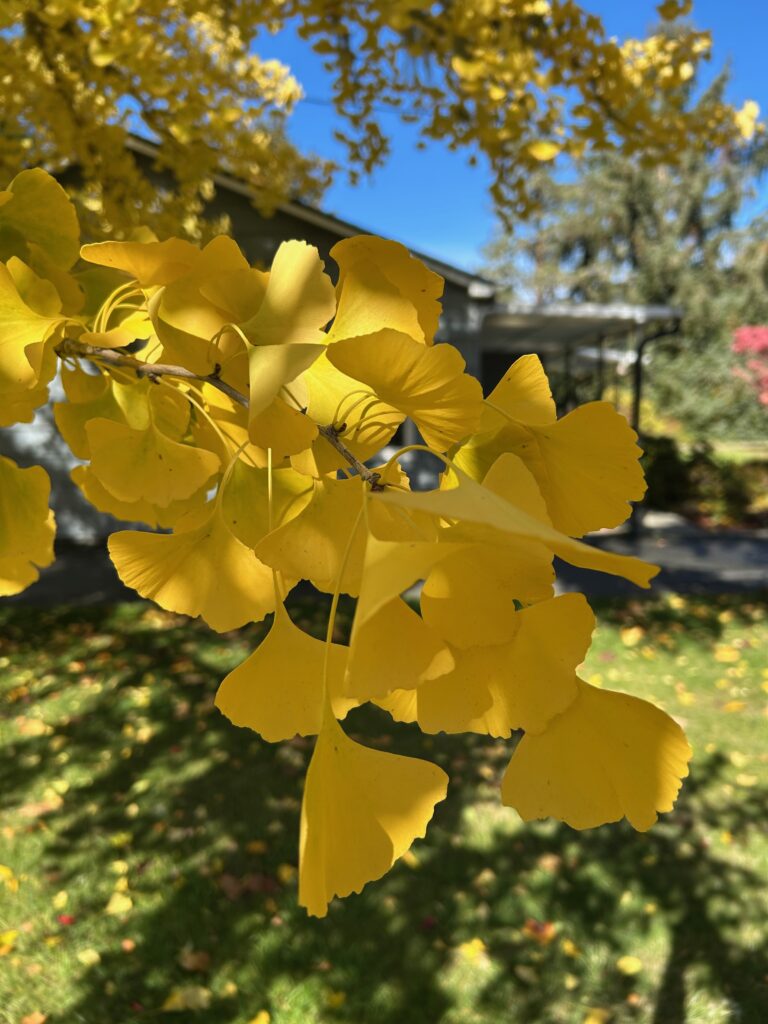
Once fall arrives, daylight hours become shorter, and temperatures cool. The tree senses the reduced light and starts to break down the chlorophyll, the pigment that gives leaves their green color and is essential for photosynthesis. Yellow and orange colors come from pigments called carotenoids and xanthophylls (a type of carotenoid). These pigments are present in the leaf throughout the growing season but are masked by the high concentration of green chlorophyll. As the green chlorophyll disappears, other yellow and orange pigments already in the leaf become visible. The intensity of the yellow color can vary depending on the specific tree species, the amount of light it receives, and even soil moisture. During this time, trees also reabsorb essential nutrients from the leaves into their roots and trunks for storage.
Some trees known for having brilliant yellow, orange and golden fall foliage include birches, hickories, walnuts, ginkgoes, quaking aspen and big leaf maple.
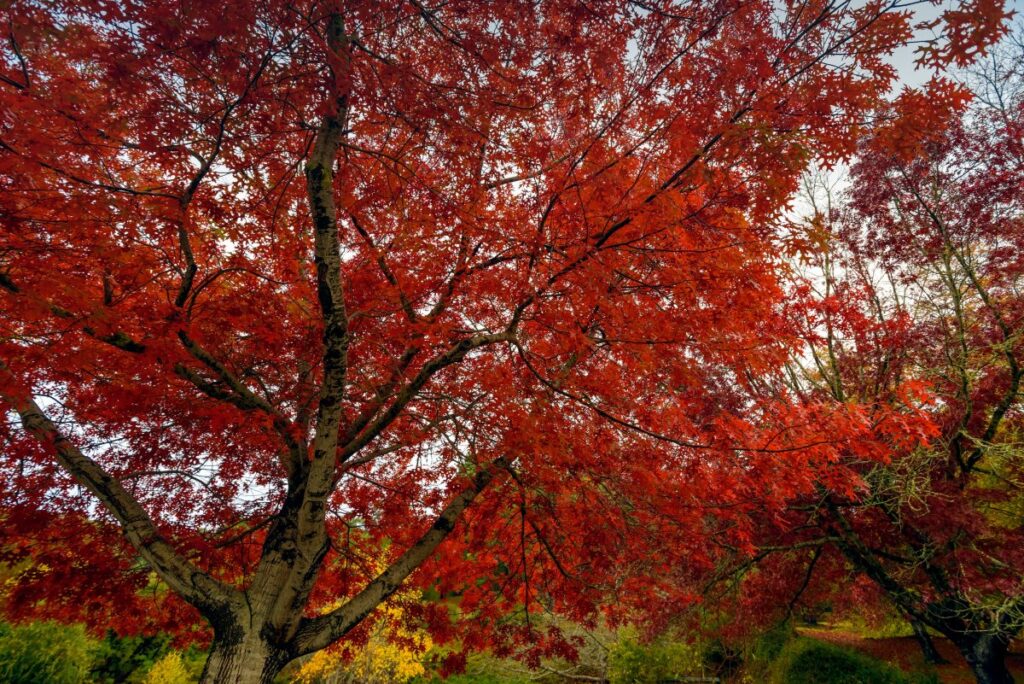
Unlike the carotenoids in yellow leaves, leaves turn red and purple due to the production of a pigment called anthocyanin, which isn’t present during the summer. It is synthesized in the fall, just before leaves fall, when sugars get trapped in the leaves. Anthocyanin production is triggered by bright, sunny days and cool nights. Anthocyanins color strawberries, apples, cherries, cranberries, grapes, plums, and blueberries. Different species have a genetic predisposition to synthesize red anthocyanins.
For example, red maples are known for producing vibrant scarlet to crimson leaves. The intensity of the red color in these trees is often enhanced by bright, sunny autumn days and cool, but not freezing, nights. Cultivars like ‘October Glory’ and ‘Autumn Blaze’ are especially known for consistent, fiery color that lasts longer into the season. Maples are a diverse group with many species. Red maples turn scarlet, but sugar maples are a bit lighter with more orange.
Other species that produce brilliant red foliage include dogwood, serviceberry and vine maple. In the fall, the leaves of red osier dogwood turn shades of red and reddish purple before they drop, revealing the shrub’s brightly colored red stems, which are most vibrant in the winter. Some varieties may also show hints of orange in the fall.
What happens when leaves fall? After leaves fall, trees conserve water and energy for winter dormancy, a process called abscission. Leaves lose water through transpiration. By shedding them, trees prevent water loss during winter. Trees use energy to maintain leaves, so dropping them allows the tree to go dormant and focus its energy on its roots to survive the winter. Cooler temperatures and shorter days trigger hormones that signal the tree to form a special layer of cells at the base of each leaf. This “abscission layer” weakens the connection, making the leaves ready to detach. Before falling, trees break down and reabsorb nutrients from the leaves, such as chlorophyll, and store them in the roots to be used in the spring. Fallen leaves are broken down by fungi, bacteria, and other organisms in the soil. This decomposition process releases essential nutrients back into the soil, creating a rich, dark material that fertilizes the trees and surrounding plants.
Why do some trees remain green and others change color? Trees known as evergreens remain green in the fall because they have adaptations like waxy, leathery or needle-like leaves that conserve water and energy, allowing them to stay green year-round. This adaptation is crucial because evergreens can’t afford to lose water, especially during winter. The needles and leaves are retained for several years even though new leaves are produced each spring. The leaves contain high concentrations of cryoprotectants to lower the freezing point of water in their cells and protect them from cold damage. Evergreens are adapted to stay green all year, thus can keep the process of photosynthesis going throughout the winter.
Do you have a gardening question? Please email, call, or visit the Douglas County Master Gardener Plant Clinic at douglasmg@oregonstate.edu, 541-672-4461, or 1134 S.E. Douglas Ave., Roseburg.